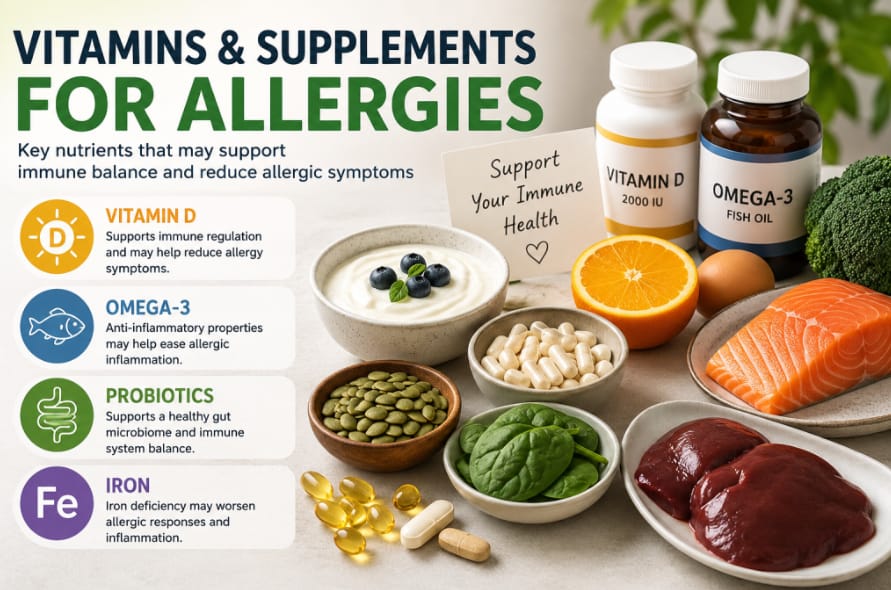
Can vitamins and supplements help with allergies?
It is a common question, especially for parents of children with eczema, allergic rhinitis, asthma or food allergies. Among the most commonly discussed supplements for allergies are vitamin D, omega-3 fatty acids and probiotics. More recently, researchers have also discovered an interesting relationship between iron deficiency and allergic disease.
So, what are the best vitamins and supplements for allergies?
The short answer is: some nutrients may influence allergic inflammation and immune function, but no supplement can simply cure an allergy.
Research shows that nutrition can affect the immune system, gut microbiome, and the health of our skin and mucosal barriers. All of these are involved in allergic disease. However, evidence for taking supplements is much more complicated than it could be.
Vitamin D may have benefits in certain allergic conditions. Omega-3 fatty acids have anti-inflammatory properties but mixed clinical evidence. Probiotic effects appear to depend heavily on the specific strain and situation. And emerging research suggests that iron availability may influence Type 2 allergic inflammation.
Let’s look at what the science actually says about each of them.
1. Vitamin D for Allergies
Vitamin D is best known for maintaining healthy bones, but it also has important effects on both the innate and adaptive immune systems.
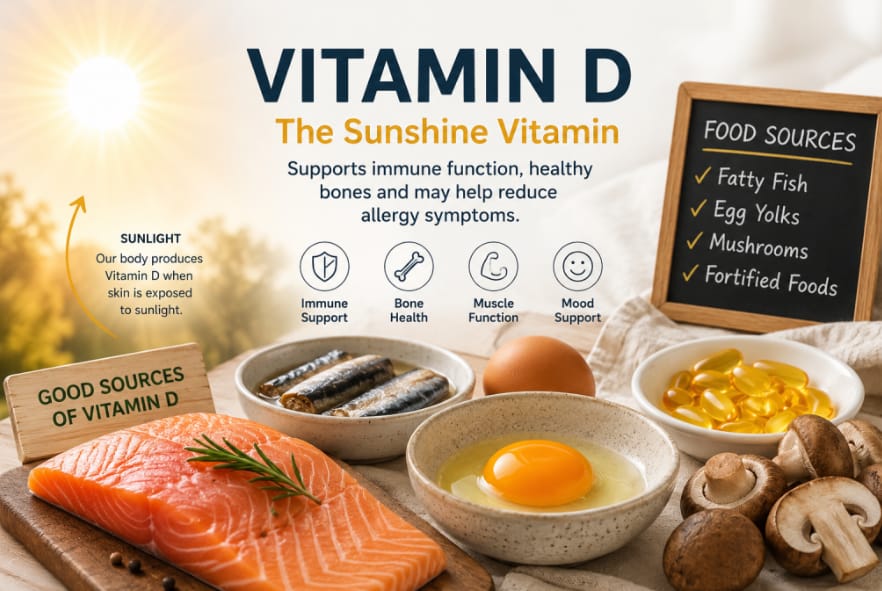
Low vitamin D levels have been associated with several allergic conditions, including atopic dermatitis (eczema), allergic rhinitis, asthma and chronic urticaria (hives).
However, an association does not necessarily mean that vitamin D deficiency caused the allergy.
A 2026 umbrella review, combining evidence from 14 previous reviews involving more than 66,000 participants, found that vitamin D supplementation may improve symptoms or disease severity in allergic rhinitis, atopic dermatitis and chronic urticaria, although the strength of evidence varied between conditions. [1]
The same review did not find significant benefits from vitamin D supplementation for asthma or food allergy overall.
What does this mean in practice?
Vitamin D deficiency should be recognised and treated, particularly in growing children.
But taking increasingly large doses of vitamin D is not a universal treatment for allergies. When supplementation is required, the goal should be to maintain adequate vitamin D status rather than trying to “boost” the immune system.
2. Omega-3 for Allergies
Omega-3 fatty acids, particularly EPA and DHA found in oily fish, have attracted considerable attention because of their role in regulating inflammation.
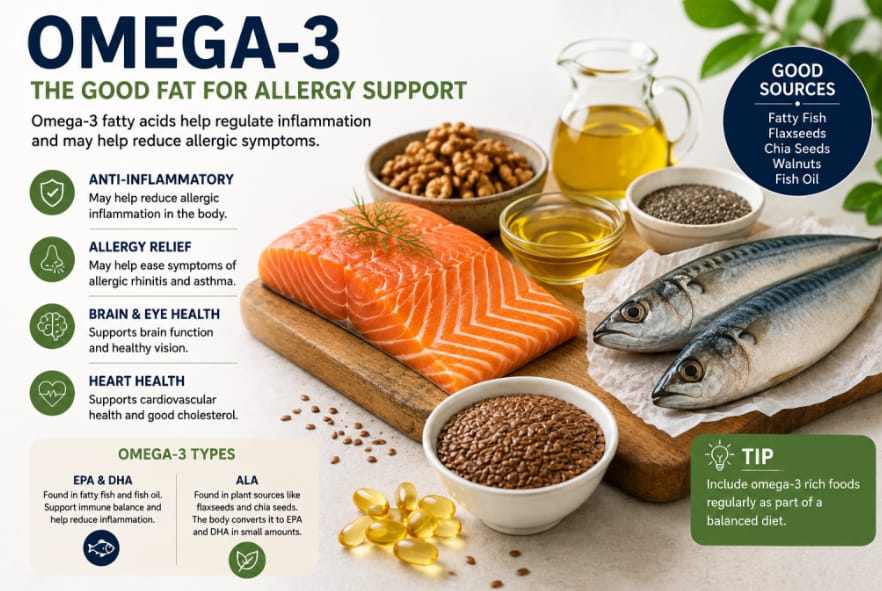
They are involved in the production of specialized pro-resolving mediators, molecules involved in regulating and resolving inflammatory responses.
This has led researchers to investigate whether omega-3 intake during pregnancy and early childhood might influence the subsequent development of eczema, food allergy, wheezing or asthma.
Some studies and meta-analyses have reported encouraging findings, particularly with omega-3 supplementation during pregnancy and certain food allergy or sensitisation outcomes.
However, the results are not consistent enough to recommend omega-3 supplements routinely for allergy prevention.
The European Academy of Allergy and Clinical Immunology (EAACI), for example, currently makes no recommendation for or against fish-oil supplementation during pregnancy, breastfeeding or infancy specifically for preventing food allergy. [2]
What does this mean in practice?
Fish remains an excellent component of a balanced diet, providing protein, omega-3 fatty acids and other important nutrients.
But eating nutritious foods containing omega-3 and taking concentrated omega-3 supplements as an allergy treatment are not the same thing.
3. Probiotics for Allergies
The gut microbiome is one of the most exciting areas of modern allergy research.
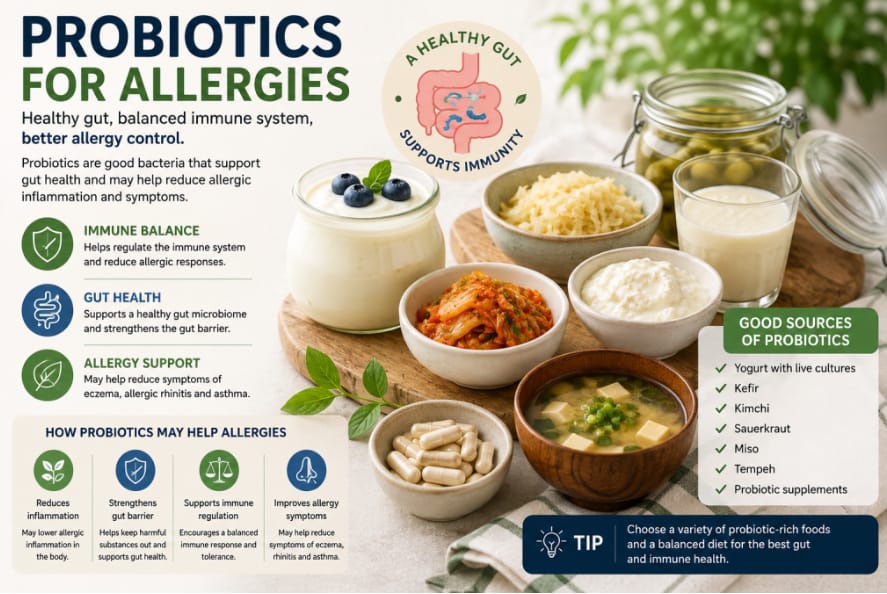
The trillions of microorganisms living in our gut interact continuously with our immune system. They can influence intestinal barrier function, immune regulation and the development of oral tolerance, our immune system’s ability to recognize harmless substances, including foods, without unnecessarily reacting against them.
This has naturally generated enormous interest in probiotics.
Recent systematic reviews suggest that certain probiotics may produce modest improvements in children with atopic dermatitis. However, results vary considerably between studies.[3]
One major problem is that “probiotics” are not one treatment.
Their effects depend on factors such as the bacterial strain, combination of strains, dose, timing and duration. A positive clinical trial involving one particular probiotic therefore cannot automatically be applied to every commercial product labelled “probiotic”.
Similarly, EAACI currently makes no recommendation for or against probiotics, prebiotics or synbiotics for the prevention of food allergy because the evidence remains uncertain.[5]
What does this mean in practice?
Rather than focusing solely on probiotic supplements, it may be more useful to consider the wider dietary environment.
A varied diet containing fiber-rich foods provides nutrients for our existing gut microorganisms and supports a diverse nutritional environment.
A probiotic supplement should not be viewed as a shortcut to a healthy microbiome.
4. Iron Deficiency and Allergies
Iron is probably the most surprising nutrient on this list.
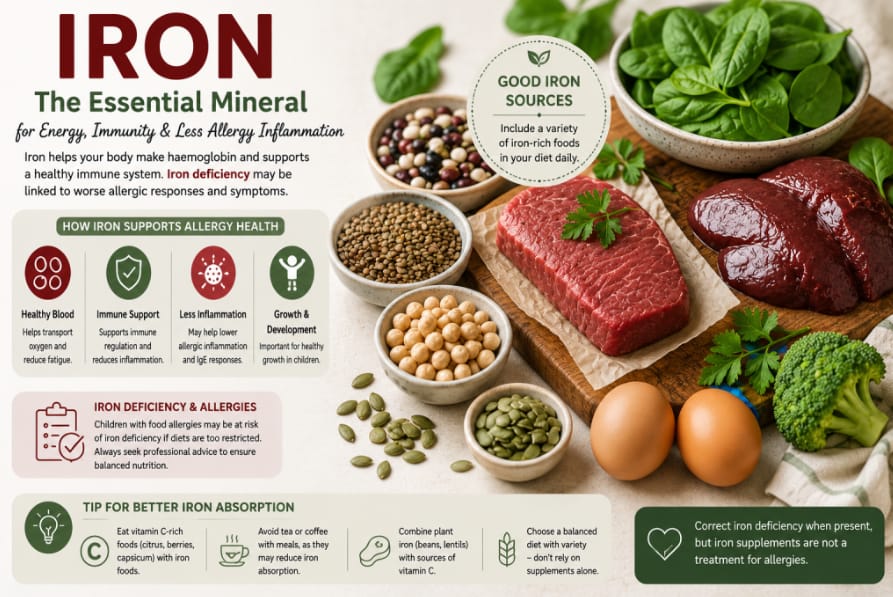
Most of us associate iron with haemoglobin and anaemia. But iron is also involved in numerous aspects of immune regulation.
In 2026, an EAACI Task Force published an extensive report examining the relationship between iron physiology and allergic diseases. [4]
The report highlights emerging evidence that insufficient iron availability may disrupt normal immune regulation and favour Type 2 inflammation, the broad immune pathway involved in many allergic diseases. Iron availability may also influence IgE responses and immune cells such as mast cells and eosinophils.
Researchers have also observed higher rates of iron deficiency among people with allergic diseases.
However, we need to be careful about what this means.
Iron deficiency does not automatically cause allergies, and iron supplements are not an established treatment for allergic disease.
There is also a more practical connection between iron and allergies, particularly in children.
Children with food allergies may sometimes have several foods removed from their diets. If major food groups are unnecessarily restricted, or suitable nutritional replacements are not provided, nutritional deficiencies can develop.
The 2024 EAACI food allergy management guideline specifically emphasises maintaining nutritional adequacy and avoiding unnecessarily restrictive diets in children with food allergies. [5]
What does this mean in practice?
Children on restrictive diets should have their overall nutrition considered, not simply the allergen being avoided.
Iron deficiency should be identified and appropriately treated when present. But iron supplements should not be given indiscriminately simply because someone has eczema, asthma, allergic rhinitis or food allergy.
So, Should You Take Supplements for Allergies?
The answer is more complicated than a simple yes or no.
Vitamin D, omega-3 fatty acids, probiotics and iron all have fascinating relationships with our immune system. Research may eventually allow us to use nutrition much more precisely in preventing or managing allergic diseases.
For now, however, the most important principle is:
Food first. Correct genuine deficiencies. Use supplements when there is a reason, not simply because someone has an allergy.
A balanced and diverse diet remains more important than filling a cabinet with supplements.
This is particularly important for children with food allergies. Eliminating a confirmed allergen may be necessary, but unnecessarily removing multiple foods can create nutritional problems without improving the underlying allergy.
Supplements can sometimes be useful. But they should complement appropriate allergy management, and not to replace it.
Disclaimer: This article provides general educational information and does not replace an individual medical assessment. Vitamins and supplements should not be used as a substitute for appropriate allergy treatment. Speak to your doctor before starting supplements, particularly for children or if a nutritional deficiency is suspected.
Dr Wong Yee Ming
Consultant Paediatrician | Allergy and Clinical Immunology
Published: Sept 2026
Last reviewed: Sept 2026
References
- Hou Y, Zhang Q, Xu X, Zhao G. Effects of vitamin D levels and vitamin D supplementation on allergic diseases: an umbrella review. Frontiers in Allergy. 2026.
- Halken S, Muraro A, de Silva D, et al. EAACI guideline: Preventing the development of food allergy in infants and young children (2020 update). Pediatric Allergy and Immunology. 2021.
- Arif MI, Dai Q, Ru L. Probiotics for pediatric atopic dermatitis: A systematic review and meta-analysis of randomized controlled trials. Journal of Allergy and Clinical Immunology: Global. 2026.
- Roth-Walter F, Agache I, Cabanillas B, et al. Iron Physiology and Its Impact on Atopic Diseases: An EAACI Taskforce Report. Allergy. 2026.
- Santos AF, Riggioni C, Agache I, et al. EAACI guidelines on the management of IgE-mediated food allergy. Allergy. 2024.
Disclaimer: This article is intended for educational purposes and should not replace individual medical assessment, diagnosis, or treatment. Please consult your healthcare professional for personalised advice.
Dr Wong Yee Ming (allergy@drwongyeeming.com) is a content creator under the Newswav Creator programme, where you get to express yourself, be a citizen journalist, and at the same time monetize your content & reach millions of users on Newswav. Log in to creator.newswav.com and become a Newswav Creator now!
The User Content (as defined on Newswav Terms of Use) above including the views expressed and media (pictures, videos, citations etc) were submitted & posted by the author. Newswav is solely an aggregation platform that hosts the User Content. If you have any questions about the content, copyright or other issues of the work, please contact creator@newswav.com.