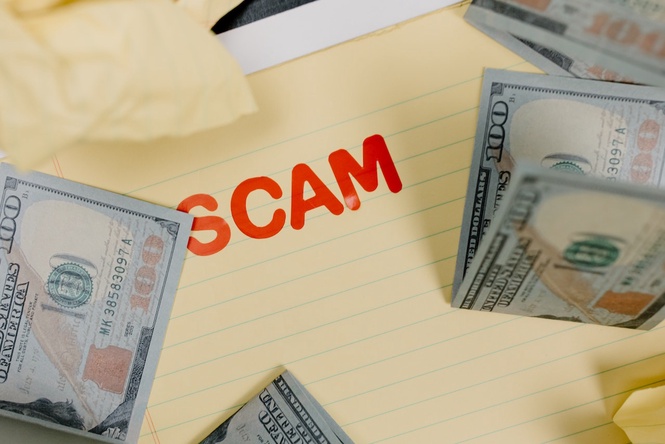
A few days ago, I posted an article about online scams that hackers commonly use. This article is following up on that, letting you know of the latest online scams hackers use to trick most Malaysians into giving up their hard-earned cash.
The year 2022 is well underway, and it's time to get ready for the next big wave of cybercrime. In this edition, we take a look at some of the most popular new online scams that hackers are using today. I know some of you may have heard or experienced the scams first-hand. On that note, I hope this information will help you to identify the next red flag.
Online personal loan scams
If you're looking for a personal loan, there are plenty of legitimate banking sites that can help. The problem is that scammers have found ways to trick users into giving out their information and money.
Here's how it works: The hacker will create an email address and sign up for one of these websites with a fake name, like "Ahmad Albab" or something similar. Then they'll send out emails telling people they've been approved for loans of up to RM10k - but only if they give out personal details such as credit card numbers or IC numbers. I've seen many of these emails before. And the red flag here is simple - I never applied for any loans. Therefore I know it is a scam.
Having said that, this is a common scam and it's easy to avoid. If you get an email from a website offering you money, double-check the address to see if it's legitimate. If it isn't, then don't reply. A good point is to see the domain name. Banking sites don't use Gmail. And check the domain spelling as well. If it shows cimbclickhere.com.my, that doesn't sound right.
Job offers scam
We see these kinds of scams lately, don't we? Even I get these kinds of messages on my phone almost on weekly basis, especially on Apple's iMessage platform. I get those from Lazada, Shopee, TikTok and many others who claim that they are the recruitment manager for those companies. They send enticing messages with lucrative "daily salary" as a side hustle. No thank you.
How it works is that people are asked to pay an up-front fee for the offered jobs. The scammer will ask for money to be sent directly to them before the job is given. Something like a pre-approved employment fee with their company.
Another method is that the scammer will say that they need the money before they can start sending you the tasks and that it’s a one-time fee. This is not true, as most jobs are paid after completion and banked in directly to your bank account, not the other way around.
The scammer will also say that they’re a legitimate business, even if you can’t find any information about them online. They might use fake documents or send you a contract to sign and then ask for payment before sending over the tasks. This is not how it works with legitimate businesses. So when you come across these red flags, just bail out.
Fake LHDN scams
Raise your hand if you got calls from "LHDN" before. *I'm raising mine*
The scam works like this: You get a call from someone claiming to be from the Inland Revenue Board (IRB). They say there's a problem with your taxes or some outstanding payments and they need you to send them money via online banking or cash deposit as soon as possible. That is probably a scam. The first red flag, the IRB (LHDN) use a mobile number to call you. This is obviously a scam because who in the right mind would call you from an official government body using a mobile number? The second red flag, they use an automated voice recording to "answer" your call. No matter what number you pressed during the automated process, it will always end up with the person in charge, in this case, the scammer.
The problem is that most people who fall for these fake IRB scams are elderly people who have no idea what's going on or how online banking works. So when they receive a call saying that their name has been blacklisted or under IRB investigation, what do they do? They unknowingly hand over their cash to scammers.
This is why it's so important to know the warning signs. If you ever get a call from someone claiming to be from the IRB and saying there's a problem with your taxes, hang up immediately. The IRB will never contact you via phone about this—they only send official letters.

Overseas lover scams
The overseas lover scam is also a common one, and the name says it all. It’s basically a way for scammers to swindle their victims into believing that they have been in a relationship with someone from another country. And some are still gullible to fall for this.
The scammer will pretend to be in love with you and after a while of being "in the relationship", they will ask you to send money or gifts as proof of your love to them. Another way is to tell you that they are having some problems with their bank and that they need your help by sending a certain amount to help unfreeze their bank account. After receiving the money, the scammer will disappear without saying goodbye. Familiar? Yes, it happened many times before.
If you fall victim to this type of scammer, you can talk about it with friends/family members who can provide some support. Breaking up from a relationship is hard. Breaking up in a fake relationship and losing your money in the process is harder. And there's almost no point to make a police report about this because nothing much can be done. So please be aware of these online lovers' scam and watch out for one simple red flag. When your "online lover" asks for lots of money due to some problem or payments, get the h*ll out.
Fake auditor scam
A fake auditor scam is when someone sends you an email or text message saying they have been hired by a company to conduct an audit of your business and they need to send someone in to do this. They will tell you that they will pay for their travel expenses, but the only way they can get paid is if they can prove that there are serious issues with your business.
The scammer's goal is for you to give them access to all kinds of confidential information about your company so that they can make this claim during their investigation process. Once inside, these "auditors" may try and steal money from your accounts (or worse: shut down operations), all while pretending nothing happened.
The best way to protect yourself from this type of scam is to simply never respond to these emails. If someone sends you an email asking for your confidential information, let them know that you will only talk with them by phone or in person. This way, they cannot trick you into giving away any sensitive information over email.
Make sure to be fully aware of the new scams that scammers use in 2022
In 2022, cybercriminals will continue to either use the same techniques that have been working for years or simply come up with new ones. They will continue to create fake websites, and emails and spread malware through social media sites like Facebook, Twitter and Instagram. They also use email and phone numbers to steal your personal information.
If you're not sure how to protect yourself from scammers in 2022, here are some tips:
- Make sure you're using the latest security software on all of your devices - laptops/desktops/tablets/phones etc. This means making sure they're up-to-date with patches. If there's one thing I've learned over my decade-long career in IT is this; better be extra safe than sorry.
- Be careful when using social media sites like Facebook or Twitter because that's where scammers find their target. It takes only seconds before something goes wrong which could lead to identity theft. So make sure your passwords are changed regularly. I would also advise for you to activate the 2-factor authentication (2FA) for your social media accounts. Each social media accounts have its own 2FA settings so go ahead and set them up. This will increase security access to your social media profiles.
- Don't approve friend requests from someone who you think is already on your friends list. This happens to me on Facebook. I already have that person on my friends list but to get a request from the same person again is rather fishy. Then I found out that someone stole his identity pretending to be him and asking me to lend him some money. Thank God I found out quick.
- Install apps like Truecaller or Whoscall or Hiya on your phones. These are community-based caller identification apps that can identify the caller even if you don't have their number saved on your phone. If you receive a call which you think is a scam, you can have it blocked and shared to its cloud database. I have Truecaller installed on my phone and it has saved me from scam calls many times. It is free to use so go ahead and install them.
- Here's a useful tip. If you receive a call from a so-called legitimate phone number, listen to the other people or the background noise. Real phone numbers or calls will sound loud and clear without any delay in the conversation. Fake ones will sound a little faint with a 1-2 seconds delay in response. Eg: You finished your "hello" and you receive their reply 1-2 seconds later. This means that they are using VoIP calls such as Skype or something similar to that. The scammers can assign any phone number on the VoIP app, therefore masking their real identity. When this happens, hang up.
Conclusion
As you can see, there are a lot of new scams that hackers use in 2022. Some of them are easy to spot and avoid, others may be more difficult but still worth the effort to avoid them. For example, identity theft is still a big problem and many people do not realize they could be at risk until after they have been scammed by someone who uses fake information about themselves or their family members. Stay vigilant and keep yourself and those closest to you in the loop about these scams. As they say, sharing is caring.
Kamarul Azwan is a content creator under the Newswav Creator programme, where you get to express yourself, be a citizen journalist, and at the same time monetize your content & reach millions of users on Newswav.
Log in to creator.newswav.com and become a Newswav Creator now!
Newswav is solely an aggregation platform and hosts the content. The views expressed and content above including media (pictures, videos, etc) were provided by the author. If you have any questions about the content, copyright or other issues of the work, please contact Newswav.