
When everyday citizens lay their head on the pillow after a long week of work, they take comfort in an unwritten social contract. For millions of Malaysian civil servants the teachers grading late-night papers, the nurses pulling double shifts, and the administrative officers keeping local governance running that contract is embodied in institutional custodianship. Pension funds like the Retirement Fund (Incorporated), or KWAP, exist precisely to safeguard their future, quietly compounding hard-earned contributions through prudent, high-conviction investments.
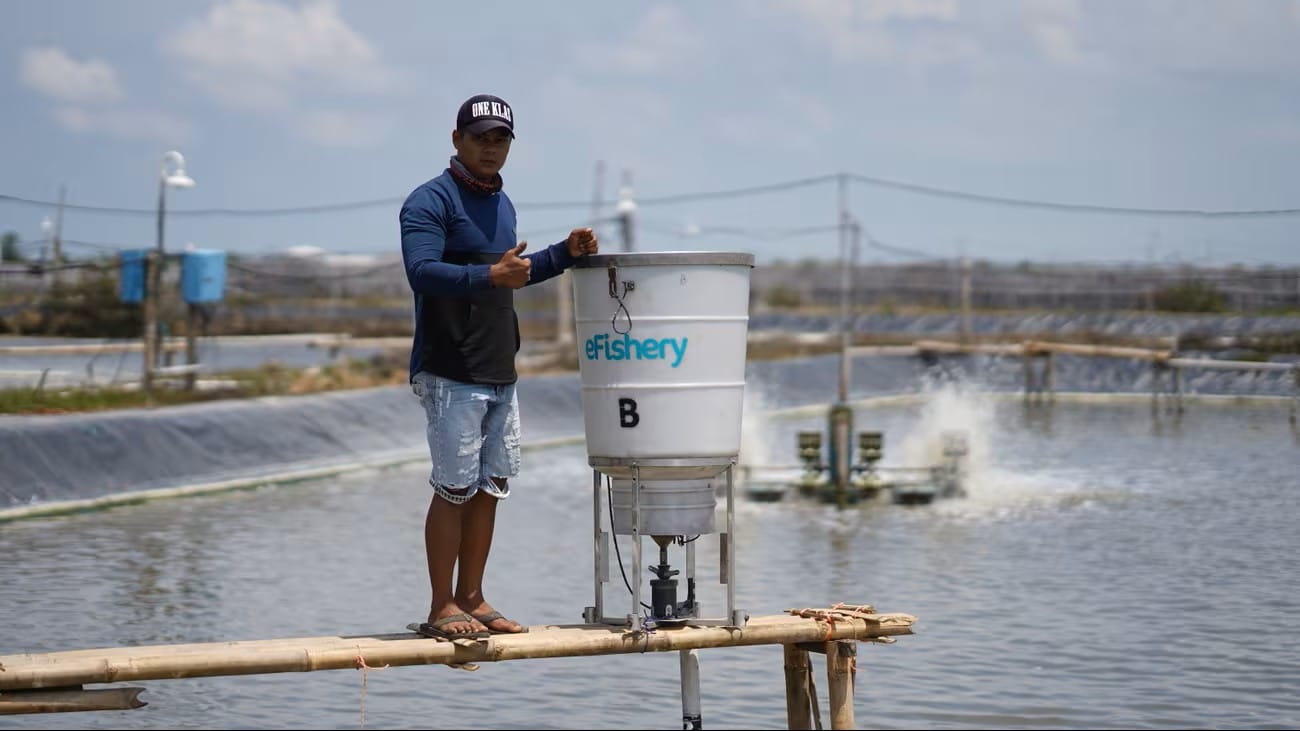
Yet, every now and then, a seismic disruption in the global financial landscape reminds us how fragile even the most heavily fortified financial walls can be. In mid-2023, the tech world was buzzing with enthusiasm over an extraordinary Southeast Asian success story: an Indonesian agritech company called eFishery. What began as a humble attempt to revolutionize rural aquaculture through smart auto-feeders quickly transformed into a unicorn darling, eventually securing over US$315 million in capital funding.
When KWAP joined a star-studded global syndicate to invest RM163.4 million (approximately US$47.7 million) into eFishery’s Series D round, it looked like a forward-thinking play. The investment aligned with modern ESG values, regional food security goals, and high-growth technology. However, fast-forward to recent parliamentary disclosures, and that golden dream spiraled into a cautionary tale that has captivated headline readers across Malaysia and Southeast Asia.
As revelations surfaced detailing an elaborate, orchestrated internal fraud within eFishery, institutional investors across five major nations Malaysia, Singapore, Japan, the United States, and Indonesia found themselves navigating an unprecedented reputational and financial maze. While critics initially rushed to paint the loss in dramatic political strokes, a deeper social and economic analysis reveals something far more complex: a structural flaw in how modern venture capital assesses risk in the digital age.
Anatomy of an Engineered Deception
To understand how global behemoths were ensnared, one must look closely at how the deception was constructed. According to comprehensive forensic reports and legal documentation, eFishery was not merely a case of a bad business model failing in a tough market; it was a systematic, top-down manipulation of corporate realities.
Subsequent investigations by FTI Consulting and internal whistleblower disclosures revealed that eFishery’s senior management had allegedly inflated company revenues by nearly US$600 million. While the company reported healthy double-digit millions in profit on paper during 2023 and 2024, actual operations were bleeding tens of millions in net losses. The illusion was sustained through a maze of fabricated invoices, fictitious customer networks, and transactions routed through entities indirectly owned by corporate insiders.
What makes this incident particularly striking to financial analysts is that the investment was not made blindly. As confirmed in a parliamentary written reply, KWAP’s decision followed a multi-tiered due diligence framework. It underwent internal committee evaluation, independent third-party market assessments, and most importantly, validation by certified international audit firms. KWAP sat alongside global giants like Singapore’s Temasek Holdings, Japan’s SoftBank Vision Fund, US-based 42XFund, and Indonesia’s Northstar Group.
If world-class auditors and institutional funds with billions under management could all be misled simultaneously, the issue transcends a single board meeting in Kuala Lumpur or Jakarta. It exposes a systemic blind spot in conventional corporate auditing. Standard audit procedures are designed to verify accounting consistency, but they struggle to catch coordinated, falsified paper trails when executive leadership intentionally builds an artificial ecosystem of receipts and records.
Social and Cultural Pressures in the Tech Gold Rush
From a broader sociological perspective, the eFishery fallout highlights the psychological tension within Asia’s rapidly evolving startup scene. Over the past decade, venture capital in Southeast Asia has been driven by a relentless "growth at all costs" ethos. Founders are routinely lionized in media profiles as visionary disruptors, creating immense cultural pressure to maintain explosive year-on-year metrics.
In the agritech sector, this pressure is magnified by a romanticized narrative: technology bridging the gap for impoverished rural farmers. When a company claims to empower thousands of fish and shrimp farmers through smart automation, it hits a sweet spot for institutional investors seeking both financial returns and impactful social stories.
However, when rapid growth targets collide with operational bottlenecks in rural logistics, a dangerous incentive structure can emerge. As detailed in industry case studies on financial transparency in business, when corporate governance fails to keep pace with hyper-valuation, executive culture can shift from problem-solving to status preservation.
When the truth broke, the legal consequences were swift. Co-founder Gibran Huzaifah was stripped of his position, tried, and subsequently sentenced to nine years in prison by a court in Bandung for embezzlement and money laundering. Yet, while judicial enforcement delivers accountability after the fact, it cannot instantly erase the lingering feeling of shock shared by early backers who believed they were building a sustainable future.
Navigating Political Narratives vs. Institutional Reality in Malaysia
In Malaysia, news of the investment loss predictably triggered intense public scrutiny. In an era where political commentators quickly draw parallels to past mega-financial sagas, some critics attempted to label the loss as a political failure of the current administration.
However, objective institutional analysis paints a distinctly different picture. Financial columnists discussing the eFishery case and political accountability note crucial distinctions between political interference and external commercial fraud. Under the Retirement Fund Act 2007, KWAP’s investment decisions are executed independently by its Investment Panel and professional management, rather than directed by the Prime Minister or Minister of Finance.
Furthermore, context and scale matter significantly when assessing institutional health. The RM163.4 million allocation represented roughly 2.51% of KWAP's specific venture stake in that round, forming a tiny fraction of its overall portfolio. Addressing the Dewan Negara, Prime Minister Datuk Seri Anwar Ibrahim defended KWAP’s overall resilience, emphasizing that KWAP recorded RM12.9 billion in profit, putting the agritech setback into proper perspective while reiterating that legal recovery processes were underway.
Simultaneously, Malaysian democratic institutions have demonstrated active oversight. The Malaysian Anti-Corruption Commission launched a formal probe into the investment processes, while the Parliamentary Public Accounts Committee evaluated an inquiry into KWAP’s risk controls. This active multi-agency response reflects a healthy, functioning democratic framework determined to turn an international misfortune into stronger domestic safeguards.
The Evolution of Due Diligence: Lessons for the Region
If the eFishery episode offers one silver lining, it is the imperative for systemic reform across Southeast Asia's capital markets. Prime Minister Anwar Ibrahim highlighted a vital lesson during parliamentary deliberations, warning that institutions cannot blindly rely on external audit firms alone.
Moving forward, institutional investors across Asia are shifting toward forensic technology due diligence. Rather than merely inspecting audited balance sheets once a year, funds are beginning to implement real-time, AI-driven transaction verification and direct supply-chain audits. In the case of agritech, this means physically cross-referencing satellite IoT data from smart feeders with actual bank statements and verified local farm yields before deploying capital.
For Malaysia, the experience strengthens KWAP’s long-term maturity as a global institutional player. A fund that never takes calculated risks in high-growth sectors will inevitably fall behind inflation, while a fund that learns from complex global shocks becomes far more resilient. By confronting this challenge openly in Parliament, investigating through the MACC, and coordinating with international legal consortiums, Malaysia is setting a standard for transparent crisis management.
What Do You Think? I’d Love to Hear Your Opinion in The Comments Section.
At its core, the eFishery narrative is not a story of defeat, but a story of learning in a rapidly changing global economy. Innovation inherently carries risk. When we encourage our public institutions to modernize, seek higher yields, and participate in transformative regional ventures, we must also recognize that no global market is entirely immune to sophisticated deception.
What defines the character of a nation’s financial system is not whether it ever encounters a storm, but how it steers the ship once the fog clears. Malaysia’s response marked by parliamentary accountability, active investigative oversight, and a calm, transparent put-in-perspective assessment demonstrates institutional maturity. The civil servants whose futures are entrusted to KWAP can take heart in knowing that their fund remains fundamentally strong, highly profitable, and actively refining its defenses against tomorrow's challenges.
As Southeast Asia's tech ecosystem grows up, the lessons learned from Jakarta to Kuala Lumpur will pave the way for smarter investments, tighter safeguards, and an unwavering commitment to integrity.
AM World (tameer.work88@gmail.com) is a content creator under the Newswav Creator programme, where you get to express yourself, be a citizen journalist, and at the same time monetize your content & reach millions of users on Newswav. Log in to creator.newswav.com and become a Newswav Creator now!
The User Content (as defined on Newswav Terms of Use) above including the views expressed and media (pictures, videos, citations etc) were submitted & posted by the author. Newswav is solely an aggregation platform that hosts the User Content. If you have any questions about the content, copyright or other issues of the work, please contact creator@newswav.com.