FILIPINO school children are one step closer to receiving free, nutritious meals as the bicameral conference committee approved the proposed National Children’s Nutrition Act.
The Senate and House of Representatives bicameral conference committee reconciled the provisions of Senate Bill 2272 and House Bill 9466, which seek to repeal and replace Republic Act 11037, or the Masustansyang Pagkain para sa Batang Pilipino Act.
The reconciled measure seeks to establish a National Children’s Nutrition Program that adopts a life-stage approach to addressing child malnutrition, hunger, poverty and the country’s education crisis.
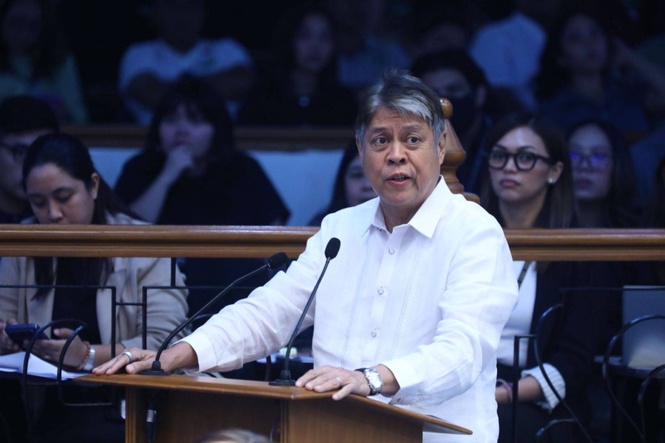
“This is a promise kept because we made sure that this measure was pushed forward and fought for. Poverty should never prevent our children from having access to sufficient and nutritious food. No Filipino child should have to go to school hungry and unable to learn because of inadequate food,” Pangilinan said in a statement on Wednesday.
“Malnutrition and undernourishment are not merely health issues. They are also issues of education, poverty, and equal opportunities. When a child does not get enough nutrition, it affects their growth, cognitive development, ability to learn, and chances of having a better future,” he added.
Pangilinan said that providing nutritious meals to children is an investment in the country’s future, emphasizing that efforts to fight hunger and malnutrition must go hand in hand with initiatives to close learning gaps and break the cycle of poverty.
The veteran lawmaker made the free breakfast program a legislative priority upon returning to the Senate last year, immediately filing Senate Bill 219, or the Libreng Almusal Act.
The measure aimed to institutionalize a free breakfast program for all public school students from Kindergarten to Grade 12, as well as children in daycare centers nationwide.
It aims to ensure that children have access to nutritious food before starting their school day, helping them become better prepared to learn.
Pangilinan’s proposal also sought to support local agriculture by requiring the direct procurement of food products from Filipino farmers and fisherfolk.
This provision is anchored on his landmark Sagip Saka Act, or Republic Act 11321, enacted in 2019, which allows national government agencies and local government units to directly purchase agricultural and fisheries products from farmers and fisherfolk without public bidding, subject to the law’s requirements.
Pangilinan has pushed for the integration of local agricultural producers into government feeding programs, arguing that public spending on children’s nutrition can also provide farmers and fisherfolk with a reliable market for their produce.
His Libreng Almusal proposal was subsequently consolidated into Senate Bill 2272, or the Expanded National Nutrition Program Act, which formed part of the bicameral conference committee deliberations.
Under the reconciled measure, public school learners from Kindergarten to Grade 3 will receive universal school-based feeding regardless of their nutritional status, while undernourished learners in Grades 4 to 6 will get targeted feeding interventions.
The measure also expands nutritional interventions for young children, pregnant adolescent learners, and other vulnerable groups.
It further strengthens the participation of local farmers and fisherfolk in government feeding initiatives through direct procurement under the Sagip Saka Act.
Pangilinan urged both chambers of Congress to complete the remaining legislative requirements for the measure’s enactment, stressing that Filipino children could not afford further delays in receiving the nutrition and support they need.
“When every Filipino child is given the opportunity to grow up well-fed and healthy, with the ability to dream and learn, our entire nation will benefit. These children will contribute to nation-building and genuine progress and help ensure that no Filipino is left behind,” he said.