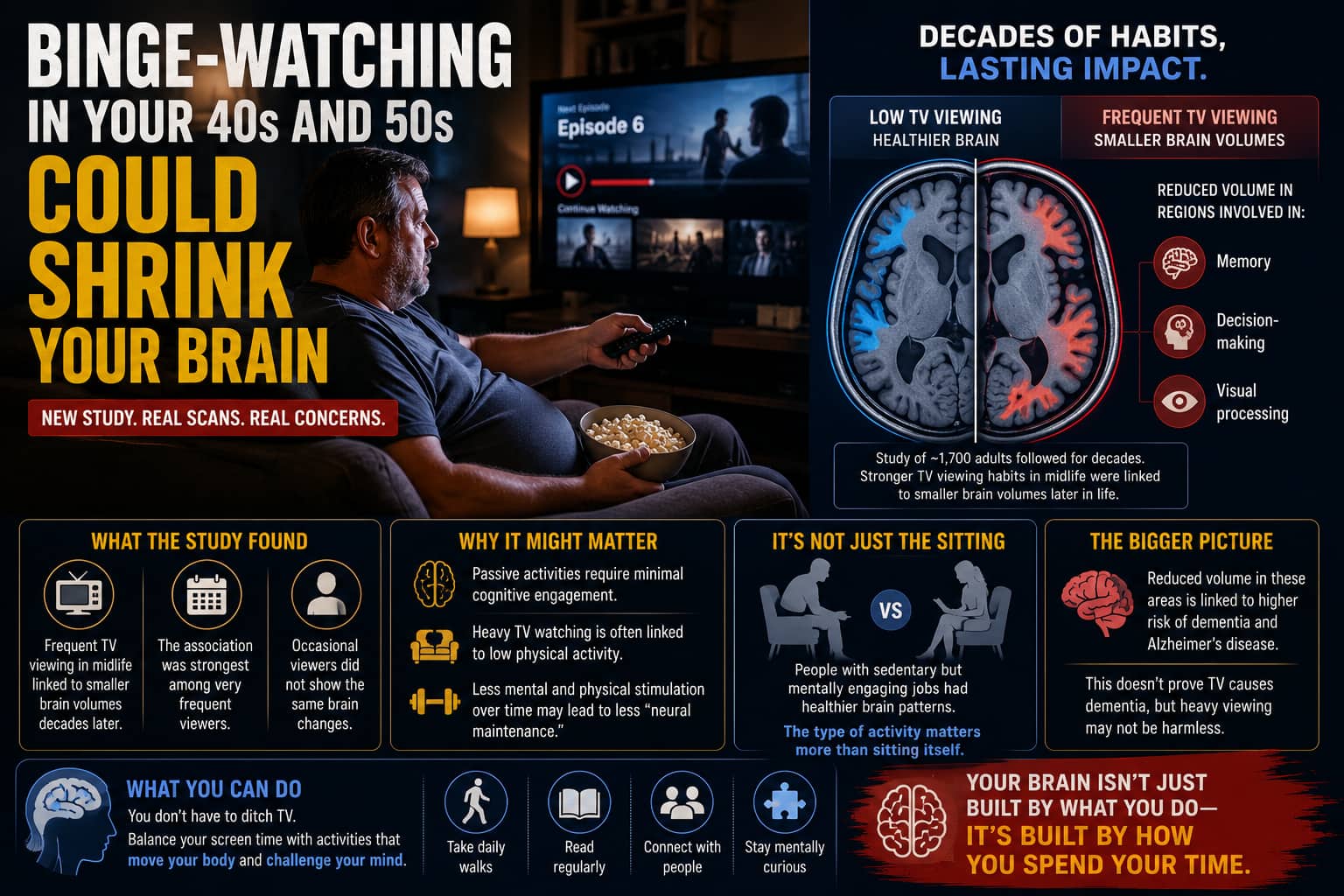
Television has been a punching bag for health researchers for decades. Studies have linked excessive TV watching to obesity, diabetes, cardiovascular disease, and premature death. Most of those findings centre on the sedentary behaviour that comes with sitting on a couch for hours. A new study adds a different concern: your brain might be physically shrinking.
Researchers studying about 1,700 adults found that frequent television viewing during midlife was associated with smaller brain volumes in regions involved in memory, decision-making, and visual processing. The brain changes were measured decades after the TV-watching habits were reported, suggesting that the effects accumulate over time.
This is not about watching one episode of a series after work. The association was strongest among people who watched television very often, essentially making it a primary leisure activity. Occasional viewers did not show the same patterns.
The mechanism is not entirely clear. Television watching is a passive activity that requires minimal cognitive engagement compared to reading, socializing, or problem-solving. Some researchers have suggested that replacing mentally stimulating activities with passive consumption over long periods may lead to less neural maintenance, essentially a "use it or lose it" dynamic.
There is also the physical inactivity factor. Heavy TV watchers tend to be less physically active, and exercise is one of the strongest known protectors of brain health. Separating the effect of the screen itself from the effect of sitting still for hours is difficult, and this study did not fully disentangle the two.
Interestingly, people who spent long hours seated at mentally engaging jobs showed healthier brain patterns, suggesting the type of activity during sedentary time matters more than the sitting itself. The brain regions affected are notable. Reduced volume in areas tied to memory and executive function has been associated with higher risk of dementia and Alzheimer's disease later in life. This does not mean watching TV causes dementia. But it does suggest that heavy viewing during the decades when brain health is being established for old age may not be harmless.
The timing of the study is relevant because streaming platforms have made it easier than ever to watch for extended periods. Auto-play features, entire seasons released at once, and content libraries designed to maximize viewing time have all contributed to a culture where watching four or five hours of television in a single sitting is considered normal.
For people in their 40s and 50s, the findings are a nudge rather than an alarm. Nobody is saying you need to throw out your TV. But if your primary evening activity is settling in for hours of streaming, mixing in a walk, a book, or a conversation might be worth considering.
Have you noticed your screen time creeping up without you really planning it?
Ronny M (ronny76netstuff@gmail.com) is a content creator under the Newswav Creator programme, where you get to express yourself, be a citizen journalist, and at the same time monetize your content & reach millions of users on Newswav. Log in to creator.newswav.com and become a Newswav Creator now!
The User Content (as defined on Newswav Terms of Use) above including the views expressed and media (pictures, videos, citations etc) were submitted & posted by the author. Newswav is solely an aggregation platform that hosts the User Content. If you have any questions about the content, copyright or other issues of the work, please contact creator@newswav.com.