In 1988, Congress enacted a law to protect the privacy of video rentals after a journalist published details of Supreme Court nominee Robert Bork’s movie rental history during his Senate hearings. Nearly four decades later, the court is weighing how the Blockbuster-era statute fits into the modern age of digital commerce.
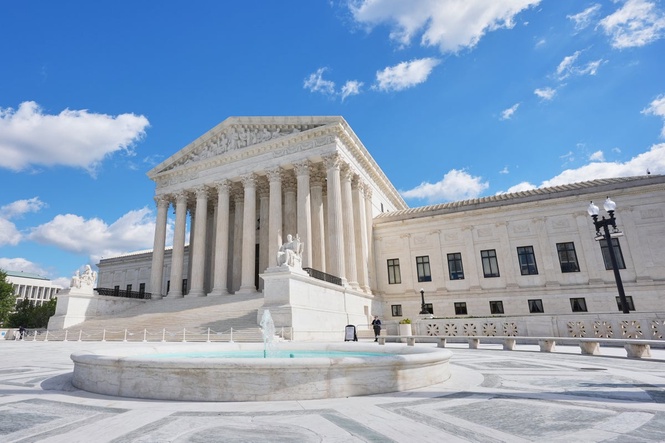
The Supreme Court heard arguments Wednesday in a case exploring the extent to which companies from an array of sectors are obligated to protect the privacy of customers’ video-viewing data. A ruling could resolve a lower-court split over how a consumer qualifies for the law's protections.
Consumer advocates say the Video Privacy Protection Act of 1988 was broadly written to adapt to inevitable advances in technology and safeguard consumers' personal information.
Critics of the law view it as a relic that plaintiffs' lawyers are trying to exploit in a way that Congress could not have anticipated before the internet revolutionized commerce. They are urging the justices to reject an interpretation of the law that deprives companies of a vital source of revenue from targeted online advertising.
The current case was brought by a customer who subscribed to Paramount Global’s online newsletter to view videos on its website 247Sports.com. Michael Salazar claims Paramount violated the law by disclosing his video-watching history to Facebook without his consent, allowing companies to use his personal information to create and display targeted advertising.
Justice Elana Kagan, who said the language of the statute is “relatively clear," stressed that it is easy for companies to obtain consent from customers to use their digital data.
“Going forward, you have two very simple solutions," Kagan told Paramount lawyer Paul Clement. “One is to get consent. Easy enough. People do it every day. And the other is to stop selling people's private information. Take your pick.”
“Yeah, or put everything behind a paywall. That would be great,” Clement responded sarcastically.
“Not the same thing,” Kagan said.
“Well, I think that's one way that people would try to deal with this,” Clement said.
Congress passed the law a year after a video store clerk provided a Washington City Paper reporter with a list of 146 movies rented by Bork, a federal appeals court judge at the time of his nomination by Republican President Ronald Reagan. The reporter's publication of “The Bork Tapes," on the eve of Bork's hearings in 1987 that ended with the Senate rejecting the nominee, fueled bipartisan outrage and led to the law's enactment.
Paramount argues that Salazar does not meet the definition of a “consumer” under the law to qualify for its protections.
Rulings in two appeals courts defined a consumer, under this law, as anybody who purchases, rents or subscribes to any good or service from a videotape service provider. Two other appeals courts adopted a narrower definition of consumer limited to goods and services with audiovisual content.
Only the Supreme Court "can resolve the split and bring uniformity to this important area of federal law,” Salazar’s lawyers wrote.
Paramount says Salazar has no basis to broaden the scope of the law. The company says the law merely prohibits video rental stores from disclosing customers' rental histories without consent.
“Salazar seeks to transmogrify it into a prohibition against targeted advertising on the Internet,” Paramount attorneys wrote.
Paramount says 247Sports is a sports news website that posts video clips with articles and photos free of charge.
“That is a completely different business from renting video cassette tapes. The VPPA does not address it,” company lawyers wrote.
Read MoreFox News is now predicting Democrats will take control of the House in midterms
Sally Rooney’s publisher withdraws her books from UK sale over support for Palestine Action
Supreme Court declines to hear the case of a lobster fisherman who opposes boat tracking
Netflix is laying off 6% of its workforce, in biggest round of job cuts at streaming giant in years
Israel trying to recreate Gaza in the West Bank, warns Jordan
Judge cites The Lorax as she stops Trump from ripping up trees at DC golf course