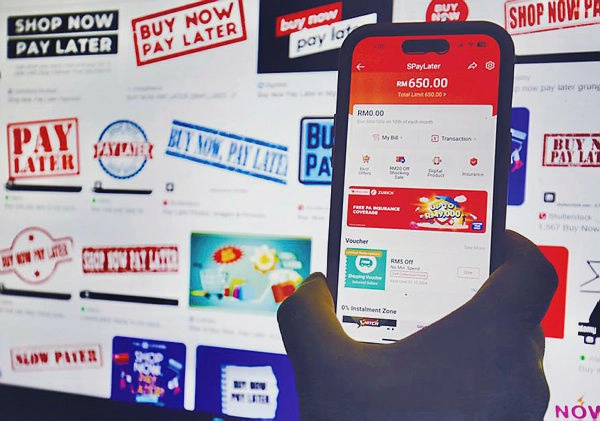
Economist warns that growing BNPL use for food and groceries may signal financial strain as Malaysians face stagnant incomes and rising living costs.
PETALING JAYA: The growing use of Buy Now, Pay Later (BNPL) to purchase food and groceries could signal that some households are struggling with stagnant income growth amid rising living costs, said an economist.
Universiti Teknologi Mara economist Dr Mohamad Idham Md Razak said the current trend suggested BNPL was increasingly being used to bridge the gap between income growth and household expenses, rather than simply to finance discretionary or lifestyle spending.
“When short-term credit is used to finance essential items rather than discretionary purchases, it indicates that some consumers are struggling with insufficient disposable income as they try to handle rising living costs.”
He said the trend warranted close attention, particularly if consumers continued relying on BNPL to meet their everyday needs.
Idham said young Malaysians were increasingly using BNPL as a cash-flow management tool, with irregular incomes, delayed salary cycles and rising monthly commitments prompting some consumers to spread even small purchases over several instalments.
“While BNPL offers temporary financial flexibility, prolonged dependence could expose users to repayment difficulties if income remains constrained,” he said.
The economist also expressed concern over the fact that 40% of BNPL users are aged 30 and below, saying this group was generally at an early stage of wealth accumulation and career development.
“Younger consumers typically have lower earnings, limited savings and shorter credit histories, making them more vulnerable to financial shocks.”
Idham said although BNPL could improve financial inclusion, excessive reliance among young adults could undermine their long-term financial resilience if repayment obligations continued to accumulate.
He said repeated reliance on BNPL for basic necessities could be a warning sign of financial distress, particularly when consumers experienced missed repayments or used multiple accounts to cover daily living expenses.
“Using BNPL for everyday necessities becomes a sign of financial distress when consumers rely on it consistently to purchase basic essentials because their regular income is insufficient to meet recurring expenses.”
He said policymakers should look beyond aggregate BNPL debt figures and examine users’ income profiles, debt-servicing capacity and repayment behaviour.
“Aggregate debt levels alone may underestimate financial vulnerability if a significant proportion of borrowers have low incomes or limited financial buffers,” he said.
On the proposed interest rate cap, Idham said it would be a positive consumer protection measure but should be complemented by broader safeguards.
“These should include affordability assessments before credit approval, mandatory reporting of BNPL obligations to credit reporting agencies, clear disclosure of fees and repayment schedules, limits on multiple concurrent BNPL facilities and stronger financial literacy programmes.
“Such measures would help protect vulnerable consumers while preserving access to legitimate short-term credit that supports responsible financial inclusion,” he said.
Previously, the Finance Ministry said the number of active BNPL account holders had risen to eight million in the first quarter of 2026, with outstanding balances reaching RM5.3 billion.
Overdue payments stood at RM181 million, or 3.4% of the total outstanding BNPL balance, while around 40% of users were aged 30 and below.