
BNPL could become a debt trap, particularly for consumers juggling several commitments at the same time.
PETALING JAYA: Buy Now, Pay Later (BNPL) affordability checks risk becoming a “box-ticking exercise” when providers cannot see a consumer’s total commitments across multiple platforms, the Federation of Malaysian Consumers Associations (Fomca) said.
Its CEO Dr Saravanan Thambirajah said consumers could hold BNPL commitments with several providers, with each assessing their ability to repay independently.
READ MORE: BNPL for food, groceries may signal household financial strain
READ MORE: BNPL debt hits RM5.3 billion, MOF monitors rising usage among younger consumers
“Provider A may see RM100 and consider it affordable. Provider B may see another RM150 and reach the same conclusion, while Provider C may approve another RM200.
“Each provider may independently conclude that the consumer can afford the credit while nobody sees that the consumer has accumulated hundreds or thousands of ringgit in commitments.”
Saravanan said Fomca believed the regulatory framework must eventually be able to identify a consumer’s aggregate BNPL exposure across providers. “Otherwise, affordability assessments risk becoming a boxticking exercise rather than genuine responsible-lending assessments.”
He added that BNPL could become a debt trap, particularly for consumers juggling several commitments at the same time.
However, he also cautioned against assuming that BNPL was predominantly used for basic necessities simply because the reported average transaction value was below RM100.
“An average transaction value of about RM100 does not necessarily mean consumers are borrowing only RM100, nor does it prove that BNPL is mainly being used for groceries, food or transport.”
He said consumers could make numerous small BNPL transactions in a month, adding that 10 transactions of RM100 would already amount to RM1,000 in spending commitments.
“The important figure is therefore not merely the average value of an individual transaction, but the consumer’s total outstanding BNPL commitments across all transactions and all providers.”
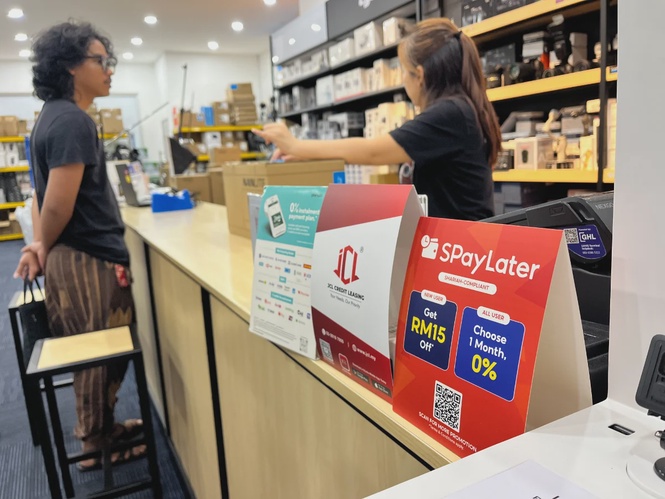
Saravanan said BNPL was available across online shopping platforms and physical retail outlets, allowing consumers to use the facilities for gadgets, mobile phones, electronics, fashion, hotels, travel and other products and services.
He added that some BNPL facilities had also evolved to include payment cards that could be used across a broad range of merchants.
“This significantly changes the consumer-protection question.” He also said Fomca was concerned that BNPL’s convenience could make the accumulation of debt “almost invisible” to consumers.
“Being able to pay an instalment is not the same as being able to afford the purchase.”
He said splitting the cost of a RM2,000 smartphone into smaller instalments did not change the fact that it remained a RM2,000 purchase. Saravanan also questioned whether an interest-rate cap would address risks associated with BNPL.
“Cheap debt is still debt. Zerointerest debt is still debt.”
He added that the more fundamental issue was how easily consumers could accumulate multiple credit commitments and how aggressively BNPL was being normalised as an everyday payment method.
He also said providers should also bear responsibility when consumers accumulated excessive debt through multiple platforms.
“Consumers have a responsibility to manage their finances prudently, but BNPL companies design the products, establish the credit limits, analyse customer behaviour, control the algorithms and advertise the facilities.”
Saravanan said providers should have systems capable of identifying when consumers were becoming financially overstretched.
He also called for more detailed BNPL data, including users’ total monthly spending, outstanding balances, number of transactions, spending categories and the number of providers used by each borrower.
“The government should not be reassured merely because the average transaction is about RM100. A small transaction does not mean a small debt problem.”