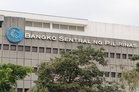
THE country’s external position is expected to remain under pressure through next year amid global and domestic uncertainties as the Bangko Sentral ng Pilipinas (BSP) sees a continued balance of payments (BOP) deficit. “The BSP projects the balance of payments (BOP) to remain in deficit in 2026–2027, reflecting a challenging global environment of subdued growth, geopolitical tensions, and elevated fuel and transport costs,” BSP said on Tuesday. The central bank, however, lowered its projected BOP deficit for this year to $9.2 billion from its previous estimate of $10.7 billion. It also said it expects a narrower deficit next year of $8.5 billion from the earlier projection of $11.0 billion. “These deficits highlight the shock from elevated oil and commodity prices, which continue to weigh on the country’s external position,” BSP said. The country’s BOP position ended in a $5.7-billion deficit last year, a reversal from 2024’s $609-million surplus. The BOP is a record of an economy’s transactions with the rest of the world. It consists of the current account, which covers trade in goods, services, and primary and secondary income (which includes overseas Filipino worker remittances); the capital account; and the financial account, which consists of investments from abroad. The current account deficit, however, is now expected to be wider at $19.1 billion instead of the previous $18.0 billion, while that for next year is lower at $19.4 billion from $19.7 billion. The central bank said that “elevated fuel and commodity prices remain the principal driver.” But BSP said imports growth is expected to compress in the second half of 2026, as firms and households adjust to slower domestic activity and high inflation.
Broken down, merchandise exports were expected to be higher at $67.2 billion and $69.9 billion for 2026 and 2027, respectively. This is higher than earlier projections of $65.3 billion and $67.9 billion for this year and next year. The outlook for goods imports was also raised to $139.7 billion from $135.3 billion. It also expects higher goods imports for next year at $143.9 billion from the previous $142.0 billion. The projection for services exports this year was slightly increased to $53.6 billion from $53 billion, while imports were revised downward to $39.6 billion from $39.9 billion. For next year, services exports were projected to rise to $55.7 billion from the earlier estimate of $54.6 billion, while imports were lowered to $42 billion from $42.2 billion. Travel receipts, which are under services exports, were projected to reach $9.2 billion this year from the previous estimate of $8.8 billion. The outlook for outsourcing revenues was also raised to $34.5 billion from $34.3 billion. For 2027, the projections for travel receipts and outsourcing revenues were increased to $9.6 billion and $35.5 billion, respectively, from the earlier estimates of $9 billion and $35.3 billion. The outlook for remittances this year and next year, meanwhile, was retained at $36.6 billion and $37.7 billion, respectively. As for the financial account, the 2026 projection is an outflow of $11.4 billion, up from $9.8 billion three months earlier. It is expected to hit $11.8 billion next year, also higher than the earlier projection of $10.6 billion. The net foreign direct investment forecast for this year was also lowered at $6.5 billion from $7.0 billion. It also trimmed its FDI projections for next year to $7.0 billion from the previous $8.0 billion. Net foreign portfolio investments, meanwhile, were retained at $1.8 billion for this year. The 2027 outlook was set at $3.0 billion, down from the previous $3.3 billion. Gross international reserves, lastly, were still seen ending this year at $104 billion and rise to $105 billion next year. BSP said GIR reserves are projected to remain above $100 billion in both 2026 and 2027, serving as a critical buffer against external shocks.
“Alongside services exports and remittances, these reserves will continue to support the economy’s adjustment to external pressures,” it added.