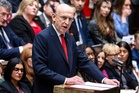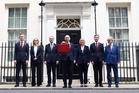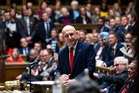
It is part of the modern Budget ritual to have the Institute for Fiscal Studies, the respected and impartial think tank, pour cold water on the fireworks let off the day before. The IFS did its duty today, pointing out that, behind the facade of a cautious, small-measures Budget, John Healey took more risks with the future than were immediately evident.
Helen Miller, the director of the IFS, was particularly stern about the chancellor’s decision to dip into the reserves to pay for the Defence Investment Plan – the first instalment of his welcome pledge to raise defence spending to 3 per cent of national income by 2030.
“This is categorically not what the reserves are for,” Ms Miller said. The reserves are for unforeseen contingencies that departments cannot absorb, she said, not for choosing to spend on new commitments. Combined with a reduction in the headroom against the fiscal rules, which was eaten up by higher cost of interest on the national debt, she warned that Mr Healey had weakened the Exchequer’s ability to withstand shocks.
Given that the world oil price was already above the range forecast by the Office for Budget Responsibility by the time Mr Healey stood to deliver the Budget speech, this thinning of the buffer against the unexpected seems reckless.
The extent of the stagnation in living standards has also only become evident now that the fog of Mr Healey’s selective statistics and overclaiming has cleared.
Between them, the Office for Budget Responsibility, the IFS and the Resolution Foundation paint a picture of the 2020s as the worst decade for living standards since the Second World War. In 2029, real household disposable income per person is expected to be just 1 per cent higher than it was in 2019.
As Ms Miller said, this is a “depressing” outlook that “no amount of temporary cost of living packages will fix”.
What is needed is a bolder approach to growth. That means a tax regime that encourages wealth creation and employment, and it means reversing the damage done by Britain shutting itself out of the European Union’s market.
Instead, we got a Budget of fiddly schemes and gimmicky complications, including what Ms Miller called the “bonkers” capital gains tax relief for business founders. The result is an even longer tax code and enough small print to suffocate all but the most determined entrepreneurial spirits.
Meanwhile, the chancellor in some of his morning-after interviews seemed to open up a difference of emphasis between him and the prime minister on the issue of Europe. On LBC, he was asked if Britain needed to go back into the EU single market to have stronger growth, and he replied: “I don’t actually accept that. I mean, it’s certain Brexit has hit our level of growth. It’s certainly hit our level of trade.
“But we had a referendum. We’re out of the European Union. The challenge for me now is how do we make the best of an economy which, this year, has proved remarkably resilient.”
Asked on GB News if he were in favour of Britain rejoining the EU if it helps the economy, he was blunter: “No – I’m in favour of accepting that we’ve got a Brexit decision.”
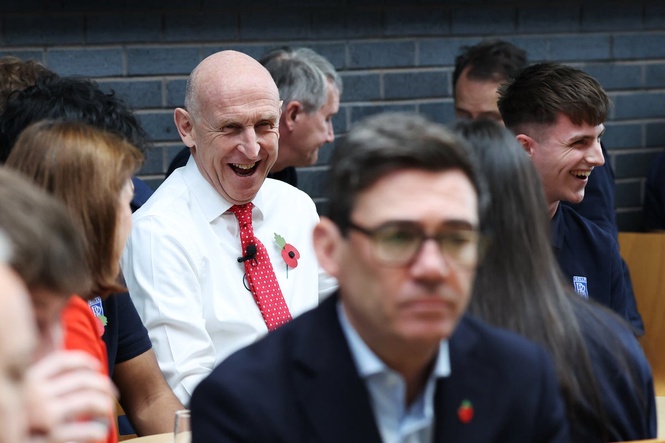
He said that “freedom of movement is not on the agenda, and certainly for this parliament, it’s ruled out”, which at least allows the possibility that it will be on the agenda after the next election. But the difference in tone between him and Andy Burnham, who said he wants an open and honest discussion of all options for our future relationship, including rejoining, was striking – and ominous.
Day two of Budget coverage is often more sober than day one – although nothing has unravelled so dramatically that the chancellor will be forced to return to parliament to change measures that he announced on Wednesday, which has happened in recent years.
And there was much about the Budget that was welcome. The commitment to higher defence spending. The modesty of the tax rises. The first tentative steps towards the devolution of tax-raising (and cutting) powers to mayors.
But Mr Healey’s willingness to gamble with the public finances over the coming years, his needless complication of the tax system and his failure to grasp the potential benefits to living standards of closer integration with the EU single market all give cause for concern.
Now that we have had time to examine the small print, this Budget deserves a more critical verdict than it received on the day.
Read MoreBreathing space? Labour’s housebuilding will make a village near me 11 times bigger