
A decaying house covered in graffiti-spattered chipboard, a new flat a developer can’t sell – or a luxury apartment snapped up by an overseas investor.
Long-term empty homes come in many forms, but all are appearing equally damaging to the country’s homelessness crisis.
Some 338,400 homes have been empty for more than six months, according to council records this year – while, at the same time, 135,580 households are being cooped up in council-provided temporary accommodation like hostels, B&Bs and refuges.
In those homeless households, there are a total of 177,520 children.
The empty homes issue is complicated. The reasons behind it are deep, and there is not one solution to solve it, acknowledge campaigners.
Work is being done – some councils are giving out money to bring back into use empty homes, others are charging more council tax – but the numbers have worsened, with a 10 per cent lift in long-term vacant homes from last year.
You can donate to Project Nest here
Chris Bailey, director of campaigners at Action on Empty Homes, is urging the government to give money to councils to buy empty homes to help tackle huge social housing waiting lists, and end the use of temporary accommodation, which cost councils in England £2.8bn last year.
It is one of the main aims of Project Nest, spearheaded by The Independent and charity EveryYouth, which is raising money to simultaneously put a roof over young people’s heads while also breathing life into dilapidated buildings that are blighting Britain’s city centres.
Mr Bailey told The Independent: “We are literally putting those people [in temporary accommodation] in living hell, ruining their lives and costing the country money.”
Here we look at five different areas, each with a different story, caught up in the current crisis:
Middlesbrough
Once an iron and steel producing industrial powerhouse, Middlesbrough has changed dramatically over the past 200 years, starting as a small village in the 1800s before expansion into a town known as “Ironopolis”.
However, since the end of the 20th century, its proud industry has declined sharply, resulting in economic struggles, deprivation and high levels of unemployment.
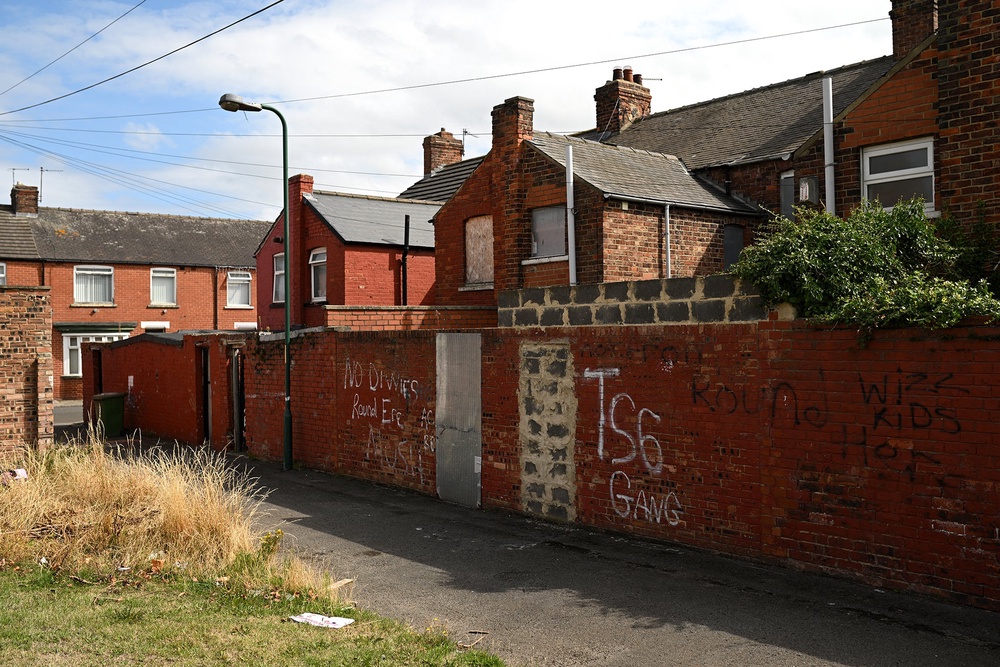
Earlier this year, it was named the UK’s crime capital outside London after five men and two police officers died in a head-on crash which local police linked to organised criminal activity.
The town has one of the highest rates in the country of long-term empty homes, with 1,529 vacant, equating to 2.3 per cent of the area’s 67,058 homes.
This is despite the area becoming a hot spot for buy-to-let investors with more than a third of home purchases going to landlords attracted by low prices. £140,000 was the average sold price for a property in September.
But many could be hitting issues with poor-standard properties.
“Areas like Sunderland and Middlesbrough have large amounts of relatively cheap, terraced housing,” said Mr Bailey. “There has always been an issue with some of the homes because they require investment, are relatively small and poorly insulated.
“Landlords can then face the issue of alot being on the market, depopulation of the young, which can lead to long-term empty homes.”
In an area with 100 households in temporary accommodation, costing the council £2.8m last year, there’s a clear need to bring back into use the empty homes.
Middlesbrough Council did not respond to The Independent on the issue. On the council’s website, it said it recognises bringing empty homes back into use will increase housing in the town, and that boarded-up properties can be factor for crime and antisocial behaviour.
Kensington and Chelsea
Nowhere in the UK is the contrast between the rich and poor perhaps so evidence than in Kensington and Chelsea.
Inside London’s smallest borough, where the average property price is £1.2m, it can be a picture of wealth and prosperity But, a look beyond the leafy streets with Victorian homes featuring stucco terraces, and there’s a different narrative on inequality.
One in five neighbourhoods are classed as being among the most-deprived in England and Wales, while one in four children live in poverty.
The area of just five square miles has 1,810 households in temporary accommodation, including 2,250 children.
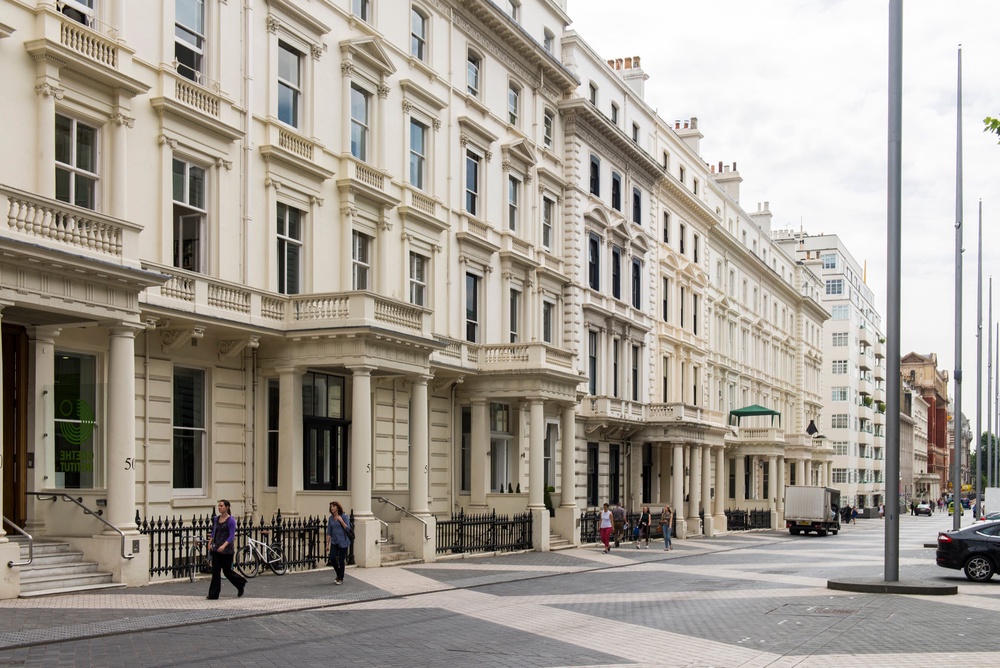
Compare that to the 2,475 long-term empty homes in the district – three per cent of the area’s 89,790 homes – and it’s not difficult to spot one of the factors. Another issue is the number of second homes; 8,395, which is 9 per cent of the total housing.
The district is known to be a target for “buy-to-leave” investors who purchase property as an investment while land value increases.
Jess Turtle, co-director of charity Museum of Homelessness, said: “People investing in property and then land banking it is really, really wrong and shouldn't be happening so much given that we've got a crisis.”
Royal Borough of Kensington and Chelsea enforce premium council tax charges for empty and second homes, with rates increasing up to 400 per cent, depending how long the property has been empty for. The council has 2,206 households on its housing waiting list.
Tory councillor Cem Kemahli, lead member for housing, blamed the government’s recent Renters Rights Act, which he said had led to a “huge exodus” of rental properties in the market.
He said: “Like the rest of London, Kensington and Chelsea faces significant housing pressures, particularly as we have some of the highest private rents in the country and demand far outstripping supply.
“We’re working hard to prevent homelessness and find suitable accommodation for those who need it, and our work has helped reduce the number of our households in temporary accommodation by 9.5 per cent over the past year.”
Cornwall
So often the scene on a postcard, the pretty sight of Cornwall’s coastal villages and towns during the summer holidays masks the region’s housing crisis. Sandy beaches are often packed, busy shops and restaurants seem to be doing good business and homes are occupied.
But come back during the winter months, and the housing situation can appear reversed, if not bleak.
In some of the most sought-after destinations, like Rock, often dubbed the region’s Saint-Tropez or Kensington-on-Sea, much of the village’s homes can remain in pitch black at night with some 42 per cent of parish properties second homes.

Across Cornwall, there were 12,906 second homes recorded this year, according to latest government figures, which equates to almost five per cent of the area’s 289,059 homes,
Meanwhile, the region has 867 households in temporary accommodation, including 781 children, with the council last year spending £16m on the provision.
Which means the issue is clearly not just a humanitarian problem but a financial one for the authority.
In a bid to tackle the problem the council last year started charging second home owners twice the normal rate of council tax, generating more than £24.7m according to a report by Cornwall Live.
A spokesperson for the council said it was committed to buying and refurbishing disused properties, providing more homes for single people and using its housing stock to support homeless households.
They added: “We are working hard to bring more social and affordable homes to areas where they are most needed, through our own housebuilding programme and grants and support for registered providers and community organisations.
“We know that emergency accommodation can be unsuitable and costly, which is why we are continuing to build our own stock of emergency temporary accommodation so that fewer residents are housed in B&Bs or hotels.”
Newham
Right at the centre of London’s homeless crisis is the inner borough of Newham.
Sat on the north bank of the River Thames, with a population of almost 400,000, its districts, such as East Ham, Canning Town and Stratford, have ethnically diverse communities which are affected by deep rooted inequalities.
After housing costs, staggeringly, almost half of residents live in poverty, while 7,561 households, including 10,952 children, are in temporary accommodation.
That number of households is the highest rate in the UK, with 60 out of every 1,000 in temporary accommodation, costing the council £142m last year.
Meanwhile, 1.8 per cent of the borough’s housing stock is classed as long-term vacant, 2,375 properties in total.
A focal point for the crisis has been the Carpenters Estate in Stratford, where more than 400 homes had sat empty for years before, finally, work started last year on a £1bn regeneration of the site, which will provide 2,300 homes, half of them affordable.
But still thousands live in temporary accommodation, which can be hostels, shared rooms, B&Bs and refuges.
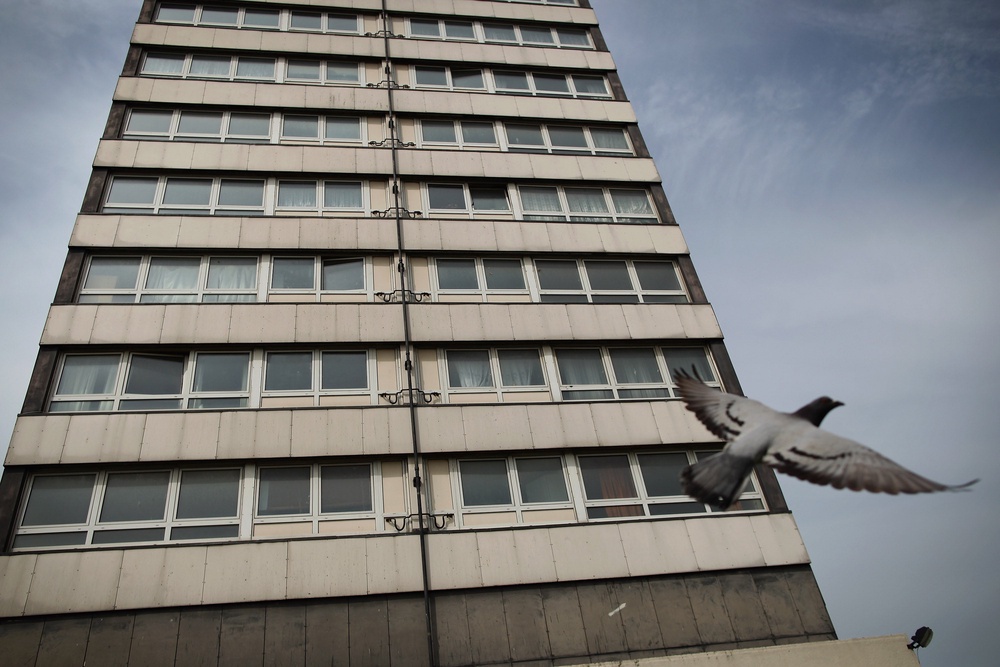
“In places like Newham, we have created a sort of housing purgatory for people,” said Chris Bailey, director of policy and campaigns at Action on Empty Homes. “Some people are stuck in this for years, and it’s being funded through public funds.
“The pressure on temporary accommodation clearly needs to be alleviated, and one way to do that is the council acquiring empty homes.”
Liverpool
Eighteen years ago, the city of Liverpool was named the European Capital of Culture - a transformation moment in the city of The Beatles that triggered a wave of investment and tourism.
After mass unemployment due to the collapse in manufacturing in the 1980s, major regeneration has meant much of the city is unrecognisable from even a decade ago.
Just last week, plans were given the green light to redevelop the city’s northern waterfront with almost 6,000 homes as part of the a £5bn waterside regeneration scheme which includes offices, shops and restaurants, as well as a five-acre park.
However, despite the homes investment, latest figures show the city has 4,928 long-term empty homes, while having 1,847 households, including 1,710 with children, living in temporary accommodation.
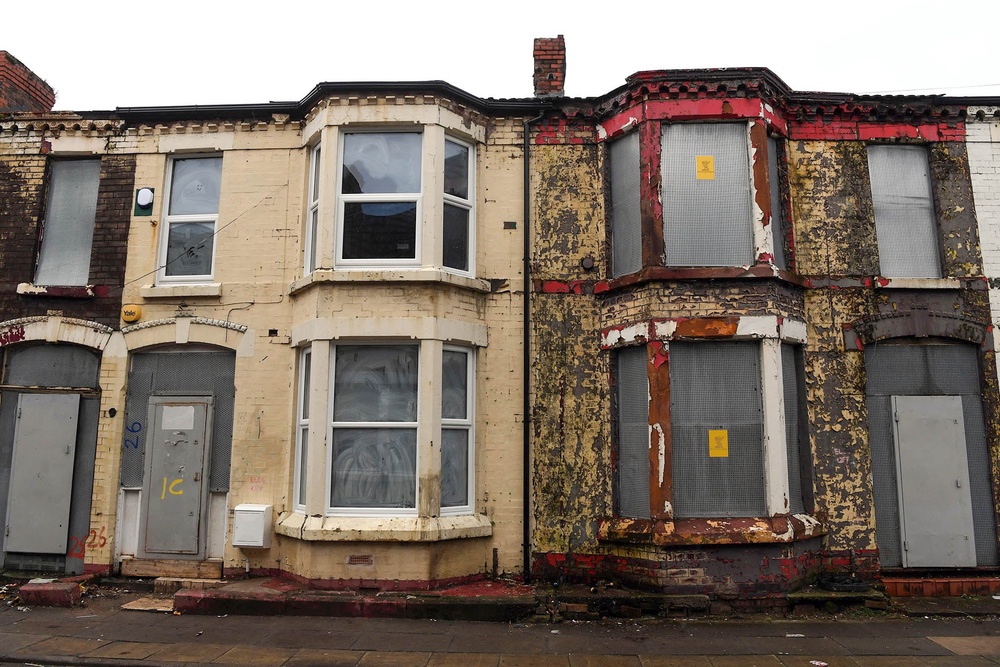
So why hasn’t the boom in economy delivered money to bring back into use the empty homes, and take out homelessness?
“It goes back to the issue of underinsulated, cheap terraced housing,” said Chris Bailey, director of policy and campaigns at Action on Empty Homes. “In the times of Tony Blair, Gordon Brown, these were areas where you had funding and terraces were being cleared. Then, of course, the next government came in and stopped the funding.
“Like any former northern industrial city suffering from relatively high levels of vacancy, it has older, lower quality housing that requires investment.”
Liverpool City Council said it was targeting bringing back into use more than 1,000 long-term vacant properties over the next four years, with grants being offered of up to £20,000 on around 360 sites.
In July, the council also launched four contracts for 1,300 self-contained accommodation units.
Councillor Hetty Wood, cabinet member for housing, said: "We are taking decisive action to prevent homelessness earlier, support people with complex needs and help more residents into safe, stable accommodation.
“There are currently no homeless families that we have a duty to support in hotels. Where children are in temporary accommodation, additional support is provided through link workers. This includes support with school transport, internet access and accessing the local community, helping families maintain stability.”
What the government says
A Ministry of Housing, Communities and Local Government spokesperson said: “The number of families living in inappropriate B&Bs for more than six weeks has fallen by 77% since the peak – but it is clear more work must be done to make sure that everyone has the safe, secure home they need.
“Our National Plan to End Homelessness is taking action to prevent families becoming homeless in the first place, tackle the unlawful use of B&Bs and improve the quality and supply of temporary accommodation.
“We’re also giving councils stronger powers to bring empty homes back into use for their communities – including allowing them to take over the management of empty homes after six months and return them to occupation.”
Project Nest
For our Christmas campaign, The Independent is aiming to raise £200,000 to fund the renovation of three properties in Sheffield, Fife, and Basingstoke. Every single penny raised during the appeal will go to fund these homes to change young people’s lives.
EveryYouth currently runs more than 60 bed spaces across 21 homelessness hubs around the UK, most of which are in houses rented from local councils at a peppercorn rate. If successful, Project Nest will allow the charity to purchase its first property.
In Sheffield, the money will be used to buy and renovate a derelict three-bed house while in Fife and Basingstoke it will fund the renovation of empty, dilapidated one-bed properties.
The accommodation will specifically serve young people aged between 16 and 25 who are in work. Crucially, young people in these homes can also access support offered by youth homelessness charities to address the childhood trauma that leads to homelessness.
The young people EveryYouth supports have been failed long before they lose their home. Virtually all grew up in absolute poverty, and 90 per cent experienced traumatic childhoods. Approximately half were physically abused by a parent or guardian, and 70 per cent say they never felt loved.
While living in the houses, young people will pay a very low rent contribution, which will cover all their bills, property maintenance and practical support services, which will help them budget and manage their money.
We are asking for readers to donate money to help support this vital cause.
You can donate to Project Nest here
Read More‘AI slop’ has infiltrated UK Christmas markets – and people have had enough
Newborn baby died of infection after ambulance never arrived
Woman calls for change in ambulance responses after death of newborn son
Man arrested at Stansted Airport on suspicion of murdering teen girl in east London
DWP latest to be hit in string of cyber attacks raising alarm across US and Europe