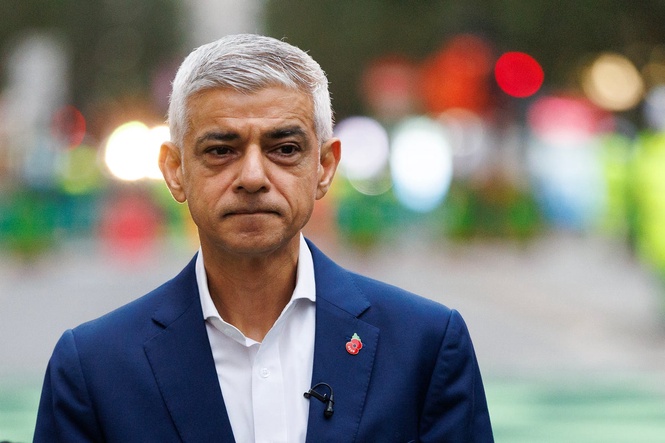
Lord Sadiq Khan will be handed powers to build an extension to the Bakerloo line into south-east London, as well as to develop Stratford station.
Under new plans brought in chancellor John Healey’s Budget, the government will devolve business rates and some income tax revenue to allow regions to invest in large infrastructure projects.
The chancellor announced on Wednesday that an initial £285 million will be allocated as part of a plan to give mayors and regional leaders in England more money and power to invest in projects in their areas.
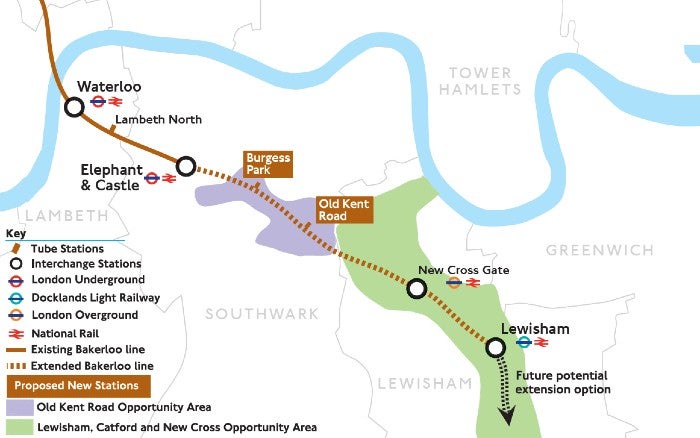
For Labour’s London mayor, this will allow him to push ahead with delivering the West London Orbital, which would connect Hendon and Hounslow using disused freight rail tracks, and extending the Bakerloo line from Elephant and Castle to Lewisham.
On Tuesday, Lord Khan said the greater ability to invest could “help unlock transformational infrastructure projects” across the city.
The announcement to hand further powers to city mayors is one of Andy Burnham’s key drivers for devolution and to decentralise powers from Westminster.
All business rates will be kept by local administrations by 2030, with a fifth to go to mayors from next year, and from 2028 a share of income tax receipts will go to mayors.
The chancellor said these moves, paired with the tourist tax due to come into force, will provide “long-term funding streams”.
CityAM reports that estimates suggest that around £10bn in extra borrowing capability from new tax powers will allow Lord Khan to give the green light to build major transport lines that have long been discussed in City Hall.
As well as the Bakerloo line, which would see two new stations at Burgess Park and Old Kent Road, a £50m upgrade at Euston station has also been discussed and transforming Stratford into an international hub for travel.
Outside of London, devolved loans worth £1.5 billion will allow mayoralties to carry out projects such as the Black Country Metro, the reopening of Doncaster Airport or regeneration in Gateshead, Mr Healey said.
The Treasury has also confirmed that 10 new devolution agreements are in their final stages, with the aim of achieving full devolution coverage by 2028.
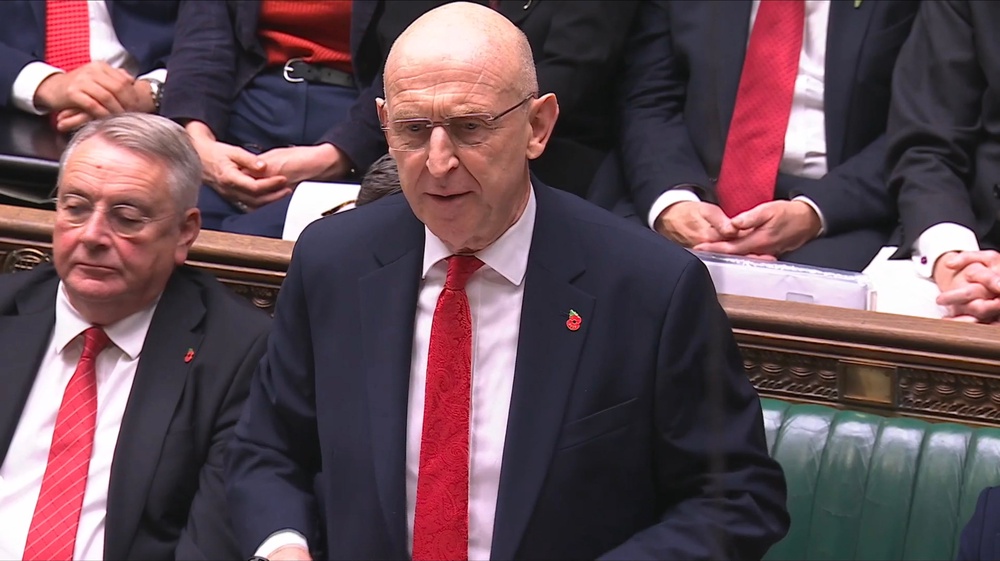
Mr Healey described the local retainment of tax revenues as “the most radical act of devolution in a generation”.
He added: “Taken together, these are long-term funding streams. They can be used to back investment into big local infrastructure so that more of the money that is raised locally can be spent on projects like the Trent Sport District, led by the mayor of the East Midlands, and the Bakerloo Line extension, led by the mayor of London.
“[These are] new powers to the people who know their areas best – not sentimentality but supply-side economics. The biggest wave of devolution in a generation.”
The Treasury confirmed retained business rates for mayors would replace grants from central government.
The Government said it will seek views from local government on how best to achieve this, with a call for evidence planned for later this year.
Read MoreTax calculator: See how John Healey’s Budget announcements affect you
Stand and deliver, said our Robin Hood chancellor… the poor banks didn’t feel a thing