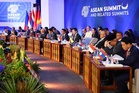
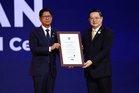
LAST Saturday, Asean’s trade and economic ministers signed an agreement to build a framework for digital trade and e-commerce for the region.
Several years in the making, the Digital Economy Framework Agreement, or DEFA, sets down the rules for a wide range of digital concerns, including cross-border data flows, source code protection, cybersecurity and artificial intelligence.
The world’s first legally binding, regional digital economy agreement, DEFA, is projected to double Asean’s digital economy to $2 trillion by 2030.
The agreement “opens a new chapter in Asean cooperation, one that brings our economies close together, extends the benefits of trade beyond physical borders, and positions our region to compete in an increasingly digital world,” noted Trade Secretary Cristina Roque.
DEFA “places Asean at the forefront of efforts to build a more connected, trusted and inclusive digital future,” Roque said.
The agreement holds promise for the Philippines. It will allow the country’s micro, small and medium enterprises (MSMEs) “to reach customers across Asean, across digital platforms, and participate in regional value chains,” she said.
Consumers will benefit from “safer online transactions and stronger protection of personal information,” while workers could explore job opportunities in sectors like e-commerce, digital services and the creative industries.
It is also expected to expand cooperation with the bloc’s external partners.
Singapore’s Deputy Prime Minister Gan Kim Young, who also heads the Ministry of Energy, Trade and Industry, said the agreement is expected to come into force “sometime early next year.” Gan said DEFA is designed to be flexible, allowing membercountries “who are not quite ready today, to be able to join in any time when they are ready.” He allayed concerns that the pact could fuel intense competition among businesses within the bloc, saying “our economies are very complementary in nature. We compete in some areas, of course, but in many areas, we are complementary to each other.” Who will benefit the most from a digital economy? In its digital trade review of Asean last May, the Organization for Economic Cooperation and Development (OECD) listed Cambodia, Laos, Myanmar and Vietnam, the so-called CMLV cluster, as the economies that will eventually reap the biggest trade gains under DEFA.
OECD notes that as digital trade grows as a vital component of Asean trade, “understanding the potential impact of deeper and broader digital trade integration is essential. This can help policymakers identify emerging opportunities, guide international negotiations, and prioritize domestic reform efforts.” Asean’s Digital Integration Index approaches the question from a different perspective. Based on the index, the Asean-6 — Brunei, Indonesia, Malaysia, Singapore, Thailand and the Philippines — could seize the early lead when the region’s digital economy kicks off, having the infrastructure and regulatory structure already in place.
The Philippines is considered moderately ready to transition to a digital economy because of its thriving IT-BPM sector and high mobile payment. There are, however, gaps and bottlenecks the government has to address.
While urban centers like Metro Manila boast strong 5G and fiber connectivity, broadband speeds and reliability elsewhere are far slower than Asean-6 peers like Singapore, Malaysia and Thailand.
MSMEs, which make up 99 percent of the country’s businesses, are reluctant to let go of basic social media selling practices and fully embrace e-commerce processes like digital invoicing.
The country’s digital ecosystem is still highly vulnerable to cyberattacks and data breaches.
To overcome these challenges, the Philippines needs external financing, and the Asian Development Bank (ADB) is more than willing to help.
The ADB has pledged up to $5 billion by 2030 to support DEFA’s implementation.
The groundwork for the transition was given further momentum last week after President Ferdinand Marcos Jr. signed an executive order adopting the Artificial Intelligence Governance Framework and creating the National Artificial Intelligence Center (NAIC).
The AI Governance Framework is the “national strategic guide for policy formulation, regulatory coordination, institutional development, capacity-building, and other governance measures necessary to support and strengthen the Philippine AI ecosystem.” DEFA has the potential to reshape Asean from a fragmented collection of national markets into a unified digital bloc. Achieving this goal, however, will depend on closing uneven infrastructure gaps before the pact takes effect next year.