By a community pharmacist
Have you ever noticed a swelling over your elbow after leaning on a hard surface for too long? Or perhaps your knee has become puffy, tender and uncomfortable when kneeling or bending?
Many people assume these problems are simply part of getting older, a sign of arthritis or the result of a minor injury. But sometimes the cause is bursitis — inflammation of a small, fluid-filled sac that helps your joints move smoothly.
Bursitis commonly affects the elbow, knee, shoulder and hip. It can cause pain and swelling that interfere with everyday activities, from getting dressed and climbing stairs to gardening, praying on your knees or working at a desk.
The good news is that many cases improve with appropriate self-care. However, it is important to recognise when the swelling might indicate an infection or another condition that needs medical treatment.
What exactly is a bursa?
A bursa is a small sac containing a thin layer of lubricating fluid. It sits between tissues such as bone, skin, muscles, tendons and ligaments, helping them glide over one another with less friction.
Think of it as a tiny cushion that protects the tissues around a joint.
The body contains many bursae, and most cause no problems. But when one becomes irritated, inflamed or infected, it can swell and become painful. This condition is known as bursitis.
The swelling may be particularly noticeable where a bursa lies just beneath the skin, such as the tip of the elbow or the front of the kneecap.
According to the NHS, bursitis can affect different parts of the body and often improves with simple measures, although some cases require further treatment. NHS: Bursitis.
1. Elbow bursitis: the swelling at the tip of your elbow
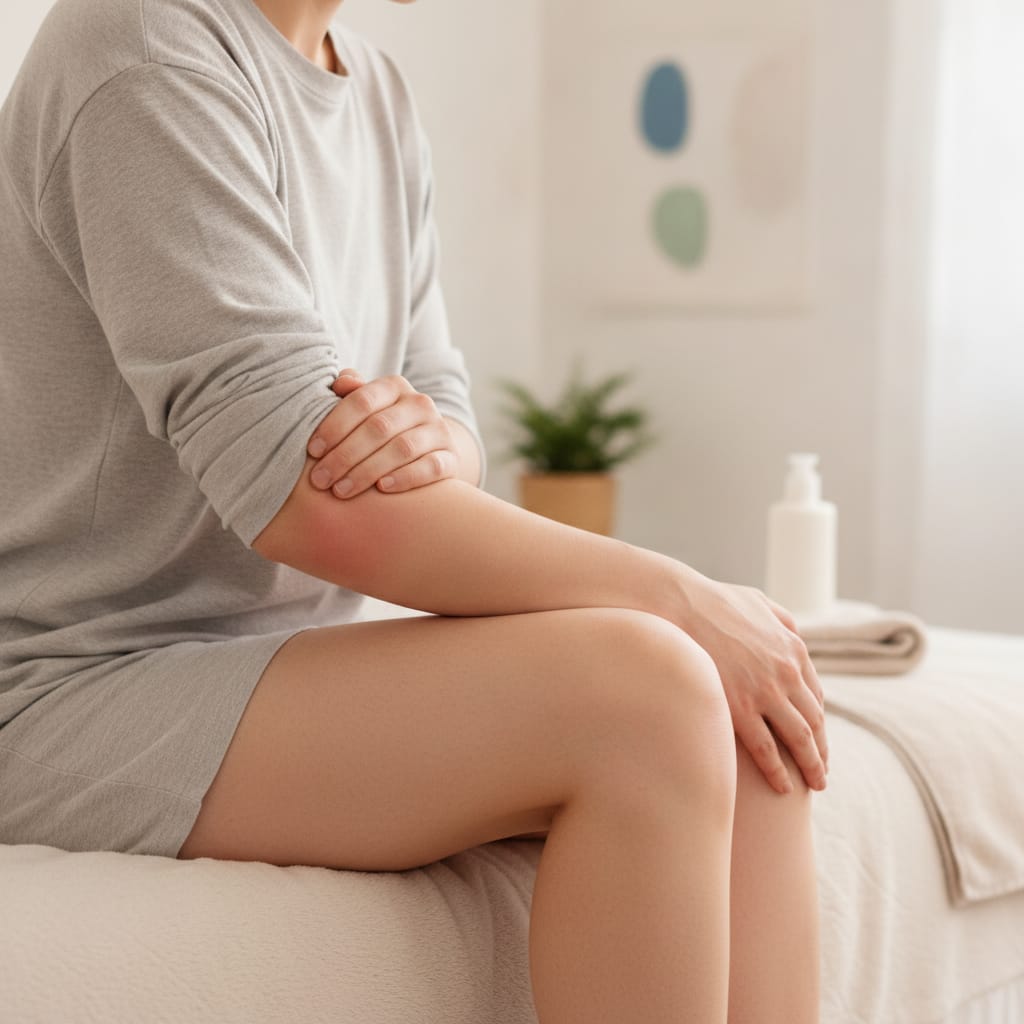
One of the most recognisable forms of bursitis is olecranon bursitis, which affects the bursa at the back of the elbow, over the bony point known as the olecranon.
It can produce a soft, sometimes quite large swelling that resembles a small water balloon sitting on the elbow.
What causes it?
Common triggers include:
- Repeatedly leaning on a desk or hard surface.
- Prolonged pressure on the elbow.
- A direct knock or fall.
- Repetitive movements or activities that irritate the area.
- In some cases, an underlying inflammatory condition such as gout or rheumatoid arthritis.
Sometimes there is no obvious cause.
What does it feel like?
The most obvious symptom is swelling at the back of the elbow. The swelling may be surprisingly large even when the pain is relatively mild.
Some people notice tenderness, stiffness or discomfort when bending the arm fully. If the bursa becomes infected, the elbow may become hot, red and increasingly painful, and fever may develop.
It is worth remembering that not every lump on the elbow is bursitis. A persistent or unexplained lump should be examined by a healthcare professional.
2. Knee bursitis: when the kneecap becomes swollen
The most familiar form of knee bursitis is prepatellar bursitis, sometimes called housemaid’s knee.
The name comes from the repeated kneeling that historically affected people whose work involved scrubbing floors. Today, it can affect gardeners, carpet fitters, construction workers, cleaners, sportspeople and anyone who spends long periods kneeling.
What are the symptoms?
- A visible swelling directly over the kneecap.
- Tenderness when kneeling or pressing on the area.
- Warmth and sometimes redness.
- Discomfort when bending the knee fully.
- Swelling that may be more noticeable than the pain.
Unlike some other knee conditions, movement may remain relatively comfortable, particularly in the early stages. However, significant pain or restricted movement should not automatically be attributed to bursitis.
Repeated pressure is a common cause, but a fall, direct blow or infection can also trigger it. NHS Tayside: Pre-patellar and infra-patellar bursitis.
What about swelling below the kneecap?
Other bursae around the knee can become inflamed, including the infrapatellar bursae, located below the kneecap near the patellar tendon.
Pain and swelling in this region can be associated with repetitive kneeling, jumping or sporting activity. The exact location of the swelling can help a clinician distinguish between different causes.
Another commonly confused condition is a Baker’s cyst, which is a fluid-filled swelling behind the knee. It is not the same as prepatellar bursitis, and it may be associated with an underlying knee problem. If a Baker’s cyst ruptures, it can cause calf pain and swelling that may resemble a blood clot. Sudden calf swelling should therefore be assessed urgently.
3. Is bursitis the same as arthritis or tendonitis?
No, although the symptoms can overlap.
| Condition | What is affected? | Typical clues |
| Bursitis | A fluid-filled cushioning sac | Localised swelling, often over the elbow or kneecap |
| Arthritis | The joint itself | Joint pain, stiffness and sometimes swelling |
| Tendonitis or tendinopathy | A tendon connecting muscle to bone | Pain associated with particular movements or loading |
| Gout | Inflammation caused by urate crystals | Often sudden, intense pain with redness and swelling |
These are general patterns, not a way to diagnose yourself. Gout and infection can also affect a bursa, and more than one problem may be present at the same time.
If the diagnosis is uncertain, a clinician may examine the area and, where appropriate, arrange imaging or take a sample of the fluid to check for infection or crystals. NHS: Bursitis.
4. What can you do at home?
Most non-infected cases improve over several weeks with sensible care.
Rest and use a cold compress
Apply an ice pack wrapped in a towel for around 10 minutes at a time, repeating every few hours as needed. Never put ice directly on the skin or leave it on while asleep. Temporarily avoid activities that aggravate the swelling.
Protect the affected area
Avoid leaning on your elbows and use padding when kneeling. Take regular breaks from activities that put repeated pressure on the joint.
Return to movement gradually
Avoid activities that increase pain, but do not keep a joint completely immobile for longer than necessary. Gentle movement within comfortable limits can help prevent stiffness.
These measures are consistent with NHS self-care advice for bursitis.
Which painkillers are suitable?
Paracetamol may help relieve pain when taken according to the packet instructions.
Ibuprofen, either as a gel or in tablet form, may be suitable for some people, but it is not appropriate for everyone. Oral ibuprofen can increase the risk of stomach bleeding, kidney problems and cardiovascular complications in susceptible people. Anyone taking aspirin, clopidogrel, anticoagulants or other medicines that increase bleeding risk should check with a pharmacist or doctor before using an anti-inflammatory medicine.
A pharmacist can help select a suitable option based on the person’s medical history and current medicines.
5. When might antibiotics or surgery be needed?
One important distinction is between ordinary inflammation and septic bursitis, where the bursa becomes infected, usually by bacteria entering through a break in the skin.
Signs that raise concern include:
- Increasing redness or warmth around the swelling.
- Worsening pain or marked tenderness.
- A nearby cut, graze or wound.
- Fever, chills or feeling generally unwell.
Infection cannot always be ruled out by appearance alone.
A suspected infected bursa needs urgent medical assessment, particularly if there is fever or spreading redness. Treatment may include antibiotics and, in some cases, drainage of the fluid. Steroid injections should not be given into an infected bursa.
Surgery to remove a bursa is uncommon and generally reserved for persistent or recurrent cases that have not responded to appropriate treatment.
If you have a hot, swollen joint with severe pain, difficulty moving it, or difficulty bearing weight, seek urgent medical care to exclude a more serious joint infection. NHS: Septic arthritis.
6. When should you see a GP?
Arrange a GP assessment if the swelling is unexplained, keeps returning, becomes increasingly painful or fails to improve after one to two weeks of self-care.
Seek urgent assessment if the area becomes hot and red, you develop a fever, you cannot move the joint normally, or the pain is severe. Do not attempt to drain a swollen bursa yourself, as this can introduce infection.
People with diabetes, reduced immunity or a condition that increases infection risk should be particularly cautious about a new swollen, inflamed joint.
The message from your community pharmacist
A swollen elbow or knee may look like a minor problem, but the cause matters. Bursitis is often manageable with rest, ice, protection and appropriate pain relief. However, infection, gout, arthritis and other conditions can produce similar symptoms.
The best prevention is often surprisingly simple: stop leaning on hard surfaces, use knee pads when gardening or doing DIY, take breaks from repeated kneeling and deal promptly with cuts around the joints.
And remember, if a swelling is hot, red, increasingly painful or accompanied by fever, do not assume it is ordinary bursitis.
Sometimes, protecting a joint begins with recognising when it needs more than a little rest.
Until next time, take care of your health.
Health Matters — practical health advice from a community pharmacist.
Health Matters (zaynp100@yahoo.com) is a content creator under the Newswav Creator programme, where you get to express yourself, be a citizen journalist, and at the same time monetize your content & reach millions of users on Newswav. Log in to creator.newswav.com and become a Newswav Creator now!
The User Content (as defined on Newswav Terms of Use) above including the views expressed and media (pictures, videos, citations etc) were submitted & posted by the author. Newswav is solely an aggregation platform that hosts the User Content. If you have any questions about the content, copyright or other issues of the work, please contact creator@newswav.com.