KUALA LUMPUR: Businesses depend on data to understand their customers, improve services and make decisions, Malaysia’s Digital Minister has said.
Customers, in turn, expect that information about their finances, health, identity and personal circumstances will be treated with care.
Gobind Singh Deo pointed out that Malaysia has strengthened its personal data protection framework through the Personal Data Protection (Amendment) Act 2024, whose provisions came into force in stages during 2025.
“I urge business leaders to understand how their organisations collect, use and store personal data,” Gobind said.
“Be clear about why the information is needed, who can access it, which external providers handle it and how long it is kept. Employees must also know what information they are allowed to share with AI tools, especially when handling customer records or other sensitive personal data,” he added.
Gobind said Malaysia’s Data Sharing Act 2025, which has been in force since April 28 last year, establishes a framework for sharing data within the federal public sector.
“It provides clearer authority and governance for agencies to share information in carrying out their functions. Better public services depend on the responsible use of information, supported by proper controls and accountability.”
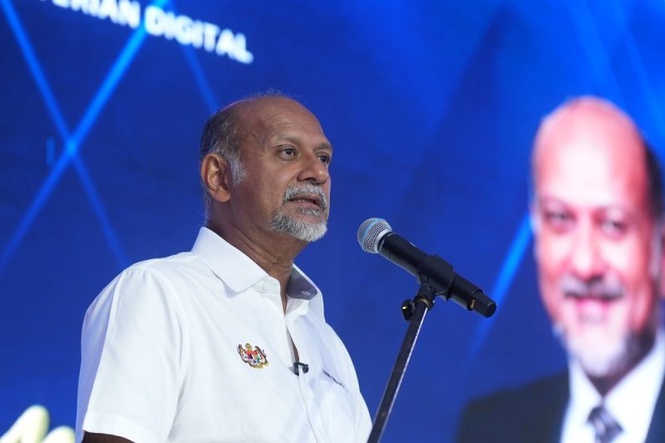
Gobind was speaking at the British Malaysian Chamber of Commerce (BMCC) and HSBC Trust and Resilience Forum 2026 in Kuala Lumpur yesterday. Also present were BMCC executive director Farhan Zamri and HSBC chief operating officer Mark Hall.
Gobind added that financial institutions occupy a particularly important position today.
“They safeguard savings, facilitate trade and provide the financing on which households and businesses depend. A disruption or failure can have consequences well beyond the institution itself.
“Digital trust extends across national borders. Your customers, technology providers, investors and supply chains operate in different jurisdictions.
“Clear and compatible approaches to data, security and digital trade can make it easier to expand while maintaining confidence in how transactions are conducted.”
Gobind said the Asean Digital Economy Framework Agreement, signed on 14 November, is an important step towards a more integrated, secure and interoperable regional digital economy.
“The work ahead is to translate that agreement into practical benefits for businesses and citizens as implementation progresses.
“Malaysia and the United Kingdom have also launched negotiations on a Digital Trade Agreement, with objectives that include facilitating digital trade, supporting trusted cross-border data flows and strengthening protections for consumers and personal data. This gives particular relevance to today’s discussion and to the role of the British Malaysian business community.
“I encourage BMCC, HSBC and the organisations here to continue working with the ministry on these issues. Share the difficulties you encounter, the practices that have proved effective and the capabilities that need strengthening.”
He said such feedback can help the Malaysian government develop policies that protect the public interest while supporting responsible business growth.