The wars in Ukraine and Iran have brutally exposed the fragility of Britain’s energy supplies. Despite the transition to renewable sources, which must continue unabated, the country is still highly reliant on gas for heating and electricity generation.
But it has become painfully apparent that the UK economy depends on the kindness of strangers, friendly or otherwise, to keep the lights on and the delivery trucks running.
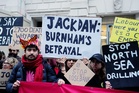
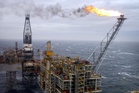
Which is why the difficult decision made by the Burnham government to permit further gas production in the North Sea’s Jackdaw field is justified. It won’t make a dent in domestic gas bills – no one should expect that – but it will be some help in the desperate struggle to ensure security of supplies and energy resilience.
Where once it was absolutely normal that British needs were met by imports of gas from Norway, the United States and Qatar, diesel fuel from Russia, and electricity from France, that is plainly no longer an option. Regrettably, that has pushed ministers to look again at the North Sea.
As an asset in structural decline – 93 per cent of the basin’s recoverable oil and gas has been extracted over the past six decades of intensive activity – for a relatively few vital years ahead, it can make some difference to whether Britain suffers power cuts.
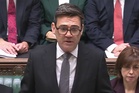
Opening up more of the Jackdaw gasfield – as well as the Rosebank oilfield, yet to be decided – is an unsatisfactory and temporary answer to much deeper challenges. But it is an unavoidable one. As Andy Burnham replied to a disgruntled Green MP during Prime Minister’s Questions, if we don’t source our own gas, it will still be needed – “it would just be imported from somewhere else”.
The climate crisis remains the transcendent issue of our times. As the freakish global weather patterns this year prove, there is every sign that the crisis is intensifying. However, there is also a cost of living crisis no less severe. This winter will inflict real hardship on households trying to stay warm, and businesses trying to survive.
As the prime minister is prone to saying, the nation as a whole needs some “breathing space” – until these wars end, and until solar, nuclear and wind power can become more properly established.
With the Jackdaw decision, Mr Burnham is once again offering the nation a little hope. People understand that these crises are not of the government’s making – these are problems essentially made in the Kremlin and the White House – but they look to the prime minister and his colleagues to be responsive. They feel that the government cannot simply do nothing, which was becoming the problem under Sir Keir Starmer, who stuck too rigidly to a somewhat bloodless economist’s analysis of the situation – that none of this will reduce household gas bills or relieve British businesses of some of the highest energy costs in the world.
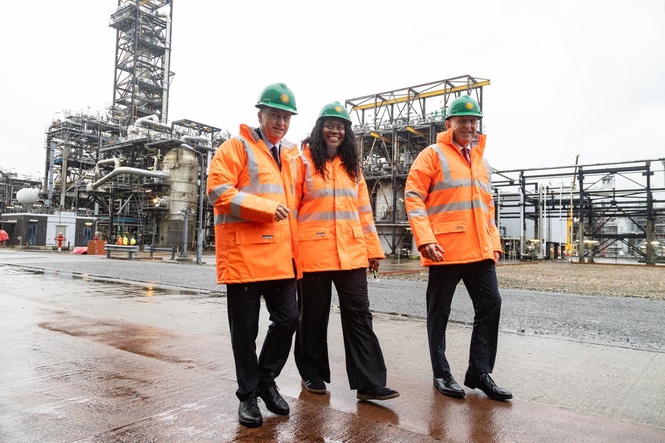
The Jackdaw decision is one of the ways in which Mr Burnham is showing himself to be the more skilful politician. By all accounts, next week’s Budget will do more of the same – alleviating the burden on energy intensive sectors such as steel, automotive, cement and ceramics. Supplies from Jackdaw will be much greener than producing and transporting liquefied gas in tankers from the US and the Gulf, even without wartime disruptions.
What probably will soon reduce gas and electricity bills for many households is the review of standing charges announced to widespread surprise by Mr Burnham at Prime Minister’s Questions. At first sight, erasing the fixed daily charge for being supplied with energy would be of most help to smaller and poorer households who tend to be more economical (and ecological) with their usage; larger homes pay for the shortfall.
For too long, the energy suppliers have used standing charges to avoid Ofgem controls, and it is time to end that. For many struggling families, it could make a significant difference. The promise that users pay only for what they use could be good for the planet, too.
The Independent has been proudly campaigning for the environment and against climate change for decades, a pioneering voice in the mainstream media. What has to be done now to prevent a potentially catastrophic energy crisis at home this winter, and for the short term, is uncomfortable but unavoidable; such are the global circumstances.
Yet even the greenest advocates for the environment must concede that, as a matter of practical politics, fossil fuels will remain a part of the energy mix for some time. If managed properly, net zero greenhouse gas emissions for the UK by 2050 remains a realistic target – and the tax revenues generated by fossil fuel production can be diverted to green infrastructure.
The only upside to the recent energy crisis and the extreme weather events is that these should remind governments and people around the world that relying on finite fossil fuels for the long term is the most foolish thing anyone can do.
Read MoreAndy Burnham’s North Sea gas gamble is greener than you think
Trump’s lethal indifference has dragged us to the brink of disaster in the Gulf
We need to make the North Sea work for Britain
The unforgivable Covid shortcomings that left our care homes defenceless
Burnham admits a generation has been failed. Now comes the hard part
As France burns, Macron looks like a man who has lost control