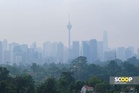
Kota Kinabalu: Malaysia should consider enacting specific legislation to tackle transboundary haze and other forms of pollution, said an academic.
Universiti Sains Islam Malaysia (Usim) Faculty of Syariah and Law Associate Professor Muzaffar Syah Mallow said the problem had persisted for more than 20 years despite numerous negotiations and discussions among neighbouring countries.
“How much longer do we need to endure and tolerate this yearly problem?” he said.
Muzaffar said transboundary pollution affected air quality and posed health risks, particularly to infants, children, pregnant women, senior citizens and those who were ill.
He said poor visibility could potentially increase the risk of road accidents, while the wider impact could also affect the economy.
Muzaffar said there was an international duty for nations to take responsibility for causing transboundary harm to other countries.
He cited the international environmental law principle sic utere tuo ut alienum non laedas, which broadly recognises the sovereign right of states to conduct activities within their territories while requiring them not to cause harm to other states.
Muzaffar pointed to Singapore’s Transboundary Haze Pollution Act 2014 as an example Malaysia could consider.
He said the legislation was designed to deter companies or entities, whether inside or outside Singapore, from carrying out activities that contributed to transboundary haze affecting the city state.
The law, he said, targets companies rather than countries and provides Singapore authorities with powers to act against entities responsible for pollution, including in certain circumstances where the activities occurred outside Singapore.
According to Muzaffar, Section 5 of the Act provides for a fine of S$100,000, or about RM318,000, for each day a local or foreign company contributes to unhealthy levels of haze pollution in Singapore, subject to a maximum total of S$2 million, or about RM6.37 million.
“This particular Act gives the Singapore authorities the power to go after companies which cause the haze in Singapore even if they have no operations whatsoever or are not registered as a company in Singapore.
“The legal steps taken by Singapore should be taken seriously into consideration by the Malaysian legislature as Malaysia can no longer sit around and wait for the haze problem to be resolved by itself,” he said.
Muzaffar said Malaysia could emulate Singapore by introducing its own transboundary pollution legislation, with consideration also given to extending its scope to pollution involving water and land.