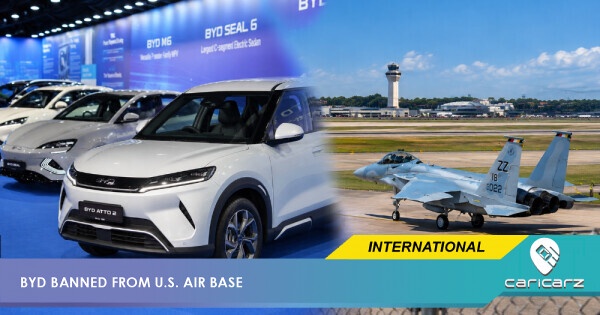
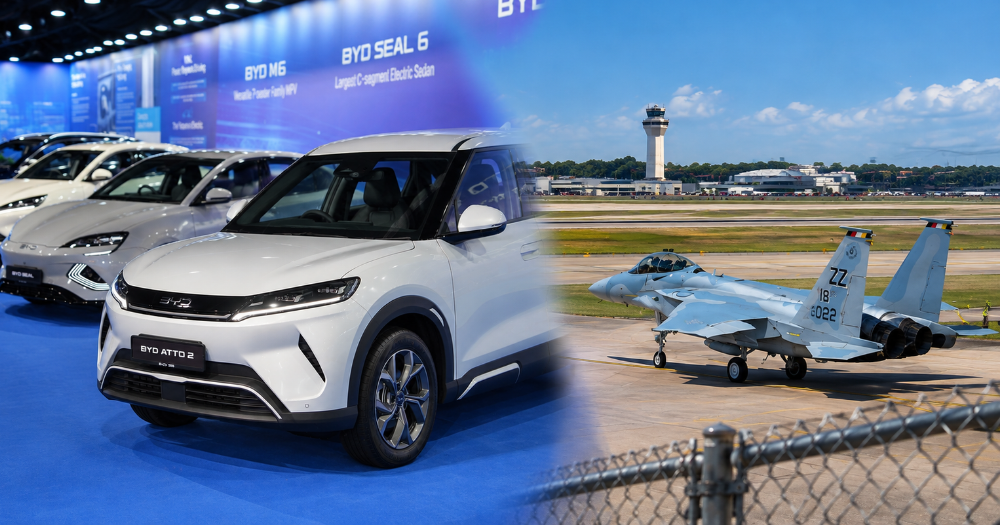
Imagine arriving at a military base, only to be turned away because of the car you're driving.
That's now the situation at Kadena Air Base in Okinawa, Japan, where the U.S. military has banned vehicles made by Chinese automaker BYD over security concerns, effective 26 October 2026.
TL;DR: BYD'S U.S. AIR BASE BAN What happened: BYD vehicles are barred from entering Kadena Air Base in Okinawa, Japan. Why: The U.S. military cites security concerns, but has not publicly detailed its technical evidence. LOCATION Kadena Air Base, Okinawa EFFECTIVE DATE 26 October 2026 REASON GIVEN Security concerns TECHNICAL EVIDENCE Not publicly disclosed Why Has The U.S. Military Banned BYD Cars?
According to Reuters, Kadena Air Base spokesperson Lieutenant Colonel Alli Stormer described BYD vehicles as an unacceptable security risk to personnel and military operations.
South Korea's Yonhap News Agency reported concerns involving onboard cameras and sensors, with the restriction covering privately owned and commercial BYD vehicles seeking access to the base.
SECURITY CONCERN DOES NOT MEAN PROVEN ESPIONAGE
The military has not publicly detailed the technical basis for the ban. No evidence establishing that BYD vehicles have collected or transmitted sensitive information from Kadena has been publicly disclosed.
Could Connected Cars Really Pose A Security Risk?
Modern vehicles use cameras, GPS and connected software for navigation, parking assistance and other everyday functions. But at sensitive locations, data about movements or surrounding infrastructure could become a security concern if accessed or shared without authorisation.
WHY CONNECTED CARS RAISE SECURITY QUESTIONS 01 Cameras Surrounding imagery 02 GPS Location data 03 Connectivity Data transfer capability These are general connected-vehicle capabilities, not evidence of wrongdoing by BYD.
However, passing that assessment does not establish compliance with the security requirements of a U.S. military installation. The two involve different authorities and assessment criteria.
The U.S. military cited security concerns when restricting BYD vehicles from entering Kadena Air Base in Okinawa. It has not publicly disclosed the specific technical evidence behind the decision.
Where are BYD vehicles banned?
The reported restriction applies to Kadena Air Base in Okinawa, Japan. It is not a nationwide ban on BYD vehicles in Japan.
Can connected cars collect sensitive information?
Connected vehicles can process information through cameras, GPS and onboard software. Such capabilities may raise security concerns in sensitive locations, depending on how data is collected, accessed, stored or transmitted.
Does the ban prove BYD vehicles are spying?
No. The restriction reflects the military's stated security concerns. No publicly disclosed evidence establishes that BYD vehicles have conducted espionage at Kadena Air Base.
Does the BYD ban affect Malaysia?
No corresponding restriction on BYD vehicles in Malaysia has been established by this decision. The reported ban concerns access to a specific U.S. military installation in Japan.