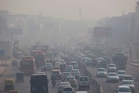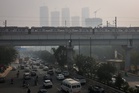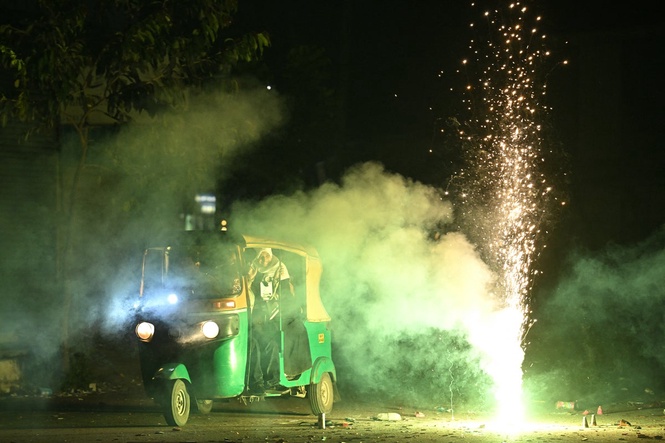
India’s Supreme Court has allowed limited use of “green fireworks” for two days during the Diwali festival once again, even as air pollution in the capital hovers near hazardous levels.
Diwali will be celebrated on 8 November this year. However, the city has already slipped back into a familiar pattern of toxic pollution with Air Quality Index rising to 387 on Friday and 28 monitoring stations recording 'severe' levels.
The festival marks the victory of good over evil, light over darkness. Hindus light lamps and burst fireworks to celebrate, with major urban centres like Delhi burning through several million kilograms in a single night, leaving the city’s skyline shrouded in smoke.
In northern India, the festival coincides with the start of the winter smog season, when stagnant air traps smoke from fireworks, traffic, and the burning of crop residue.
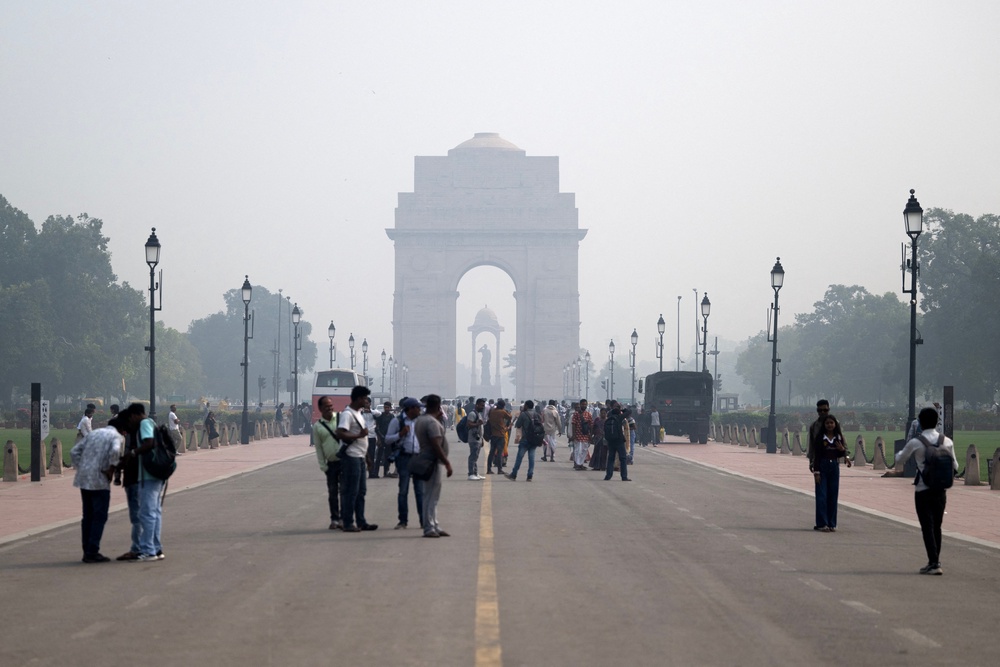
Delhi is one of the world’s most polluted megacities and air pollution is cutting the life expectancy of its residents by an average of 11.9 years compared to WHO guidelines, according to a report by the Energy Policy Institute at the University of Chicago.
The court also allowed the use of green fireworks last year.
But residents in Delhi still experienced severely degraded air quality and a toxic haze the morning after the celebration, with particulate matter (PM2.5) levels exceeding World Health Organisation safe limits by 25 to 30 times.
This year, Delhi government has already announced its Winter Action Plan months before the worst of the smog arrived. The plan is in place from 1 November to 28 February, covering the months when pollution usually spikes.
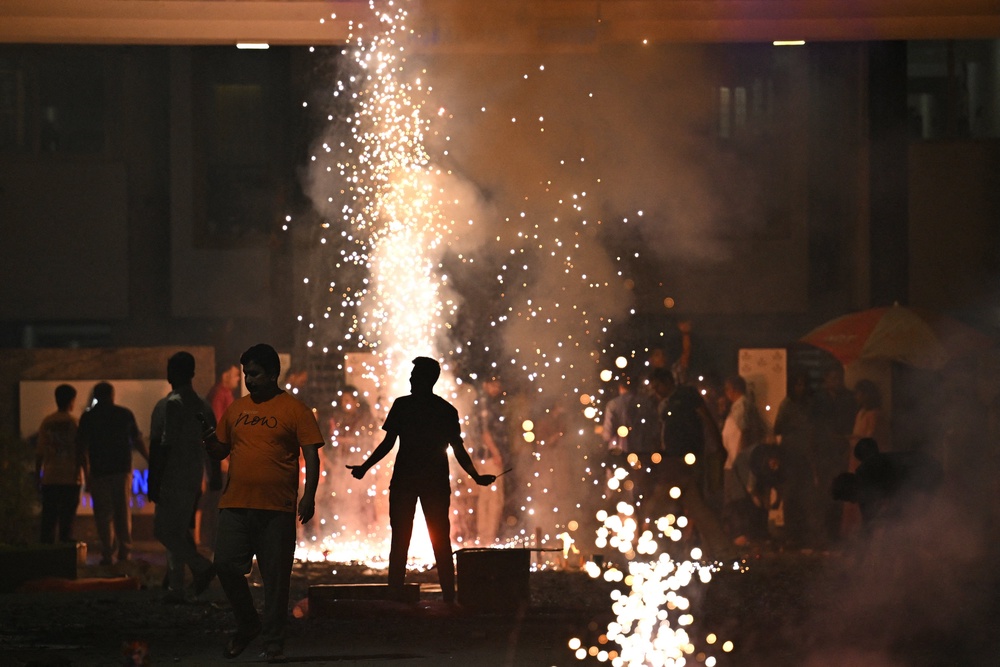
However, the ruling allowing fireworks once again has reignited debate on whether these supposedly cleaner fireworks are meaningfully different from the traditional ones that turn the capital’s skies grey each winter.
The court last year described its decision as a “temporary measure” and a balancing act. “We’re called upon to balance the interests of both the industry and the health of the general public, especially the aged, the ill and the infants,” a bench headed by chief justice BR Gavai said.
The court said a blanket ban, imposed seven years ago, had proved ineffective as illegal fireworks continued to be smuggled into the capital.
The ruling prohibits the sale of fireworks brought in from outside the National Capital Region and restricts their use to a pair of short windows, from 6am to 7am and 8pm to 10pm, on the eve and the day of Diwali.
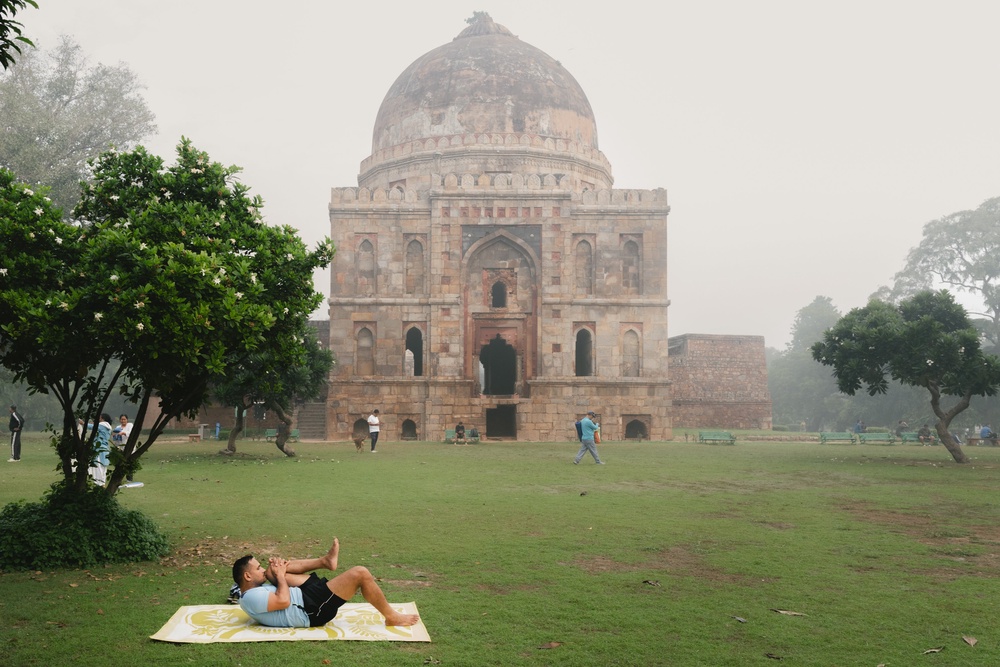
What are ‘green’ fireworks?
The so-called green fireworks are marketed as lower-emission alternatives to conventional fireworks. They were developed by the Council of Scientific and Industrial Research (CSIR) and the National Environmental Engineering Research Institute (NEERI) after the Supreme Court banned traditional fireworks in 2018.
Manufacturers claim the new formulations emit 30-40 per cent less particulate matter and sulphur dioxide and cut noise to below 120 decibels. Only fireworks carrying a QR code issued by NEERI are permitted for sale.
How ‘green’ are they?
While green fireworks may emit less smoke in controlled tests, scientists and doctors are sceptical about the difference in real-world impact. Indian hospitals routinely report spikes in emergency visits for breathing difficulty, wheezing and chest pain during and after Diwali.
These fireworks “still release fine and ultrafine particles, such as PM2.5 and PM10, which can penetrate deep into the lungs and even enter the bloodstream”, Dr Syed Abdul Aleem, senior pulmonologist in southern Hyderabad city, told The Business Standard.
A study conducted jointly by the Delhi Technological University and the Indian Institute of Technology Roorkee found that even green fireworks released huge volumes of ultrafine particles, smaller than 100 nanometres, which could reach the deepest parts of the lungs.
“Green crackers have not been studied well,” Dr Manoj Kumar, from the Centre for Research on Energy and Clean Air, told The Indian Express.
“And there’s no way for a user to know whether a cracker is truly ‘green’.”
NEERI scientists said the formulations were improving.
“We have developed compositions that can reduce emissions by up to 60 per cent, but research gaps exist,” Dr RJ Krupadam, chief scientist at CSIR-NEERI, told the same paper. He added that the use of toxic metals like barium, lithium, lead and mercury remained banned in all approved products.
Activists said the top court’s decision ignored health concerns. Bhavreeen Kandhari, founder of Warrior Moms, an organisation fighting for clean air, said it “ignores what science, medicine, and even past judgments have already established, that there is nothing green about them”.
“Legally, this is a step back from Article 21 of the constitution, which guarantees every citizen the right to life and clean air. Medically, it’s a blow to children, the elderly and those with respiratory illnesses, for whom even brief exposure to this pollution can trigger asthma attacks, hospital visits, and lasting harm," she told The Independent.
“You can’t legislate clean air by day and permit poison by night.”
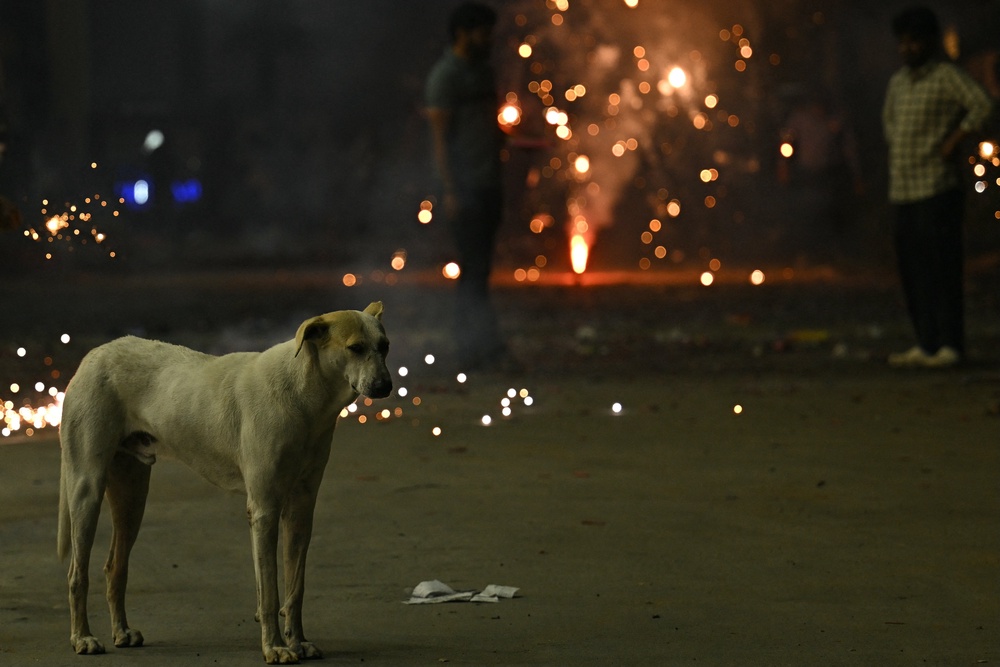
Delhi’s yearly Diwali challenge
Apart from the “green” status of fireworks, Delhi faces another familiar challenge: the enforcement of the law.
Fireworks have been banned in Delhi since 2020, but residents have continued to defy the prohibition and crackers have been available for purchase.
While green fireworks are expected to carry QR codes and certifications, fake and mislabelled products continue to flood the market.
“It was a failure when green crackers were tested experimentally in 2018,” former Delhi Pollution Control Committee official Mohan George said, according to The Indian Express.
“QR codes and stickers didn’t help. It’s very difficult for the police to differentiate between green and conventional crackers.”
Each year, Delhi’s Diwali celebrations coincide with the start of its winter smog season, when cold air and crop-burning in neighbouring states trap pollutants near the ground.
In 2023, the city’s air quality index peaked at 640 in some districts, over 10 times the safe limit set by the WHO. This year, meteorologists expect favourable winds to delay the worst smog, but the city’s air remains among the most polluted in the world.
Read MoreBollywood star calling for fireworks-free Diwali sparks political row in India
Restrictions in place as toxic air pollution spikes across India and Pakistan
Delhi turns into fortress as Modi’s rivals stage new protests against election chief
Female bus conductor dies after being pushed out of moving vehicle
Cyclone Murasu mapped: Thousands evacuated as India braces for 120kmph winds
Five killed in fresh ethnic violence in restive northeast Indian state