
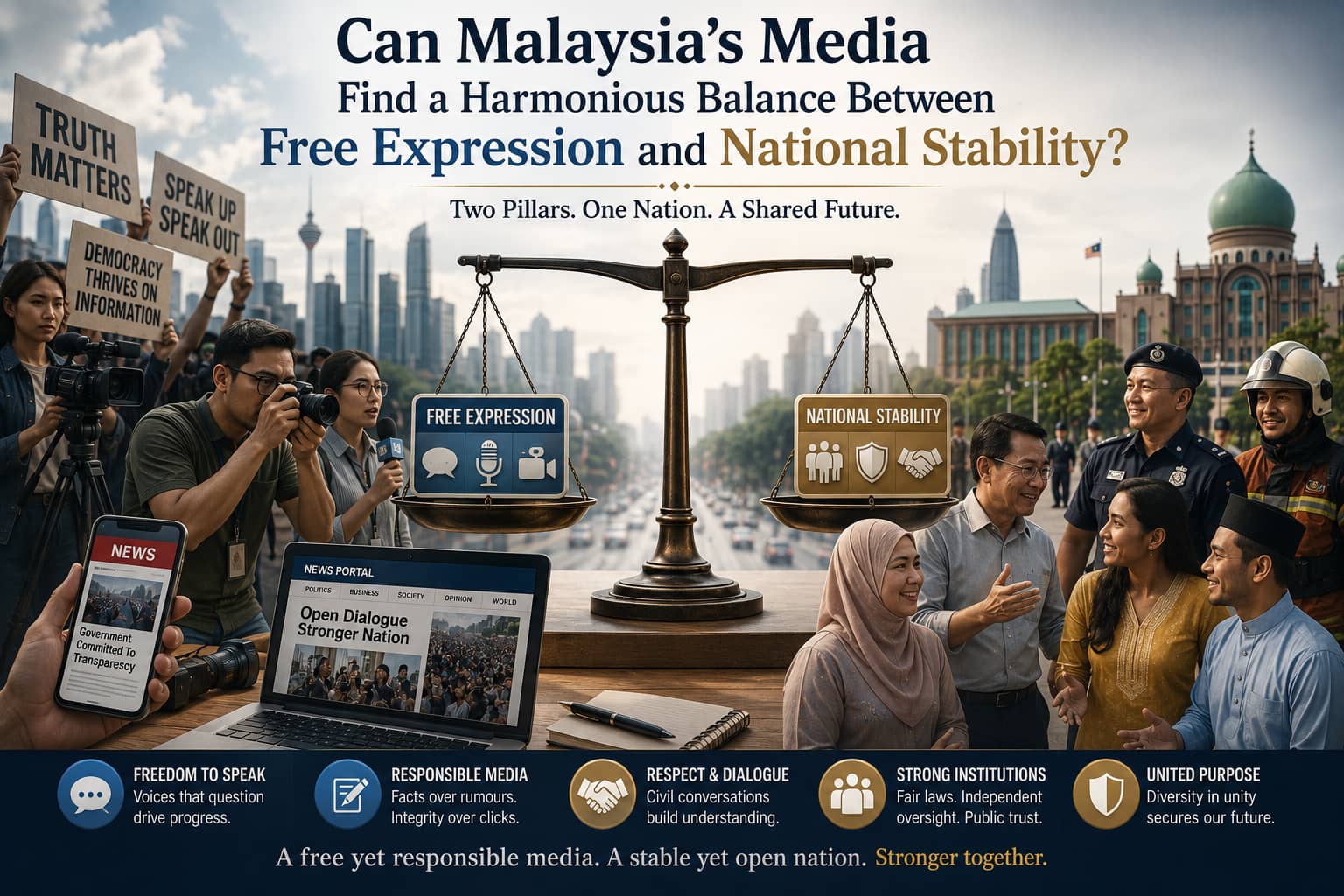
When a viral social media broadcast is abruptly cut short or a hard-hitting investigative piece quietly vanishes from public view, a familiar wave of anxiety ripples through Malaysia’s digital landscape. This quiet tension captures a profound ongoing dilemma: the delicate, often precarious dance between open public discourse and institutional oversight. Across coffee shops in Bangsar and digital forums nationwide, citizens and content creators alike frequently ask where the absolute boundaries of expression truly lie. Recent data from the Reporters Without Borders World Press Freedom Index highlights this complex reality, placing the nation at 95th place out of 180 countries. Rather than painting a picture of total silence, this positioning reflects a nuanced environment where traditional journalism and digital expression navigate intersecting pressures from legal frameworks, economic shifts, and deep-seated cultural norms.
The glow of computer monitors illuminates the late-night newsroom, casting long shadows over rows of desks where reporters pore over verified facts, draft headlines, and weigh every word against an invisible, ever-present scale. For a veteran journalist in Kuala Lumpur, the tap-tap of the keyboard is no longer just the sound of storytelling; it is a careful dance along a tightrope. Recently, as industry watchers and media organizations analyzed the complexities of the Reporters Without Borders World Press Freedom Index, a quiet realization settled over the local press corps. The question of whether press freedom truly thrives in Malaysia is not answered by a simple yes or no, but rather by the daily negotiations between public accountability, legislative boundaries, and the evolving digital ecosystem.
The Legislative Landscape and the Mechanics of Regulation
To understand the current state of journalism in the country, one must look closely at the institutional framework governing public discourse. Analysts note that Malaysia’s media environment is shaped by a complex web of laws, ranging from traditional statutes to modern digital guidelines. Regulatory bodies such as the Malaysian Communications and Multimedia Commission operate with a mandate to safeguard public order, combat online harms, and mitigate digital fraud. Recent policy rollouts, including frameworks discussed during global dialogues like the International Regulatory Conference, highlight how authorities are attempting to balance technological innovation with stringent oversight. From an institutional perspective, these measures are framed as necessary guardrails against misinformation, yet legal experts frequently analyze how broad legislative definitions can inadvertently influence what editors choose to print or leave unsaid.
Navigating Economic Realities and Social Pressures
Beyond the courtroom and the parliament, the survival of independent journalism faces profound economic and sociocultural headwinds. Media houses across Business Today report that the financial sustainability of traditional print and digital outlets has grown increasingly fragile. Advertising revenue shifts toward global tech giants, coupled with rising operational compliance costs, create an environment where newsrooms must fight harder simply to keep their doors open. Concurrently, social indicators reflect a shifting public tolerance toward sensitive reporting. Cultural diversity and multi-ethnic harmony require delicate handling, but media analysts observe that heightened polarization can sometimes translate into intense public scrutiny of journalists who probe into contentious cultural or political domains.
The Digital Shift and Platform Accountability
As news consumption migrates almost entirely to digital spaces, the battleground for freedom of expression has expanded onto social media platforms and independent blogs. Podcasts hosted by platforms like BFM 89.9 frequently feature deep dives into the shrinking margins for critical commentary, exploring how content moderation policies impact independent voices. While platforms are urged to implement robust safety codes such as verifying advertisers and labeling artificial intelligence-generated content under guidelines highlighted by the Malay Mail civil society groups continue to monitor whether these tools are applied transparently. Independent observers emphasize that digital safety must not become a backdoor for suppressing legitimate public interest inquiries, maintaining that a healthy democracy relies heavily on the unhindered flow of verified information.
What Do You Think? I’d Love to Hear Your Opinion in The Comments Section.
Despite these multifaceted pressures, Malaysian journalism refuses to stagnate. Professional bodies, press clubs, and investigative collectives continue to push for structural reforms, advocating for a permanent, independent Malaysian Media Council that can arbitrate disputes fairly without heavy-handed state intervention. Observers point out that regional comparisons such as reports tracked by Free Malaysia Today position Malaysia within a unique tier in ASEAN, where vibrant debates on governance routinely test the limits of legislative boundaries. The resilience of local reporters demonstrates that the desire for a free, fair, and courageous press remains deeply embedded in the national consciousness, even as the rules of engagement are continuously rewritten.
The journey of Malaysian journalism is a living story written every single day by editors, digital creators, and citizens who care deeply about the truth. It is a narrative defined not merely by index rankings or regulatory codes, but by the courage to keep asking difficult questions in the pursuit of a more transparent society. As technology transforms how we consume news and legislation adapts to an interconnected world, the ultimate guardian of free expression has always been the active, discerning public. The future of our national discourse rests in our collective ability to listen, analyze, and engage with respect and open minds.
AM World (tameer.work88@gmail.com) is a content creator under the Newswav Creator programme, where you get to express yourself, be a citizen journalist, and at the same time monetize your content & reach millions of users on Newswav. Log in to creator.newswav.com and become a Newswav Creator now!
The User Content (as defined on Newswav Terms of Use) above including the views expressed and media (pictures, videos, citations etc) were submitted & posted by the author. Newswav is solely an aggregation platform that hosts the User Content. If you have any questions about the content, copyright or other issues of the work, please contact creator@newswav.com.