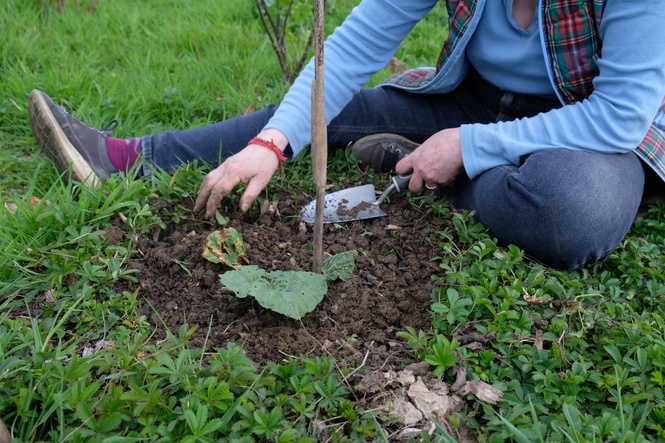
You find the perfect shade tree at a local nursery, bring it home, and spend your Saturday digging a hole in the backyard. A week later, a letter arrives from your homeowners association demanding that you remove it. The tree is on property you own, nowhere near the street, and doesn’t appear to bother anyone. So how can an HOA tell you what you’re allowed to plant in your own backyard? The answer depends on your community’s governing documents, state laws, and whether you obtained approval before making the change.
Your Backyard Isn’t Necessarily Exempt From HOA Rules
Owning a home in an HOA community often means agreeing to restrictions that extend beyond the appearance of your house. These restrictions are commonly established through recorded covenants, conditions, and restrictions, often called CC&Rs. Depending on their wording, the rules may cover landscaping changes in front yards, side yards, and privately owned backyards. New York’s regulations governing homeowners associations, for example, specifically recognize landscaping and exterior appearance restrictions among the provisions that must be disclosed in offering plans. The fact that a tree sits behind your house doesn’t automatically exempt it from enforceable community restrictions.
The Architectural Review Committee May Have the Final Say
Many HOAs require homeowners to submit landscaping plans to an architectural review committee before planting certain trees. The application might request the tree species, expected mature height, planting location, and distance from buildings or property lines. Some communities allow smaller ornamental trees without approval but require permission for large shade trees or substantial landscape changes. Others restrict planting near shared fences, drainage easements, or association-maintained areas. Before spending money at the nursery, request the current landscaping guidelines and confirm whether your proposed tree requires written authorization.
Some Tree Restrictions Have Practical Reasons
Not every HOA landscaping rule exists simply to maintain a uniform neighborhood appearance. Large trees can interfere with underground utilities, damage pavement, obstruct drainage systems, or create maintenance conflicts when planted in unsuitable locations. A fast-growing tree positioned close to a fence might eventually spread branches over neighboring properties or develop roots that interfere with nearby structures. The Arbor Day Foundation encourages selecting trees based on their mature size and the surrounding environment rather than their appearance when young. Choosing a species appropriate for the space can reduce the risk of both HOA objections and expensive future repairs.
State Laws Can Limit an HOA’s Landscaping Authority
Although HOAs have considerable power in some communities, their restrictions aren’t automatically enforceable simply because they appear in a rulebook. State laws sometimes protect particular landscaping practices, including water conservation, native plants, and environmentally beneficial gardens. For example, the University of Maryland Extension explains that Maryland communities and HOAs cannot require turf-only landscapes under the state’s protections for certain low-impact landscaping. However, those protections don’t necessarily give homeowners unrestricted permission to plant any tree in any location. The important question is whether a particular HOA restriction conflicts with applicable state law or exceeds the authority granted by the community’s governing documents.
Planting Without Approval Can Become Expensive
A homeowner who ignores an enforceable landscaping rule may receive a violation notice requiring corrective action. Depending on state law and the community’s procedures, the association may impose fines, demand removal, or pursue other remedies. Consider someone who spends $350 on a tree and another $250 on professional installation, only to discover that the planting violates a height or species restriction. If the homeowner must pay $300 for removal, the original $600 landscaping investment becomes a $900 expense with nothing left to show for it. Because enforcement rights and penalties vary, homeowners should review their association’s governing documents and state HOA laws rather than assume every threatened fine is valid.
Existing Trees May Be Treated Differently From New Plantings
A mature tree that existed before an HOA adopted new landscaping guidelines may raise different questions from a tree planted last weekend. Some governing documents contain grandfathering provisions or procedures for addressing previously approved improvements. However, an older tree isn’t automatically protected from every new rule, especially when it becomes diseased, dangerous, or interferes with common property. Responsibility for trimming, removal, and replacement may also depend on whether the tree stands on a privately owned lot or an area maintained by the association. If you’re purchasing a home with established trees, reviewing the community’s landscaping requirements can help identify future maintenance obligations.
What If Your HOA Rejects a Perfectly Reasonable Tree?
Receiving a denial doesn’t necessarily mean you have to abandon the planting project. Ask the association to identify the specific covenant, rule, or architectural guideline supporting its decision. If the restriction appears unclear or inconsistently applied, request information about the community’s reconsideration or appeal procedures. Providing an alternative planting location, a smaller species, or a professional landscaping plan may resolve concerns without creating a formal dispute. When a denial appears to conflict with state law or the HOA’s own governing documents, consulting an attorney familiar with community association law may be worthwhile.
A Neighbor’s Approval Isn’t the Same as HOA Permission
Your next-door neighbors might love the idea of a new shade tree, but their support doesn’t necessarily satisfy association requirements. Even a tree that provides privacy or blocks afternoon sunlight could violate rules about approved species, mature height, or planting location. Likewise, an HOA approval doesn’t automatically override local ordinances, utility easements, or a neighbor’s separate legal property rights. Before digging, homeowners should check for underground utilities through 811 and review any applicable easements or municipal planting restrictions. Getting the right approvals in advance is generally easier than trying to resolve a dispute after the tree has taken root.
The Cheapest Tree Is One You Won’t Have to Remove
A little research before planting can prevent an expensive landscaping mistake. Start by reviewing your HOA’s recorded covenants, architectural guidelines, and any tree-specific restrictions that apply to your lot. Then choose a species suited to your climate, available space, and long-term maintenance budget. If approval is required, keep the written authorization and the approved planting plan with your property records.
Would you accept an HOA telling you which trees you can plant in your own backyard, or do you think homeowners should have the final say?
The post Can Your HOA Stop You From Planting a Tree in Your Own Backyard? appeared first on Frugal Gardening.