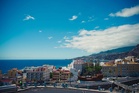
The tourist hotspot of La Palma, in the Canary Islands, suffered a power outage early on Monday following torrential rain.
According to the Canary Islands regional government, La Palma power supply was cut across the territory after a storm lashed the archipelago with rainfall of up to 30 litres per square meter per hour.
Authorities had issued a maximum rainfall alert from midnight. An emergency response plan to monitor the situation, coordinate public agencies and assess any disruption to essential services was activated.
The electric supply was fully restored at 10.26 am GMT. Red Electrica, the sole transmission agent and system operator for the Spanish electricity grid, said the causes of the power cut were still being investigated. Thermal power stations supplying electricity to the island went offline, which may have been linked to a severe storm, it said.
Tenerife gets snow in November
The outage follows a surprising flurry of snow that fell on the nearby island of Tenerife, well-known among Brits for its usually-always sunny weather.
According to local media, the summit of Mount Teide, one of Tenerife’s largest natural attractions, was closed to hikers due to the snow.
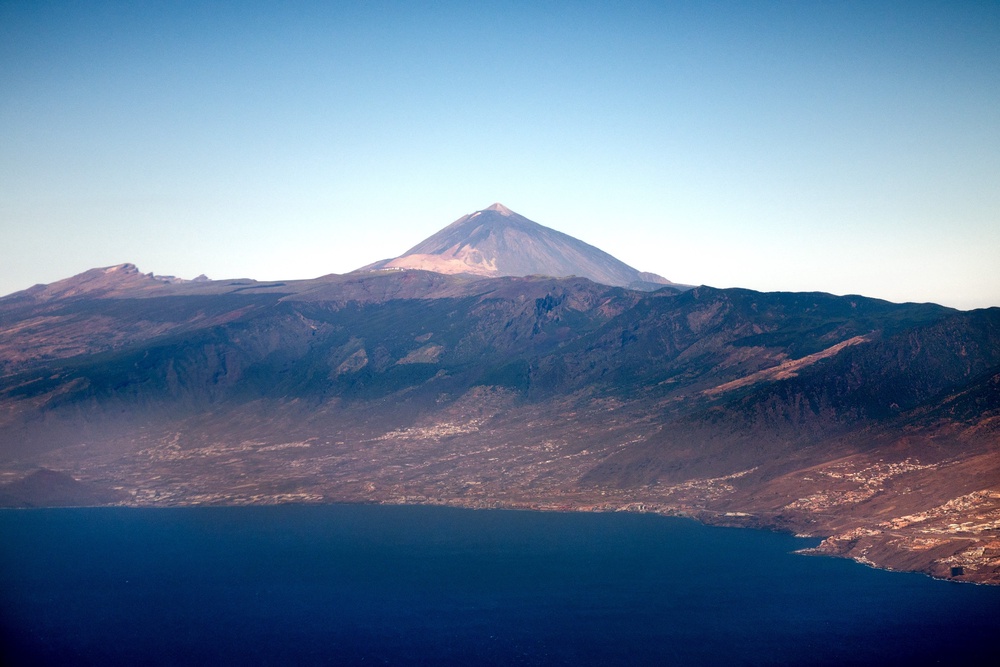
Authorities said only mountaineers with suitable winter equipment may go up the peak, but warned the weather conditions make high-altitude paths dangerous and difficult to cross.
Lower to the ground, and conditions on the island are much more enjoyable. The Met Office predicts highs of 28°C for Monday – dropping to 26°C on Tuesday and Wednesday.
Canary Islands hit with offshore earthquakes
The power outage and snow fall comes just weeks after two earthquakes struck off the coast of Lanzarote, another island forming the archipelago.
The strongest tremor, which occurred on 25 October at 6.08pm to the west of the island, measured a magnitude of 3.1 on the Richter scale.
A 2.6 magnitude micro-quake was recorded around 14 hours earlier, at 4.36am local time, at a depth of 19.2 miles.

Spain’s National Geographic Institute (NGI) listed the location of tremors under the broad geographical label “Atlántico-Canarias”. This means they occurred in a remote, offshore location, opposed to immediately beside the island’s coastline.
Seismic activity is common around the Canary Islands, particularly in the channel between Tenerife and Gran Canaria. However, most of the tremors that occur offshore in the region are small in magnitude and tend to go unnoticed by holidaymakers and locals.
Read MoreTourist Greek island hit by storm as floods trigger stay inside alert