J. Peterman, the quirky catalog retailer that became a pop-culture fixture thanks to “Seinfeld,” appears to have quietly closed after nearly four decades in business.
The company’s website has been shut down, displaying only a message that reads, “This store is not currently taking orders.” The same goes for its companion brand, Territory Ahead, while phone numbers for J. Peterman’s corporate office and customer service have been deactivated.
The apparent closure comes as the Ohio-based company faces allegations of violating consumer protection laws. In a lawsuit filed August 17, Ohio Attorney General Andrew Wilson alleges that J. Peterman failed to deliver some orders, issue refunds for canceled orders and returned merchandise, and, in some cases, honor its own refund policies. The state also alleges that customers struggled to reach the company’s customer service team.
The filing disclosed J. Peterman’s “retail business” as “no longer in operation.”
Retail Dive reported the apparent closures Wednesday and said the company had not responded to the allegations. Founder John Peterman, who is listed as chairman, and his son Tim Peterman, a former CEO and CFO, also did not respond to the outlet’s requests for comment.
The Independent has reached out J. Peterman for comment.
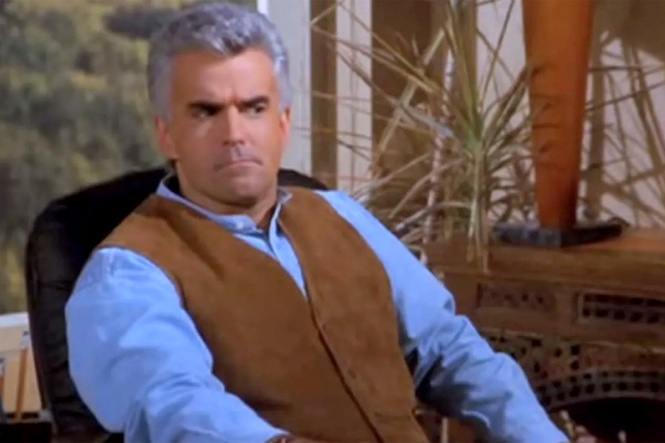
Fans of the 90s sitcom “Seinfeld” may remember the company-inspired eccentric character J. Peterman, played by John O’Hurley, who became Elaine Benes’ (Julia Louis-Dreyfus) boss when she took a job writing for the catalog.
The real J. Peterman catalog was known for its unusual, highly detailed descriptions, which turned clothing into romantic tales of travel and adventure rather than simply listing fabric, color and size. “Seinfeld” exaggerated that signature style, portraying Peterman as a wealthy, dramatic adventurer who spoke about everyday clothes as though they had emerged from some grand expedition.
The character became so closely tied to the real company that O’Hurley eventually became a part-owner after investing in J. Peterman during its 2025 revival.
The company itself has had a turbulent history. John Peterman founded it in 1987, and the catalog business grew rapidly, bringing in tens of millions of dollars in sales by the mid-1990s.

But an expansion into brick-and-mortar stores helped push the company into Chapter 11 bankruptcy in 1999. Peterman bought back the company’s intellectual property in 2001 and revived the brand.
The comeback continued for years, but the financial challenges remained. In 2023 filings, the company reported net losses of $3.6 million in 2021 and $5.7 million in 2022 and warned that it expected to continue losing money. It had also considered going public, though that plan did not materialize, according to Retail Dive.
Peterman acknowledged the difficulty of operating the smaller company in a 2018 interview with Retail Dive, telling the publication, “We’re too small to make a lot of money.”
Read MoreThe best and worst places for retirement in 2026, according to a new study
Social Security recipients could see a $2,400 yearly boost under new proposed plan
Gen Z are doing the stock market - not buying houses
Half of Gen Z is willing to abandon their career path for a better life
Erewhon, the grocery store made famous by $20 smoothies, is opening outside of LA