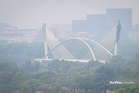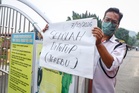
LAST week, the provincial government of Cebu hosted an Air Quality and Class Cancellation Open Forum, which involved the participation of stakeholders from the government and private sectors. The objective of the forum was to come up with Cebu-wide uniform guidelines for air quality-related suspension of face-to-face classes. Poor air quality prompted Metro Cebu’s mayors to suspend face-to-face classes for a number of days in September and October. But when should classes move online? How much discretion does a local chief executive have to determine when air pollution has crossed a level that makes it unsafe for children? The forum sought to seek clarity and unity.
Cebu’s local government officials acknowledge that air pollution and class suspensions affect learning, health and even the wider economy. The “priority here is the welfare of our children,” Cebu Gov. Pam Baricuatro stressed.
Pediatric pulmonologists attending the forum warned of “potential long-term effects” of exposure to air pollution, especially in children aged three to 12 years old.
The health risks associated with air pollution exposure are serious. Air pollution “increases morbidity and mortality from cardiovascular and respiratory disease and from lung cancer, with increasing evidence of effects on other organ systems,” to quote the World Health Organization.
On the other hand, frequent cancellations of face-to-face classes have a negative impact on learning. Cebu province and the highly urbanized cities of Cebu and Lapu-Lapu already have functional literacy rates below the national average. Also, the Second Congressional Commission on Education, or Edcom 2, found that “Cebu province faces one of the largest early-grade reading challenges nationwide. Notably, the LGUs of Talisay, Balamban, Liloan, Consolacion and Madridejos, among others, have the largest concentration of struggling readers, highlighting the need for focused attention and contextualized intervention.”
Balancing protection of health and the importance of attending in-person classes is not easy given the reality on the ground.
Local chief executives have the authority to suspend face-to-face classes when air pollution reaches a certain level. This is stipulated in Department of Education guidelines on class suspension during disasters and emergencies. In the case of poor air quality, the mayor may suspend face-to-face classes when particulate matter (PM) 2.5 reaches a concentration of 55.1-90 micrograms per cubic meter (µg/m³). Suspension is automatic if air pollution goes above this level. Mayors, however, suspended face-to-face classes when pollution levels reached the lower level of “Very Unhealthy.”
What got some of us — me included — confused, even wrong, is the way air quality is reported by the Environmental Management Bureau (EMB). But “An [air quality index or AQI] of 100 is not the same as a PM2.5 concentration of 100 µg/m³ (micrograms per cubic meter),” Dr. Elisse Nicole Catalan, provincial health consultant of Cebu, emphasized in a Facebook post. “DENR-EMB reports primarily AQI. DepEd mandates following PM2.5.” Thank you, Dr. Catalan!
DepEd’s instructions are based on DENR-EMB guidelines, most probably DENR Administrative Order No. 2020-14 that describes the AQI’s six levels of air quality for PM2.5 and the so-called “breakpoints.” The 55.1-90 µg/m³ comprise the purple “Acutely Unhealthy” level. Thus, while DepEd doesn’t use AQI values, it follows the DENR-EMB classification: pollution concentration levels and their corresponding colors.
The EMB then converts pollutant concentrations to AQI using a formula found in the “Procedural Manual on Data Handling Protocol for Criteria Air Pollutants” (DENR).
However, the way EMB Central Visayas presents the hourly AQI in its live tracker gives the impression that AQI and µg/m³ are one and the same. Example: “PM2.5 - 104 µg/m³. 10/22/2026 1AM, City of Talisay. Unhealthy for sensitive groups (101-150).” Applying the above-mentioned formula, however, a PM2.5 AQI value of 104 corresponds to around 35.7 µg/m³. Or am I wrong again?
Anyhow, the most important issue here is not formulas and highly technical descriptions. Rather, it is how to protect public health. While the threshold for class suspensions is set by DepEd at the “acutely unhealthy” purple level, prolonged exposure to even moderate levels of air pollution can be very harmful to human health. This must be considered as well when setting a standard for when face-to-face classes may be suspended.
We must not also forget the real problem here: the pollution itself. We know that the bad air in October was driven by local factors and not the Indonesian forest fires. We can’t do anything about the weather conditions that caused the trapping and accumulation of pollutants. But why aren’t we talking about the pollution itself? UP Cebu professor, lawyer Ian Vincent Manticajon, in his Oct. 17 “Bar None” opinion column, pointed out that Metro Cebu’s air pollution was documented years ago, yet we doubted EMB when it identified local factors behind the pollution.
Our activities — industrial processes, traffic, open burning, construction — have been generating hazardous emissions for decades. Usually, weather conditions make them blow away and disperse. Not this time. The pollution lingered, affected our daily routines, and made us sick. We must address the problem now and not wait for the next round of unhealthy air.