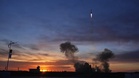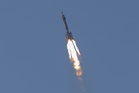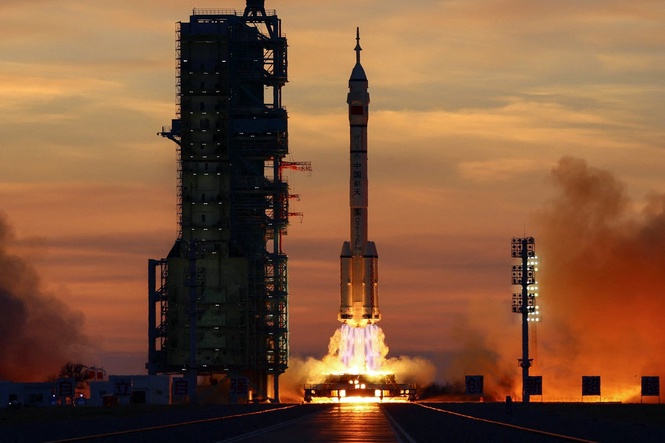
China has successfully carried out the historic launch of its Shenzhou 24 spacecraft, its first ever mission carrying a foreign astronaut to the country’s Tiangong space station.
The crew includes Pakistani astronaut Muhammad Zeeshan Ali, 40, alongside China’s Tang Hongbo, 51, and Wu Yi, 39, in what has been hailed as an important landmark for Beijing’s crewed space programme.
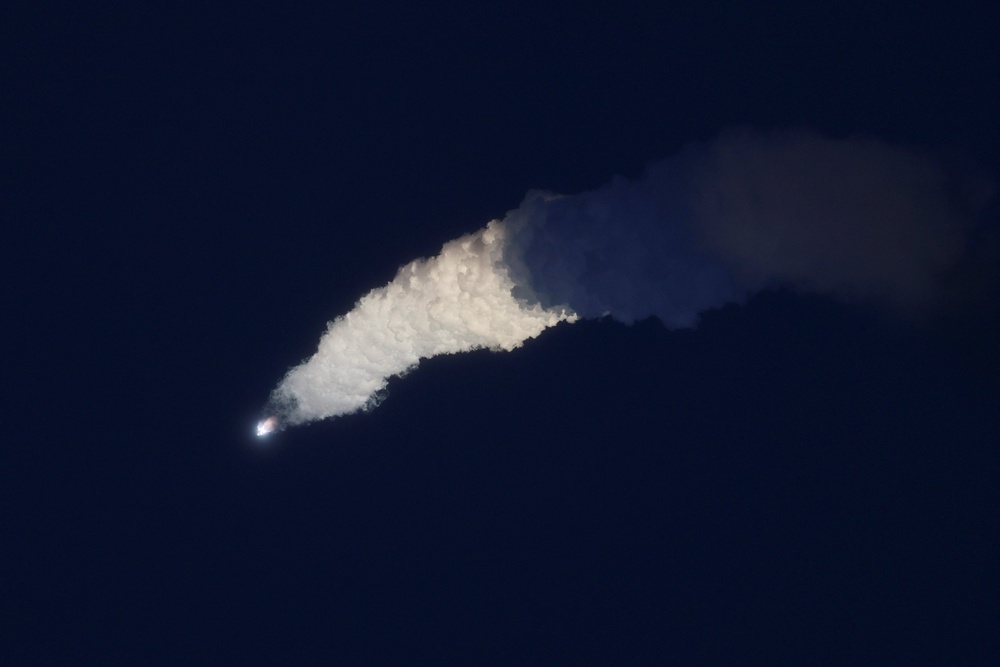
The China Manned Space Agency (CMSA) said Wednesday morning’s launch was a “complete success”, with a Long March 2F rocket carrying the Shenzhou 24 spacecraft blasting off from Jiuquan Satellite Launch Centre in northwestern China at 8.18am Beijing Time (0.18am GMT).
The spacecraft successfully separated from the rocket, entered its predetermined orbit, and docked with the Tiangong space station at 3.56am GMT after a flight of about three-and-a-half hours, according to the CMSA.
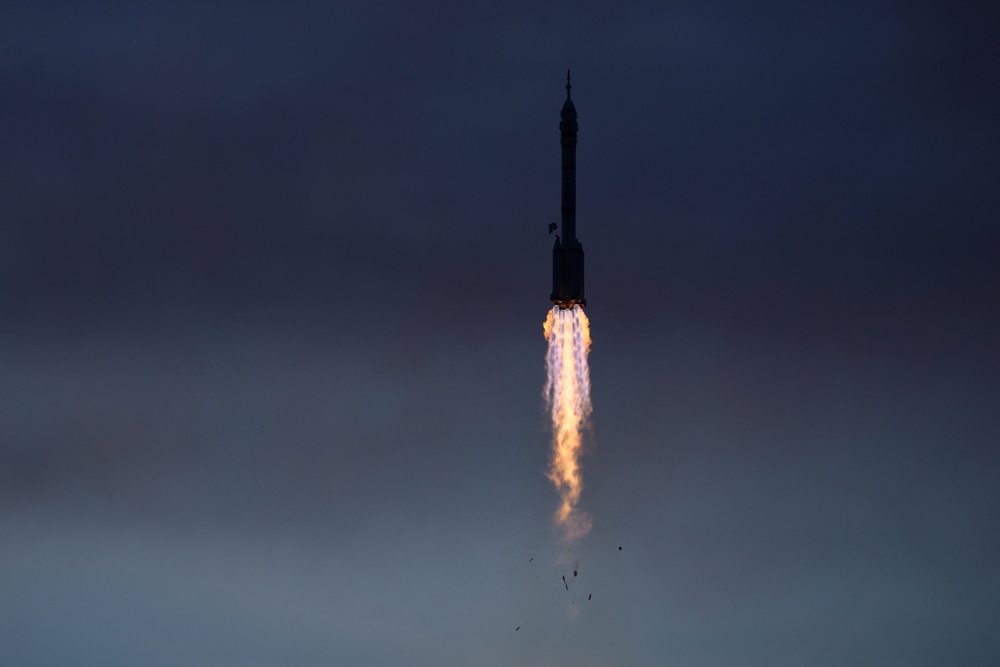
China’s official broadcast of the launch showed plumes of smoke erupting as the rocket rose from the launchpad with a deafening roar.
Crowds of people had attended a send-off ceremony for the astronauts before the launch.
China's Shenzhou-24 blasts off for the Tiangong space station, carrying three #astronauts—including Pakistani payload specialist Muhammad Zeeshan Ali.
As Ali said before launch, he carries "the hopes of 250 million #Pakistanis" into orbit. pic.twitter.com/M6Dn9p2pxu
Pakistani prime minister Shehbaz Sharif offered his best wishes to the astronauts ahead of the launch.
“Pakistan-China friendship is surpassing the heights of the Himalayas in its journey to outer space,” Mr Sharif said in a post on X.
The crew will conduct over 90 scientific experiments and technology tests at the space station.
Mr Ali will conduct experiments in the fields of biotechnology and materials, including on photosynthetic microorganisms, before returning to Earth about a week later aboard the Shenzhou 23 spacecraft, Chinese state broadcaster CCTV reported.
The Pakistani astronaut has trained intensively for seven months since his selection for the mission in April, and has admitted that his biggest challenge was learning advanced Mandarin to communicate with his crewmates and operate complex machinery labelled in the language.
“I’m not flying for myself; I carry the name of Pakistan on my shoulder, the hope of 250 million Pakistanis,” he told reporters earlier on Tuesday.
“To every child who’s watching while I’m in orbit, look up at the sky and remember that I am up there with your dreams,” Mr Ali said.
A send-off ceremony for the #Shenzhou24 crew, consisting of two Chinese #astronauts and one Pakistani astronaut, was held early Wednesday morning at the Jiuquan Satellite Launch Center in northwest China. pic.twitter.com/dOeIGh6icY
The joint mission is part of an agreement signed by China and Pakistan in February 2025.
China’s Tiangong space station, completed in late 2022, has been receiving a rotating crew of astronauts performing six-month-long missions, keeping the orbiting outpost constantly crewed.
This is the first time the space station is hosting a foreign astronaut.
Mr Ali said he hoped space cooperation between the two countries would grow from one astronaut in one flight to multiple joint flights and to the Moon, Mars and beyond.
China has plans to double the size of its space station over the coming years, and facilitate more joint missions with crews from other countries.
Its decision to focus on its own space station rather than the International Space Station comes amid an intense rivalry with the US, as both countries aim to land boots on the lunar surface by 2030.
Read MoreChina could use robot dogs to guard its lunar bases, study suggests
Scientists want to send ‘swarms’ of robots to search for life on Mars
Malaysia says jellyfish light over Sabah was Chinese rocket
China set for landmark rocket launch carrying first foreign astronaut
BepiColombo probe ‘safe’ in Mercury’s orbit despite glitch, ESA says
Another planet could be hiding in our solar system. Here’s what it looks like