.jpg)
By Mihar Dias February 2025
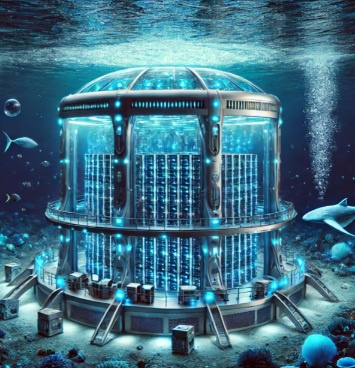
China’s new underwater AI data centre near Hainan marks a significant step in its tech rivalry with the U.S. Capable of supporting 7,000 AI conversations simultaneously, this facility represents China’s push to challenge American dominance in artificial intelligence, semiconductors, and digital infrastructure.
A Threat to U.S. Semiconductor Leadership
For years, the U.S. has led AI and computing through companies like Nvidia, Intel, and AMD. However, China’s submerged data centre, developed by Shenzhen Hicloud Data Centre Technology, suggests an effort to break free from American chip dependence. https://www.scmp.com/news/china/science/article/3299313/chinas-subsea-data-centre-could-power-7000-deepseek-conversations-second-report
Reports claim the AI cluster can process in one second what a conventional computer would take a year to complete, signaling a major leap in efficiency. https://www.scmp.com/news/china/science/article/3299313/chinas-subsea-data-centre-could-power-7000-deepseek-conversations-second-report
Amid U.S. chip restrictions, China has been accelerating its AI development. The rise of DeepSeek, a homegrown AI chatbot, highlights its move away from Nvidia’s GPUs.
If China can train AI models cost-effectively, Nvidia’s stronghold on the AI chip market in China and Asia may weaken, shifting the global semiconductor landscape.
Revolutionizing AI Infrastructure
The use of seawater cooling in AI data centres could be transformative.
Traditional data centres require massive energy for cooling, but China’s model harnesses ocean currents to dissipate heat naturally. https://www.scmp.com/news/china/science/article/3299313/chinas-subsea-data-centre-could-power-7000-deepseek-conversations-second-report
If scalable, this innovation could lower costs and reduce environmental impact, setting a precedent for future AI facilities worldwide.
Strategically located near critical shipping lanes and contested waters in the South China Sea, Hainan’s underwater data hub also strengthens China’s regional influence. The integration of advanced AI infrastructure into maritime strategy may enhance China’s military and economic presence in the region.
U.S. Response: More Sanctions or Innovation?
The Biden administration’s restrictions on China’s access to advanced semiconductors aim to slow its AI progress, but this development highlights the limits of such measures. https://www.scmp.com/news/china/science/article/3299313/chinas-subsea-data-centre-could-power-7000-deepseek-conversations-second-report
If China successfully builds alternatives to Nvidia’s chips, U.S. export controls may become less effective, as seen with China’s replacement of Western tech giants like Google and Microsoft.
The U.S. now faces a dilemma: tighten restrictions further or invest heavily in next-gen AI infrastructure. Tech giants like Google, Microsoft, and Amazon are already exploring AI data centres, but China’s seawater-cooling model could push them to rethink traditional designs.
The Future of AI Power
As AI becomes central to economic and military power, infrastructure is as critical as technology itself. China’s underwater data centre may signal a future where AI supercomputers move from land to the ocean. The race is no longer just about the best chips—it’s about reimagining AI infrastructure for the future.
Mihar Dias is a content creator under the Newswav Creator programme, where you get to express yourself, be a citizen journalist, and at the same time monetize your content & reach millions of users on Newswav. Log in to creator.newswav.com and become a Newswav Creator now!
The User Content (as defined on Newswav Terms of Use) above including the views expressed and media (pictures, videos, citations etc) were submitted & posted by the author. Newswav is solely an aggregation platform that hosts the User Content. If you have any questions about the content, copyright or other issues of the work, please contact Newswav.