China supports the US-Iran agreement and calls for continued dialogue to restore stability in West Asia.
KUALA LUMPUR: China welcomes the understanding reached by the United States (US) and Iran and hopes the agreement will be signed as scheduled, as every effort towards peace helps lower the risk of conflict.
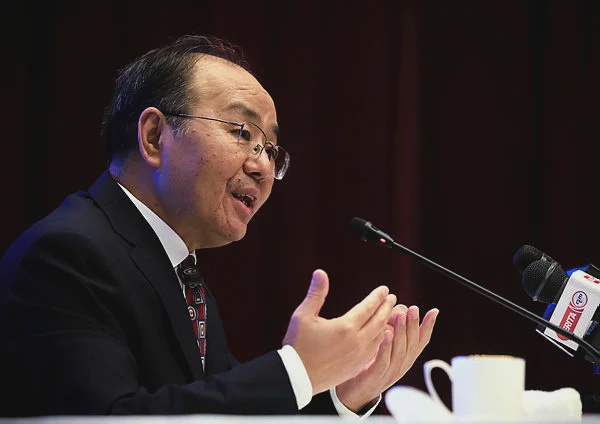
China’s Ambassador to Malaysia Ouyang Yujing said Beijing believes that dialogue and negotiation remains the most effective way to address differences and prevent further escalation in the region.
“China welcomes the agreement reached by the United States and Iran on the content of a first-phase memorandum of understanding and hopes that it can be signed as scheduled, because every additional effort for peace will reduce the risk of conflict,” he said during a media briefing here Tuesday.
Ouyang said China has consistently advocated peace talks and diplomatic solutions since the outbreak of the conflict involving Iran.
He also noted that China’s foreign minister had repeatedly called for disputes to be resolved through negotiations and for all relevant parties to maintain communication and coordination, which Beijing believes has played a constructive role in efforts to end the conflict.
“Together with the international community, we will continue to play a constructive role in restoring peace and stability in the Gulf region at an early date to create a favourable environment for the common development of all parties,” he said.
The ambassador said China had reiterated its consistent position on issues including Iran during recent high-level engagements with the US, urging all parties to remain committed to resolving disputes through dialogue and negotiation.
He stressed that confrontation would be detrimental not only to the countries directly involved but also to the wider international community, whereas cooperation would foster a peaceful, stable environment conducive to global development.
Washington and Tehran reached a temporary truce on April 8, mediated by Pakistan, before announcing a framework agreement to end the conflict. The accord is expected to be formally signed in Switzerland on July 19.
Separately, Ouyang said China would continue to work with ASEAN partners to strengthen political mutual trust, support ASEAN unity and strategic autonomy, and deepen cooperation under the China-ASEAN Comprehensive Strategic Partnership.
He added that Beijing was prepared to enhance collaboration through regional frameworks such as the Regional Comprehensive Economic Partnership (RCEP) and the proposed China-ASEAN Free Trade Area (FTA) 3.0, while expanding cooperation in emerging sectors such as the digital economy and energy.
Ouyang, among others, responded to a question on how China would cooperate with ASEAN countries including Malaysia to ensure maritime security and address the spillover effects of the West Asia crisis amid growing global economic uncertainties.