SINGAPORE: From pre-bleached straight hair wigs to wavy clipped extensions and blinged-out coffin-shaped nails, sales of Chinese-made beauty accessories are surging across the US.
While friction over soaring Chinese exports of high-profile items such as cars and batteries forms the backdrop to this week’s presidential summit, the boom in the non-strategic beauty sector underlines China’s manufacturing prowess.
“This market is growing,” said Joe Wu, an exporter in the central city of Xuchang, known as China’s wig capital, who expects his sales to grow 40% this year, driven heavily by US buyers drawn through the apps TikTok and Instagram.
China’s US exports of hair products rose 12.4% year-on-year to US$1.3 billion (RM5.3 billion) in the first half of 2026, customs data shows, with shipments on track to beat 2025’s full-year figure of US$2.3 billion.
It is one of the fastest growing export categories alongside more conventional ones, such as computer parts, scooters or plastic goods.
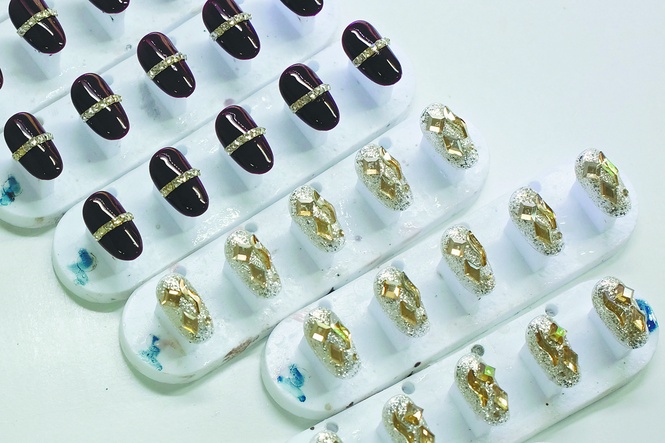
While there is no customs data for artificial nails, which are categorised as plastic products, producers say business is booming.
Zhang Da, the owner of a 200-worker press-on nail factory in the eastern county of Donghai, says exports climbed to 70% of total revenue this year from 20% late in 2025, with US sales making up a large chunk.
The trend demonstrates that Beijing occupies “a unique historical position” in using scale and product upgrades to dominate global markets in both advanced and lower value-added goods, said Dan Wang, the China director of Eurasia Group.
“It is not just competing with the industrial products of one or two countries, it is competing with all industrial products globally,” Wang said, a scenario that presented a problem for other countries, rather than China.
“It is going to be very difficult to see China’s advantage replaced for many years to come.”
Chinese exporters of beauty accessories have capitalised on the proliferation of influencers and celebrities on social media who frequently change wigs and manicures.
To do so, Chinese manufacturing centres have relied on labour forces that would be hard to replicate elsewhere – in Xuchang alone, for example, about 300,000 of a population of 4.4 million work in the hair industry, state media said.
Donghai, a county of 1 million people in the eastern city of Lianyungang, had nearly 25,000 press-on nail businesses.
Wu, in Xuchang, said its producers can outcompete rivals in places like Southeast Asia through efficiencies gained from large output capacity.
They mostly outsource the labour-intensive process of tying individual hair strands to laces used in wigs to North Korea, while sourcing some of the hair domestically from rural areas.
“The hair industry is just like any other sector – it relies on economies of scale, coupled with upstream and downstream supply chain integration,” Wu added.
Hair products took 17 of the top 20 spots in TikTok sales revenue rankings for US fashion accessories in August, according to data analytics platform Fast Moss. The top-selling item was a glueless, pre-bleached straight-hair wig.
Ranked seventh was a men’s bracelet with Bible verses, in 13th place was a hand-sized stitching device, and 20th was a pair of sunglasses.
Another hair product seller from Xuchang, who only gave his surname Tian, said his US sales rose 10% to 15% over last year.
“Customers there really value personalisation,” Tian said, citing a feature that lets him charge higher prices for lower volumes.
US clients account for a monthly revenue stream of US$10,000, said a TikTok livestreamer from a nail shop in Donghai who sought anonymity.
Producers are unfazed by any prospects of further US trade curbs, saying US demand is strong and supply cannot easily scale up outside China.
“Tariffs have an impact, but they are not the decisive factor,” Wu added. – Reuters