
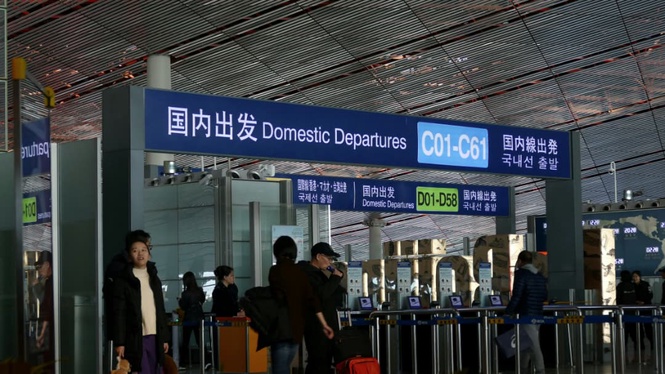
HONG KONG - Chinese tourists are expected to make about 179 million overseas trips in 2026, nearly 3 per cent fewer than previously forecast, as economic uncertainty weighs on consumer confidence.
Marketing and travel data firm China Trading Desk also lowered its estimate for destination spending to about US$258 billion (S$330 billion), although both figures would remain above pre-pandemic levels, Bloomberg reported.
“Chinese consumers haven’t stopped wanting to travel, but they are becoming more selective about when a trip is worth taking.
“Those who do travel are broadly maintaining their budgets; the weakness is in the number of trips. That points to a consumer who is cautious rather than absent,” said Subramania Bhatt, head of China Trading Desk.
The revised forecast reflects weaker outbound travel demand as China's property downturn continues to affect discretionary spending, while disruptions linked to the Middle East conflict have also reduced long-haul travel.
Chinese travellers made about 175 million outbound trips in 2019, including travel to Greater China destinations, and spent approximately US$255 billion.
Geopolitical tensions and safety concerns are also influencing where Chinese tourists choose to travel, with some destinations losing appeal while closer markets gain popularity.
Chinese airlines have reduced capacity to Japan following diplomatic tensions over Taiwan, with Chinese visitor numbers to Japan expected to fall by more than half to 4.1 million in 2026.
Thailand has also seen weaker appeal amid widely reported concerns over scams and tourist safety.
The shift towards nearby destinations has placed Hong Kong and Macau at the top of the outbound travel market, together accounting for almost 40 per cent of Chinese overseas trips.
Hong Kong is projected to receive about 41 million Chinese visitor trips this year, although average spending is expected to be only about US$310 per visitor.
Long-haul destinations attract fewer Chinese travellers but can generate significantly higher spending, with France expected to receive about 2.2 million trips while recording approximately US$7,622 in spending per visitor.
South Korea has emerged as a major beneficiary of the changing travel patterns, with strong shopping demand and a shift away from Japan expected to bring seven million Chinese visitors and nearly US$13 billion in spending.
That translates to average spending of about US$1,815 per visitor in South Korea.
Despite the downgrade, Chinese outbound travel is still expected to grow 7 per cent year-on-year from 2025, while average spending remains relatively stable at US$1,437 per trip.
“The recovery has slowed, but it hasn’t reversed,” Bhatt said.
