THE Philippines and the United States on Friday condemned the China Coast Guard (CCG) for ramming a civilian boat on a humanitarian mission in the West Philippine Sea (WPS).
The Bureau of Fisheries and Aquatic Resources (BFAR) vessel BRP Datu Magat Salamat was on a mission to distribute fuel to Filipino fishermen about 54 nautical miles off the coast of Palawan province.
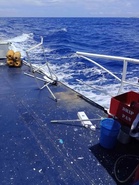
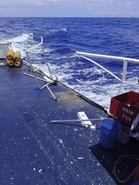
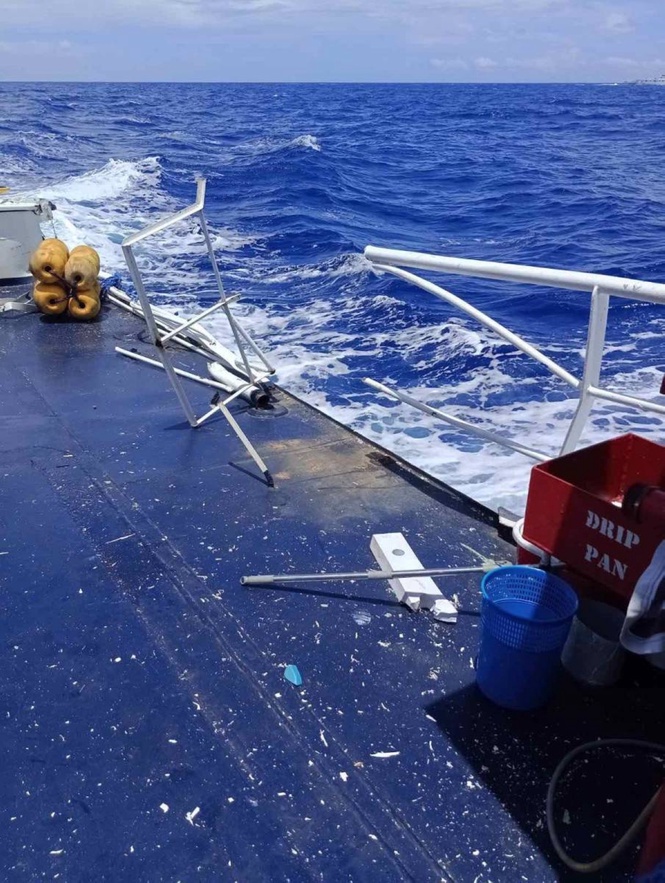
A China Coast Guard vessel, CCG-21585, carried out a series of maneuvers and made contact with the Philippine ship, damaging the supply vessel's railings and deck structures but causing no injuries, the Philippine Coast Guard (PCG) said.
"The China Coast Guard deliberately rammed a civilian government vessel on a humanitarian and livelihood mission," it said in a statement.
Video released by the PCG showed crew members shouting "brace for impact!" moments before the collision, which took place at 11:13 a.m.
Photographs taken after the impact showed bent and detached railings, damaged metal supports and debris scattered across the deck.
The Department of Foreign Affairs (DFA) said there was “no justification” for the Chinese vessel to undertake aggressive actions against a Philippine civilian law enforcement vessel, damage the ship, and endanger its civilian crew.
It stressed that the BFAR vessel was merely conducting routine and lawful humanitarian activities to support Filipino fishermen in the West Philippine Sea.
The PCG reported that the CCG vessel made another dangerous maneuver after the collision, passing directly astern of the BFAR ship at a distance of about 5 meters.
PCG Commandant Admiral Ronnie Gil Gavan ordered maritime and air assets to proceed to the area to assist the vessel and ensure the safety of its crew.
The DFA said the Chinese vessel's actions were inconsistent with China's obligations under international law, citing the United Nations Convention on the Law of the Sea (Unclos), the 2016 Arbitral Award, the 1972 International Regulations for Preventing Collisions at Sea, and the 1974 Safety of Life at Sea Convention.
The department called on Beijing to respect the Philippines' sovereign rights within the country's exclusive economic zone, exercise restraint, and avoid actions that could further escalate tensions in the region.
China, however, disputed Manila's account. Its coast guard said the Philippine vessel ignored warnings, altered its course, and suddenly accelerated across the Chinese vessel's bow, placing responsibility for the collision on the Philippine side.
The collision came a day after the BRP Datu Magat Salamat had run aground at Hasa-Hasa Shoal while approaching Filipino fishing boats to distribute fuel.
The PCG assisted in refloating the vessel and reported that a Chinese aircraft was monitoring the operation.
US Ambassador to the Philippines Lee Lipton criticized the Chinese action.
"We strongly condemn the China Coast Guard's deliberate ramming," Lipton said in a post on the Facebook page of the US Embassy in the Philippines.
The National Task Force for the West Philippine Sea separately condemned the incident and said the government would continue supporting lawful missions intended to protect the rights and welfare of Filipino fishermen in the West Philippine Sea.
The 2016 arbitral tribunal ruling rejected China's expansive maritime claims that lacked a legal basis under Unclos. China has continued to reject the ruling.
Reckless aggression
Former Surigao del Norte representative Ace Barbers on Saturday condemned the reported ramming of the BRP Datu Magat Salamat by a China Coast Guard ship in the West Philippine Sea, calling the incident “reckless aggression” that endangered Filipino lives.
“The Chinese were not confronting an enemy warship. They were confronting a Philippine government vessel helping Filipino fishermen. Yet they chose to use dangerous maneuvers that could have cost Filipino lives,” Barbers said.
Barbers said the reported sequence of maneuvers made the incident particularly disturbing.
“China cannot simply impose its will through intimidation, dangerous maneuvers and physical force. The West Philippine Sea is not a lawless zone where the biggest ship gets to dictate the rules. International law governs the seas, not the size of a country’s navy or coast guard,” he said.
Barbers said the Philippine vessel was not conducting an offensive military operation but was performing a government mission to assist Filipino fishermen.
“These were Filipino fishermen being assisted by their own government. To endanger a Philippine vessel performing that mission is not merely provocative — it is a direct affront to the rights and welfare of our people,” he said.
He said the Philippines should document and protest such incidents through available legal and diplomatic mechanisms while continuing to exercise its maritime rights with discipline and restraint.
“China should understand that its coercive tactics will not erase Philippine rights. Filipino fishermen have the right to pursue their livelihood, and Philippine government vessels have the right to perform lawful missions in our EEZ. Ramming a Philippine ship will not make China’s claims more legitimate — it only demonstrates why the rules-based international order must be defended,” Barbers said.
A national security expert and civil society leader, Jose Antonio Goitia, chairman emeritus of Alyansa ng Bantay sa Kapayapaan at Demokrasya, said the incident was worrisome because the vessel that was rammed was a civilian vessel on a mission to help Filipino fishermen.
“This was a civilian mission, not a confrontation. The Philippine vessel was there to assist our fishermen, yet according to the PCG, it was subjected to dangerous maneuvers,” Goitia said.
“A peaceful government mission should never be met with conduct that puts lives and vessels at risk,” he added. WITH REUTERS