

In China, death has long been considered a taboo topic, often associated with misfortune and bad luck. The number 4 (四 in Chinese), for example, is viewed with great superstition - its pronunciation, sì (四), sounds remarkably similar to the word for death, sǐ(死). This deep-rooted fear of death permeates much of Chinese culture, influencing everything from daily life to rituals and traditions.
Yet, in the city of Heze, located in eastern China’s Shandong province, a surprising shift is taking place. Despite the cultural aversion, Heze has quietly become the epicenter of a booming industry - an industry that seems to embrace what many in Chinese society fear the most. Here, the taboo of death has been transformed into a thriving business, one that caters to a market that most would never imagine.
How has this cultural barrier been broken? And what has sparked the sudden rise of this industry in a place where death has long been shrouded in silence? As the city of Heze becomes a key player in China’s funeral sector, the answers are as unexpected as they are intriguing. What secrets lie behind this growing industry, and what does it say about the changing attitudes toward death in modern China? The story is far from over, and its twists and turns are just beginning to unfold.
Lisa Liu, a 29-year-old from Heze, China, once worked as a teacher. However, after feeling overwhelmed and suffering from exhaustion in her teaching job, she decided to change careers in July 2023. A chance interview led her to a completely unexpected path - coffin sales, with a focus on the European market, particularly Italy.
During her transition, Liu’s boss took her on a tour of the coffin factory, where she witnessed the entire production process. From the cutting of logs to the carving and assembly of coffins, she saw how the workers crafted each piece. To the factory employees, coffins were simply wooden items. In fact, some workers even used empty urns as storage boxes in their homes.
This firsthand experience helped Liu overcome her initial superstitions about coffins being inauspicious objects. In contrast to the heavy, dark-colored coffins typical in China, Italian coffins are lighter and often adorned with intricate religious carvings. She learned that while cremation in China involves only the body, in Italy, both the body and the coffin are cremated together.
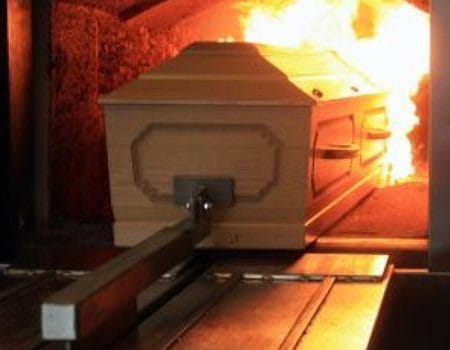
Heze, her hometown, is home to three million paulownia trees, which are perfect for coffin production. These trees are lightweight, have a low ignition point, and boast beautiful grain patterns, making them ideal for the Italian market. According to the mainland Chinese media outlet Jimu News (极目新闻), the coffins from Heze, priced between US$90 and US$150, are considerably more affordable than European coffins, which can range from US$1,100 to US$2,100.
Liu’s factory exports approximately 40,000 coffins to Europe annually, generating nearly 40 million yuan (US$6 million) in revenue. Despite challenges like changing European Union policies and rising shipping costs, Liu remains optimistic about the future of the coffin industry in Heze. "People die every day, and everyone will eventually need a coffin," she explained confidently.
Meanwhile, the funeral industry in Mibeizhuang village, located in Hebei province, has also become a significant player in China’s funeral market. The village is filled with hundreds of shops selling funeral clothing, flower wreaths, and body bags. In recent years, the villagers have expanded their offerings, introducing eco-friendly products such as biodegradable joss paper and electronic flower wreaths.
These products are sold through e-commerce platforms to markets in Southeast Asia, Europe, and the United States. In the West, young people live-stream the burning of joss paper to pray for blessings. A stack of joss paper is priced at US$15 on major platforms, while it costs less than 10 yuan (US$2) in China. In 2020, Mibeizhuang’s funeral supplies industry was valued at over one billion yuan (US$145 million).
Further south, in Huian, a city known for its granite, tombstone exports to Japan are valued at nearly two billion yuan annually. The rise of China’s funeral industry is a reflection of the complex attitude Chinese society holds toward death, a topic that continues to evolve with changing cultural and economic influences.
Aaron Colt (aaronafter@hotmail.com) is a content creator under the Newswav Creator programme, where you get to express yourself, be a citizen journalist, and at the same time monetize your content & reach millions of users on Newswav. Log in to creator.newswav.com and become a Newswav Creator now!
The User Content (as defined on Newswav Terms of Use) above including the views expressed and media (pictures, videos, citations etc) were submitted & posted by the author. Newswav is solely an aggregation platform that hosts the User Content. If you have any questions about the content, copyright or other issues of the work, please contact creator@newswav.com.