A NATIONAL budget is more than a ledger of government expenses. It is a public statement of what the state values, whose needs it recognizes, and how it intends to use the money collected from the people. Yet for a long time, budget making was difficult for ordinary citizens to follow. Documents were technical, deliberations hard to track, and the path from an executive proposal to a final appropriation often seemed sealed inside government institutions.
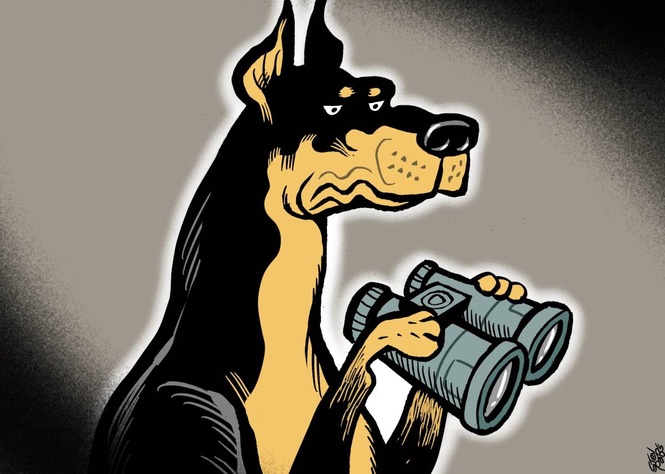
That is changing. Public documents and digital tools now make it easier to compare versions of the budget, trace amendments, examine project lists, and ask who benefits. Citizen watchdogs have helped turn those tools into public understanding. They translate spreadsheets and committee reports into questions people can see and debate. They locate allocations that deserve explanation, flag missing details, and bring scrutiny to a process that once too often unfolded beyond public view.
This work is valuable in its own right. Transparency is not achieved merely by uploading thousands of pages and declaring the public informed. Information must be findable, comparable, and understandable. Watchdogs help make it so. Their analyses can give journalists, legislators, local communities, and taxpayers a common evidentiary starting point. They also remind officials that a line in a budget is not an abstraction. It represents public money and a decision that should withstand public examination.
In principle, the elected representatives who control the power of the purse should be the people’s first guardians. Congress reviews the executive’s proposed spending, debates priorities, and authorizes the use of public funds. It is, therefore, troubling that members of Congress have also used their influence over appropriations to distort the process, protect patronage, or favor politically useful allocations. When those entrusted with oversight become part of the problem, citizens cannot be expected to remain passive. Watchdogs fill a democratic gap by defending the public’s right to know and question.
But a watchdog’s authority rests on its credibility. Vigilance must be paired with restraint, especially when a technical error is being turned into a claim about motive. Consider the farm-to-market road coordinates in the proposed 2027 budget that appear to place projects in the sea. The anomaly is serious. It raises questions about how entries were prepared, checked, and approved, and it needs correction before public money is committed.
Yet a plotted point at sea does not, by itself, prove that anyone intended to fund a road in the ocean or divert money. Human error, perhaps a transcription, encoding, or data-management mistake, is a plausible explanation. That is an inference, not an established finding. The precise cause must be investigated. Treating the error as evidence of malicious intent before that inquiry is complete weakens the argument for accountability. It allows officials to dismiss a valid warning as partisan accusation, while the practical question of how did this pass review gets lost.
The same discipline is needed when watchdogs publish large totals or identify individual lawmakers in connection with suspect allocations. Early figures may be estimates, provisional classifications, or results of comparing documents that are still being reviewed. They may be powerful reasons to demand disclosure and explanation. They are not, on their own, proof that a named legislator committed corruption. Allegations of criminal conduct require evidence about decisions, knowledge, benefit, and intent, tested through an appropriate process. A red flag is a signal to investigate, not a final verdict.
This distinction does not ask watchdogs to soften their findings or protect politicians from embarrassment. It asks them to be exact about what the evidence establishes and what remains uncertain. They should disclose their methods, identify the source documents, distinguish proposed sums from approved appropriations and actual disbursements, and correct mistakes openly. When they infer that an allocation reflects favoritism, they should explain the basis for that inference and state what additional evidence would confirm or disprove it. Such care makes a report harder to evade, not easier. That includes publishing the evidence, inviting independent verification, and applying the same standard to allies, opponents, officials, and critics who ask the public to fully trust their conclusions.
The duty also applies to legislators and government agencies. Officials cannot answer a documented discrepancy with insults or vague assurances. They must provide project-level data, explain changes between budget versions, identify responsible offices, and correct errors in public. Congress should publish amendments and supporting documents in usable formats, give committees adequate time for scrutiny, and preserve records showing who proposed and approved each change. The executive branch must supply clear, consistent project information. Watchdogs should be able to test these records, and citizens should be able to see the results.
Partisanship is an ever-present temptation. A watchdog may begin with a sincere commitment to public accountability and still frame its work around the political personalities it opposes. When scrutiny becomes a vehicle for ridicule, insinuation, or selective outrage, the public may reasonably wonder whether the goal is a fair budget or a partisan victory. The same standard must apply whether an allocation benefits a friend or an adversary. No camp should receive a pass. No camp should be condemned on thinner evidence.
We should thank citizen watchdogs for showing where allocations are disproportionate, where documentation is missing, where project details are questionable, and where public explanations are inadequate. Their work has made the process more visible and has raised the cost of secrecy. That achievement should not be undermined by turning every mistake into proof of a plot, or every preliminary figure into a corruption charge against a political personality.
The budget belongs to the people. Congress has the constitutional power to authorize its use, but that power carries a duty of stewardship. Watchdogs help make that duty real by opening the process to public inspection. Their strongest contribution is not simply to expose. It is to establish what happened, show what remains unknown, and insist on correction. The public needs vigilance that is fearless enough to confront abuse and fair enough to distinguish abuse from error. Transparency must illuminate the facts, not recruited to serve a partisan agenda.
The author is a professor at the University of the Philippines Los Baños and vice chairman of the board of People's Television Network Inc., or PTVNI.