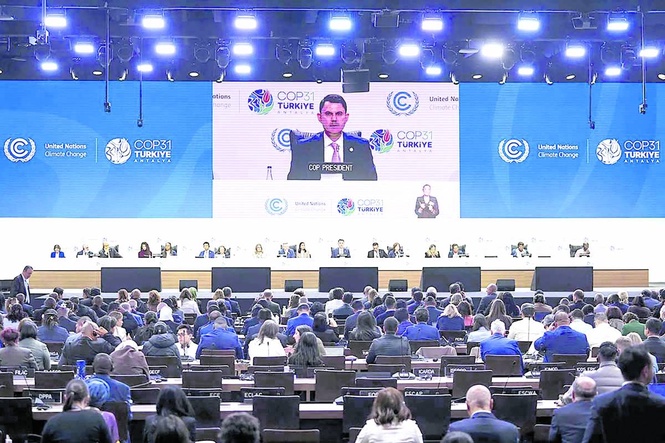
ANTALYA, Turkey — Getting clean power onto the grid, improving climate tracking and sharing green technology with developing nations have taken center stage at the United Nations climate summit in Turkey, as scientists warn that global temperatures are climbing toward record highs. COP31 brings media coverage and virtual participation via Zoom. This coverage came from reports of official United Nations Framework Convention on Climate Change (UNFCCC) digital platforms actively integrated into COP31 in Antalya, Turkey, allowing accredited remote delegates, panelists, and observers to join sessions alongside in-person attendees.
Running until Nov. 20 at the Antalya Expo Center on Turkey’s southern coast, COP31 has drawn nearly 100 world leaders, more than 300 ministers and thousands of researchers from 196 countries and the European Union. For the first time in UN climate talks, two countries are sharing leadership duties. Turkish Environment Minister Murat Kurum serves as summit president, while Australian Climate Change Minister Chris Bowen is steering the formal negotiations.
The talks opened under the shadow of sobering data from the World Meteorological Organization (WMO) that confirmed the past 12 years have been the warmest on record and warned that 2026 is on pace to rank among the hottest years ever measured, fueled in part by a strong El Niño weather pattern.
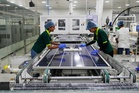
To speed up the shift away from fossil fuels, Turkey launched the 35-by-35 Global Electrification Pledge, an effort to boost electricity’s share of global energy use to 35 percent by 2035. Summit organizers are also highlighting practical upgrades like modern power grids, geothermal energy and waste-recovery systems.
Inside the science pavilions, researchers are showcasing tools designed to help communities adapt to extreme weather. On Nov. 13, the World Economic Forum and scientific publisher Frontiers will release a report spotlighting 10 breakthrough energy technologies, featuring work from the Massachusetts Institute of Technology (MIT) and the Potsdam Institute for Climate Impact Research.
The summit, co-hosted by China, the United Kingdom and Brazil, and supported by the COP30 and COP31 Presidencies, brought together leaders, ministers, international organizations and philanthropic partners, resulting in more than US$480 million in new philanthropic commitments, an additional US$25 million for the Climate and Clean Air Coalition’s Super Pollutant Country Action Accelerator, and new international commitments to reduce methane and other powerful greenhouse gases.
“In a world of suffocating disasters, methane offers breathing space,” said UN Climate Change Executive Secretary Simon Stiell. “It is one of the fastest, cheapest and most effective ways to check global heating in the near-term while boosting economies, harvests, and health.” The COP 31 Leaders-Level Non-CO2 Greenhouse Gases Summit discussed how to accelerate global action on methane and other non-carbon greenhouse gases to help limit near-term warming and temperature overshoot.
At the Philippine Pavilion in the conference’s Blue Zone, delegates from the Climate Change Commission and the Department of Environment and Natural Resources are hosting policy dialogues and technical briefings anchored on the theme “Build. Better. Together.” Alongside international research partners, Philippine negotiators are demonstrating homegrown tracking platforms powered by satellite remote sensing, geographic information systems and field sensor networks. These tools include the new National Carbon Registry, the Shared Seas marine protection initiative and the National Forest Monitoring System, which combine Earth observation imagery and spatial mapping to verify carbon sinks and monitor reefs and watersheds across the archipelago’s more than 7,600 islands.
Environment Secretary Juan Miguel Cuna urged global lenders to clear bureaucratic bottlenecks, fast-track loss and damage disbursements, unlock private capital and strengthen regional data transparency. Cuna warned that exceeding the 1.5-degree Celsius warming threshold brings immediate storm surges and biodiversity loss to Southeast Asian archipelagos, adding that shifting to renewable power shields developing economies from volatile oil prices. He highlighted how securing funding and practical technology to protect vulnerable communities is at the top of the agenda. Speaking on behalf of the 2026 Asean chair at the opening of the Italian Pavilion on Nov. 9.
The push for real-time spatial data carries urgent stakes. Government estimates warn that stronger typhoons, heavier rains and rising seas could force up to 154,000 Filipinos from coastal homes by 2030 unless early warning systems and resilient infrastructure are expanded quickly.