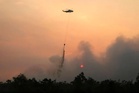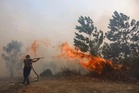
Global heating and the El Nino weather pattern made the hot, dry conditions behind this year's wildfires in Indonesia far more severe, an analysis has found.
Researchers from Indonesia, the US, the Netherlands, Sweden and the UK analysed rainfall, temperatures and short spells of hot, dry air in three regions covering parts of Sumatra, Borneo and Java between July and October.
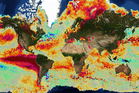
They found that El Nino, the natural warming of the tropical Pacific Ocean that disrupts weather worldwide, was the main cause of the severe lack of rain, cutting rainfall between July and October by about 50 per cent.
Human-caused global heating, driven mainly by the burning of fossil fuels, was the primary driver of high temperatures between August and October, making the season's heat about 1.6C hotter. El Nino added about 0.3C and made the heat about 11 times more likely.
The study by World Weather Attribution (WWA), an international collaboration of scientists that assesses how the climate crisis influences extreme weather, was published on Thursday.
The study says observations suggest the climate crisis also reduced rainfall by about 15 per cent, but climate models did not reproduce that effect, and the authors describe the role of the climate crisis in the lack of rain as uncertain.
The researchers also assessed vapour pressure deficit (VPD), a measure of how strongly the air draws moisture from plants and soil, in kilopascals (kPa), a unit of pressure. They examined the highest seven-day average of daily maximum values in the season, which indicates sustained spells of hot, dry air that often lead to fires.
Human-caused warming made such conditions about three times more likely and raised their intensity by about 0.4 kPa, while El Nino made them about five times more likely and raised their intensity by about 0.6 kPa. The authors describe the figures as conservative because the models used include some that do not represent El Nino well, and say the conditions seen this year are relatively common in years with a similar El Nino.
"Our analysis shows that climate change acts as a force multiplier during El Nino years. When a strong El Nino hits, global warming makes the resulting fire weather significantly hotter, drier, and harder to contain," said Dr Theodore Keeping, an extreme weather and wildfire researcher at Imperial College London and an author of the study.
"El Nino turned off the taps, but fossil fuel emissions turned up the heat," said Friederike Otto, professor of climate science at Imperial College London and an author of the study.
"We know that as the world continues to warm, fire weather during El Nino years will become increasingly severe. Without rapidly transitioning away from fossil fuels and strengthened land-management protections, we will see more and much worse fire seasons like this in the future."
The report says seasonal temperatures in southern lowland Borneo were between 0.2C and 1.8C above the previous record, depending on the dataset, and between 0.5C and 2.2C above the previous record in south-eastern lowland Sumatra.
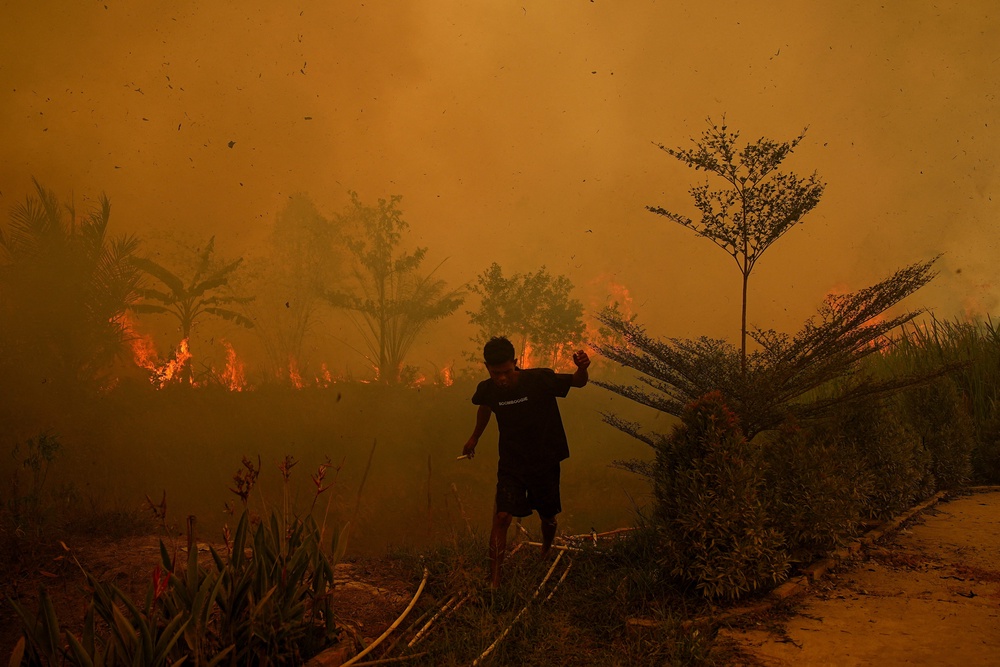
The study also points to decades of land-use change, including logging, the expansion of agroforestry and the draining of peatland, which it says has made parts of the landscape more likely to burn in prolonged hot, dry conditions.
Peat swamp forest cover fell by about 45 per cent in Borneo and 63 per cent in Sumatra between 1990 and 2010, and a further 1.4 million hectares of forest on peatlands was lost across Indonesia between 2009 and 2019. Drained, carbon-rich peat can burn underground and is exceptionally difficult to extinguish, according to the study.
"Indonesia's landscapes have changed dramatically over the last 30 years, with extensive peatland drainage and deforestation creating landscapes that can be extremely vulnerable to ignition," said Pramudhian Firdaus, a meteorologist at FLARE Wildfire Research at the University of Melbourne and an author of the study.
The study says about 1.9 million hectares had burned across Indonesia by September, citing Nusantara Atlas, a deforestation monitoring website that analyses satellite imagery, and describes 2026 as one of the country's worst fire seasons since 2015. A later update from Nusantara Atlas put the total at about 2.88 million hectares by the end of October, about 18 times the size of Greater London and more than in 2019, previously the worst year in its data.
Fires are still burning in places because El Nino has delayed the rainy season by 20 to 30 days, according to Indonesia's Meteorology, Climatology and Geophysics Agency (BMKG).
Indonesia's health ministry had reported more than 400,000 respiratory infections linked to the fires by the beginning of November, including about 180,000 in children aged nine and under, the researchers said. The study says smoke exposed about 12.5 million people to haze across Indonesia, Malaysia, Singapore and Timor-Leste, and that the haze prompted school closures and disrupted transport, including flights in Kalimantan, the Indonesian part of Borneo.
Maja Vahlberg, a technical adviser at the Red Cross Red Crescent Climate Centre and an author of the study, said smoke particularly affects children, older adults and people with pre-existing conditions, who tend to be more vulnerable. Vahlberg said El Nino conditions "are highly predictable which provides an opportunity for proactive, preventative action to stop future years from having impacts on this scale".
The fires also destroyed orangutan habitats, restricting the animals' access to food and forcing critically endangered orangutans into plantations and settlements, which has increased conflict between people and wildlife. In Java, fires damaged the habitats of other threatened species, including the Sunda pangolin and the Javan leopard.
Meanwhile, the campaign group 350.org Indonesia called on Hashim Djojohadikusumo to resign as the special envoy for climate change to Indonesia's president, Prabowo Subianto, and as head of Indonesia's delegation to the United Nations climate talks, as he addressed world leaders at the Cop31 summit in Antalya, Turkey. Sisilia Nurmala Dewi, the group's country manager, said he has business interests in the fossil fuel industry and that one of his companies had recently won an oil and gas block auction.
"How can Indonesia demand that polluters pay when its negotiations are led by someone from the polluting industry itself?" Ms Dewi said.
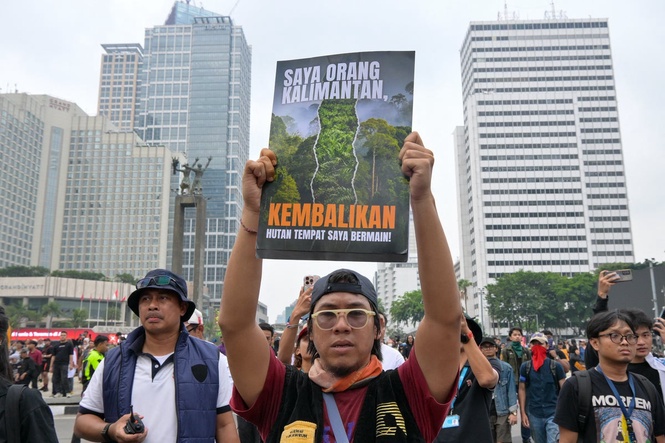
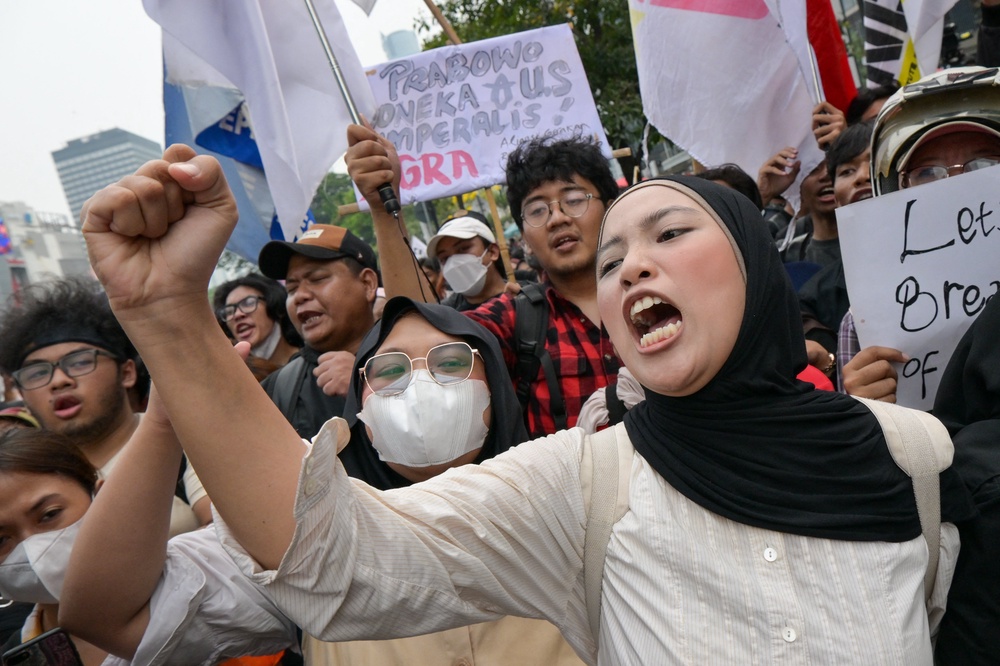
Protesters in Jakarta have called for the government to declare the fires a national emergency. "People across Indonesia are taking to the streets to demand that the Prabowo government act on the environment," Ms Dewi said.
Read MoreThe key financial stand-off between wealthy and smaller nations at the heart of Cop31
The Super El Niño has arrived - and already brought weather chaos with it
Climate action for the most vulnerable nations has to include farming
How a year of extreme heat around the world is reshaping conversations at Cop31
How close are we to a long-term breach of critical 1.5C global warming limit?
Dozens of pilot whales die in mass stranding on New Zealand coast