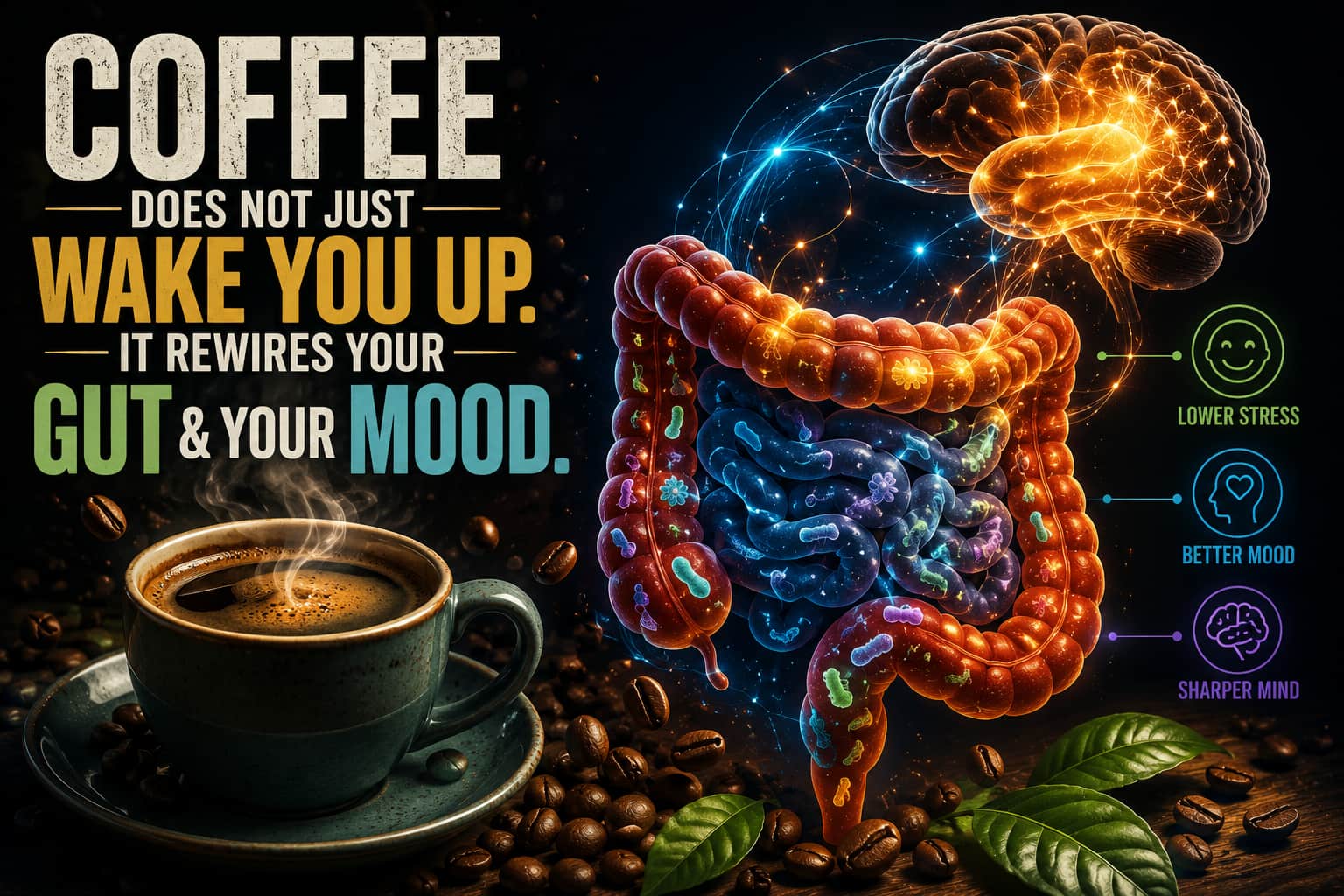
Most people think of coffee as a caffeine delivery system. You drink it, the caffeine hits your brain, you feel more awake. Simple. But a major study published in Nature Communications in April 2026 by researchers at APC Microbiome Ireland, University College Cork, found that the story is far more complex and far more interesting.
Both caffeinated and decaffeinated coffee reshape the gut microbiome in ways that are linked to lower stress, better mood, and improved cognitive function. The benefits go well beyond caffeine.
The study followed 62 participants, 31 coffee drinkers and 31 non-coffee drinkers, through a structured protocol. Coffee drinkers went through a baseline phase, a 14-day abstinence period, and then a reintroduction phase. The researchers tracked changes in gut bacteria, urinary and faecal metabolites, mood, cognition, cortisol levels, and immune markers throughout.
Coffee drinkers showed distinct gut microbiome profiles. They had higher levels of specific bacterial species, including Eggertella and Cryptobacterium curtum. They also showed increased Firmicutes bacteria, which has been associated with positive emotions. Importantly, both caffeinated and decaf drinkers reported lower levels of perceived stress, depression, and impulsivity. These differences persisted even during the abstinence phase, suggesting something more durable than a simple caffeine effect.
Here is where it gets particularly interesting. Caffeinated and decaffeinated coffee had different strengths. Caffeinated coffee was linked to reduced anxiety, better attention, and lower inflammation. Decaffeinated coffee was linked to improved learning and memory. The non-caffeine components, including polyphenols and antioxidants, appear to be doing much of the heavy lifting for mental health.
The mechanism works through the gut-brain axis. Coffee's plant compounds get fermented by gut bacteria into short-chain fatty acids, which send signals directly to the brain through the vagus nerve. It is not just a stimulant in a cup. It is a functional beverage that changes the bacterial ecosystem inside you, and those changes ripple outward into your mood, your memory, and your stress response.
Lead researcher Dr. John Cryan, principal investigator at APC Microbiome Ireland, noted that the findings suggest coffee's benefits extend well beyond caffeine. The study is one of the first controlled human trials to map coffee's influence on the microbiota-gut-brain axis while simultaneously tracking what happens when coffee is removed and then reintroduced. Previous research typically compared coffee drinkers and non-drinkers at a single point in time. This study ran participants through three structured phases, giving a much clearer picture of causation rather than mere correlation.
This does not mean coffee cures anything. But it does mean that your daily cup is doing things to your body that go far beyond keeping your eyes open during a morning meeting. The next time someone tells you that you drink too much coffee, you now have a Nature Communications paper to cite in your defence.
Ronny M (ronny76netstuff@gmail.com) is a content creator under the Newswav Creator programme, where you get to express yourself, be a citizen journalist, and at the same time monetize your content & reach millions of users on Newswav. Log in to creator.newswav.com and become a Newswav Creator now!
The User Content (as defined on Newswav Terms of Use) above including the views expressed and media (pictures, videos, citations etc) were submitted & posted by the author. Newswav is solely an aggregation platform that hosts the User Content. If you have any questions about the content, copyright or other issues of the work, please contact creator@newswav.com.