
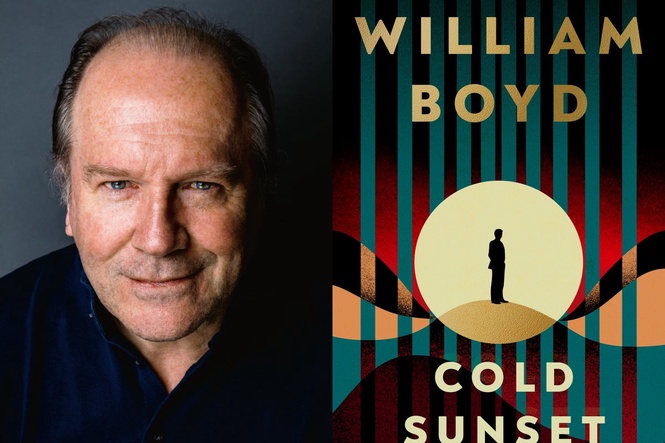
William Boyd understands one of the great paradoxes of the spy novel: that it can be morally serious and lightly entertaining at the same time. Cold Sunset, the third novel in his Gabriel Dax trilogy, finds him somewhere between Eric Ambler and Ian Fleming – Ambler in his fascination with betrayal, compromised loyalties and the corrosive absence of trust; Fleming in his relish for sex, drink, danger and the seductive suspension of ordinary moral rules.
Gabriel Dax is an unlikely hero, which is precisely why he is so engaging. He is a travel writer by profession, and travel writing is also the perfect cover for his occasional work for MI6. He is a crumpled, slightly bewildered figure who seems almost to have wandered into espionage by mistake. Yet his curiosity, powers of observation and ability to move inconspicuously through foreign places make him an unexpectedly effective spy.
The trilogy charts his gradual seduction by this shadowy world. In Gabriel’s Moon, Dax is drawn into espionage almost accidentally and meets the enigmatic MI6 officer Faith Green. In The Predicament, his relationship with Faith deepens as he is pulled further into Cold War intrigue. Now, in Cold Sunset, he finds himself moving between the apparently benign world of California and the dangerous heart of Moscow. It is a journey from sunshine to suspicion.
That movement is one of the book’s great pleasures. California offers the relaxed surface of 1960s America – travel, hotels, drink, cigarettes and the easy glamour of the period – but beneath it lie the buried secrets of an older generation of spies. Former 1930s and wartime agents are being unmasked; old loyalties and betrayals are suddenly relevant again. The past has not disappeared. It has simply been waiting for the present to catch up with it.
And that gives the novel an unexpectedly contemporary sting. If spies who were trusted decades ago can turn out to have been double agents, then what does trust mean for the spies of today? The revelations turn into do-or-die questions: who is working for whom, who has been compromised, and how far can an intelligence service rely on its own people? Boyd makes the Cold War feel less like a sealed historical period than a rehearsal for the permanent problem of espionage – that the greatest threat may always be the person standing next to you.
This is where the Ambler comparison becomes particularly revealing. Like Ambler, Boyd understands espionage as an odyssey through moral uncertainty. Betrayal and lack of trust are not merely plot devices: they are the condition of existence. Nobody can be entirely trusted, least of all oneself. But Boyd also has Fleming’s gift for making this moral darkness addictive. Sex, danger, alcohol, cigarettes and glamour become part of the propulsion. The suspension of ordinary morality is not simply a theme; it is part of the pleasure.
The 1960s are recreated with a delicious lack of guilt: endless cigarettes, generous quantities of drink, hotel rooms, restaurants and sexual intrigue. Everyone seems to be smoking, drinking, seducing or betraying someone. Yet Boyd never becomes nostalgic or solemn about it. His prose is elegant, his plotting taut, and his humour keeps the machinery of espionage from becoming portentous.
Boyd’s secret agent is vulnerable, occasionally baffled and never entirely comfortable with the ruthlessness the profession demands. His relationship with Faith Green makes everything more complicated. She is his handler, his entry into this extraordinary world and the object of an attraction that threatens to make professional judgement personal. Devotion and deception become almost impossible to disentangle.
Yet Cold Sunset never labours this. It is taut, entertaining and wonderfully addictive. Putting the book down feels less like a sensible interruption than an itch that still needs to be taken care of. One reads another chapter not simply because the plot demands it, but because Dax’s world has become irresistible.
And then Boyd leaves us with the enticing uncertainty that perhaps the odyssey is not over. The future of Dax, and particularly his relationship with Faith Green, remains tantalisingly unresolved. The supposed conclusion of the trilogy feels less like a door being firmly shut than one being left slightly ajar.
Cold Sunset is a serious spy novel that refuses to take itself too seriously – and an addictive one that demands attention right until the end.
Read MoreAn astonishingly ambitious history of the modern Middle East
The spectre of mortality looms over Salman Rushdie’s first fiction since the attack
Anthony Hopkins’ memoir falls short of capturing the depth his career deserves