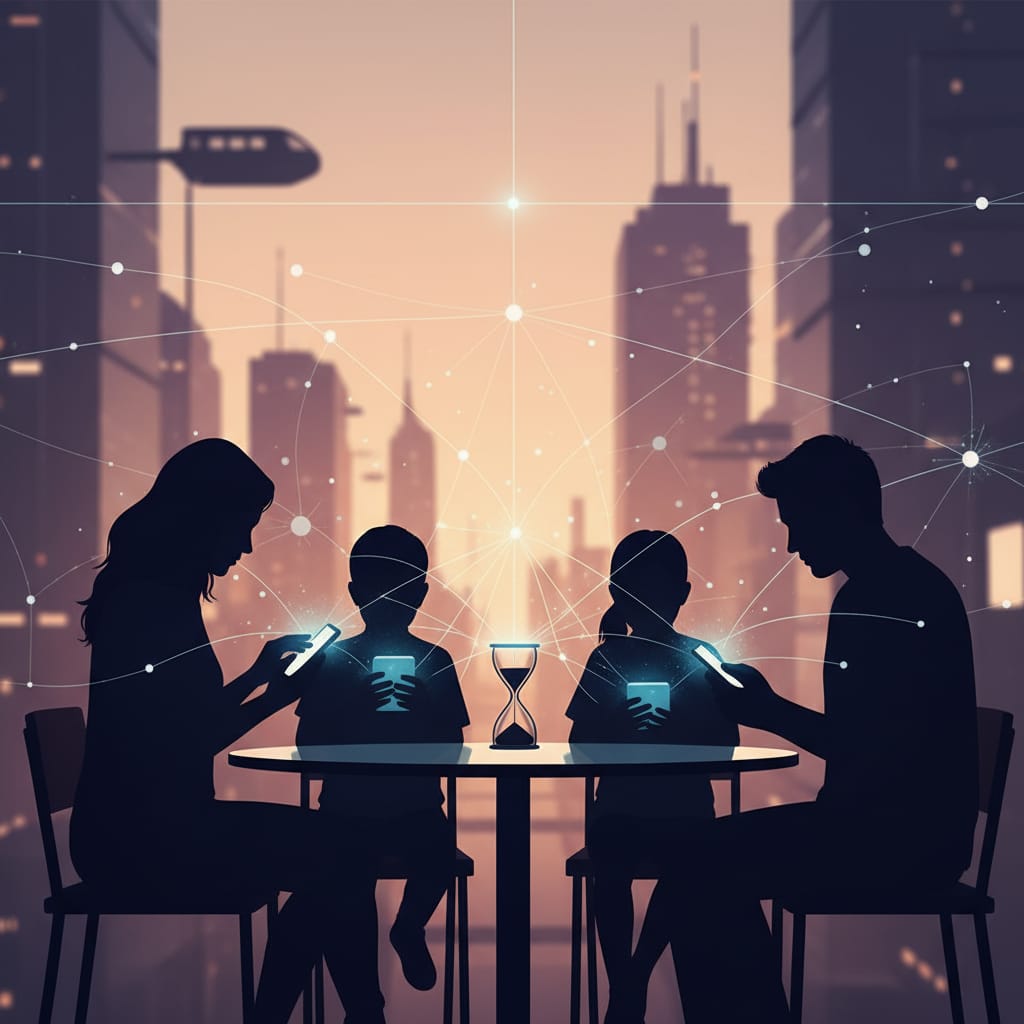
If you transported someone from 1996 into 2026, the first thing that would probably shock them would not be self-driving features in cars or artificial intelligence. It would be the sight of a family sitting together at dinner while everyone stares at a different screen.
To many people, that scene is proof that technology has destroyed human connection. Mobile phones, the internet and social media are often blamed for creating a society that is distracted, isolated and obsessed with virtual validation. Every generation seems to have its own version of “things were better in my day”, but over the past decade the criticism has become particularly loud.
The question is whether these technological advances have genuinely eroded personal relationships or whether they have simply changed how those relationships work.
The answer is probably less dramatic than either side would like to admit.
There is no denying that technology has altered the way humans interact. Thirty years ago, friendships required effort in a very different way. If you wanted to catch up with someone, you called their house phone and hoped they were home. Long-distance relationships involved expensive phone bills, handwritten letters or carefully planned visits. Losing touch with someone often meant exactly that—you lost touch.
Today, communication is almost effortless. A message can be sent across the world in seconds. Family members living on different continents can see each other’s faces instantly through video calls. Old school friends who would once have disappeared forever remain only a few clicks away.
In many respects, technology has strengthened connections rather than weakened them.
Yet critics have a point. Convenience comes with consequences.
Social media platforms encourage quantity over quality. Hundreds of online “friends” can create the illusion of connection while masking genuine loneliness. People can spend hours interacting with strangers online while barely speaking to the people sitting beside them. The ability to communicate constantly has also created an expectation of constant availability. Silence, once normal, is now often interpreted as rejection.
There is also the uncomfortable reality that many online interactions are carefully curated performances. People present highlight reels rather than reality. Comparing ordinary lives to everyone else’s best moments can leave individuals feeling disconnected and inadequate.
These are genuine problems. But they are not necessarily evidence that society is worse.
They are evidence that society is different.
History shows that every major communication revolution triggered fears about declining human relationships. When the telephone became widespread, critics worried people would stop visiting one another. When television arrived, many believed family conversations would disappear forever. Even newspapers faced criticism for distracting people from real-world interactions.
Human beings adapt. They always have.
The deeper issue may not be technology itself but how humans choose to use it. A smartphone can interrupt a conversation at dinner, but it can also allow grandparents to watch their grandchildren grow up from thousands of miles away. Social media can encourage shallow validation seeking, but it can also help people find communities they would never otherwise encounter.
Technology is neither hero nor villain. It is simply a tool.
What often fuels today’s complaints is not just concern about technology but nostalgia. People tend to remember the strengths of previous eras while forgetting their weaknesses. The 1990s had more face-to-face interaction, certainly. They also had more isolation for people who lived in remote areas, fewer opportunities to maintain distant friendships and significantly less access to information.
Many who romanticise the past forget that every generation complains about the one that follows. Ancient philosophers complained about young people. Parents complained about television. Grandparents complained about rock music. Today people complain about TikTok.
The pattern never changes.
That does not mean every new development is automatically positive. Society should absolutely discuss the effects of social media addiction, online harassment and declining attention spans. These challenges deserve serious attention.
However, endlessly comparing today’s world with the world of thirty years ago achieves very little.
The reality is simple: the world is not going backwards.
Mobile technology, the internet and social media are now woven into daily life. They are not temporary trends that will disappear if enough people complain about them. The challenge for those who grew up before the digital revolution is not to resist change but to understand it.
Likewise, younger generations should recognise that older concerns are not always meaningless nostalgia. There is value in protecting genuine face-to-face relationships, deep conversations and uninterrupted time with family and friends.
Perhaps the healthiest conclusion is that society today is neither better nor worse than it was thirty years ago.
It is simply different.
Every era gains something and loses something. The goal is not to recreate the past or blindly celebrate the future. It is to take the best of both worlds—using technology to stay connected while remembering that no app, platform or algorithm can fully replace human presence.
After all, the most important connection has never been the speed of communication.
It has always been what we choose to say once we are connected.
The Daily Durian (zaynp100@yahoo.com) is a content creator under the Newswav Creator programme, where you get to express yourself, be a citizen journalist, and at the same time monetize your content & reach millions of users on Newswav. Log in to creator.newswav.com and become a Newswav Creator now!
The User Content (as defined on Newswav Terms of Use) above including the views expressed and media (pictures, videos, citations etc) were submitted & posted by the author. Newswav is solely an aggregation platform that hosts the User Content. If you have any questions about the content, copyright or other issues of the work, please contact creator@newswav.com.