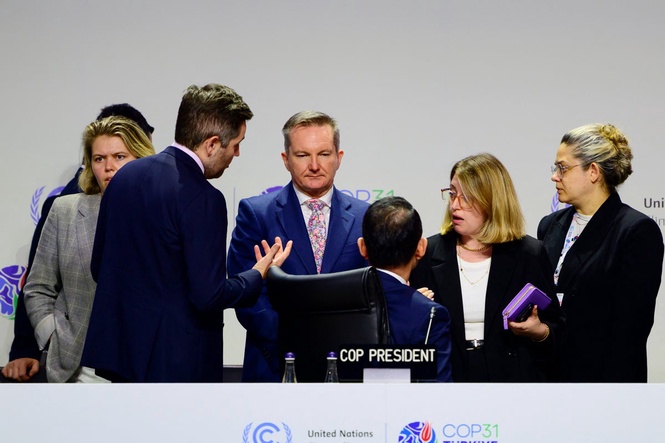
The Cop31 climate summit in Turkey descended into disarray and disappointment after countries were unable to reach consensus on a deal that failed to mention fossil fuels.
Nations rejected the agreement at a fraught closing session in Antalya on Sunday, almost two days after the summit was due to finish in what stretched to become the longest Cop in history.
The European Union, the UK and small island states such as Tuvalu refused to accept the text over the absence of references to fossil fuels, blasting the omissions as “greenwashing” and accusing oil states of “hijacking” the talks.
Ireland’s minister for climate Darragh O’Brien, speaking on behalf of the EU, called the text “unconscionable” and said its ambition went “nowhere near the level of action that's required to deal with climate change”. A spokesperson for the British delegation said it was “profoundly disappointed” by the proposed deal.
Some nations indicated a willingness to continue working, but at the closing plenary summit president Murat Kurum said there would be no new draft of the deal.
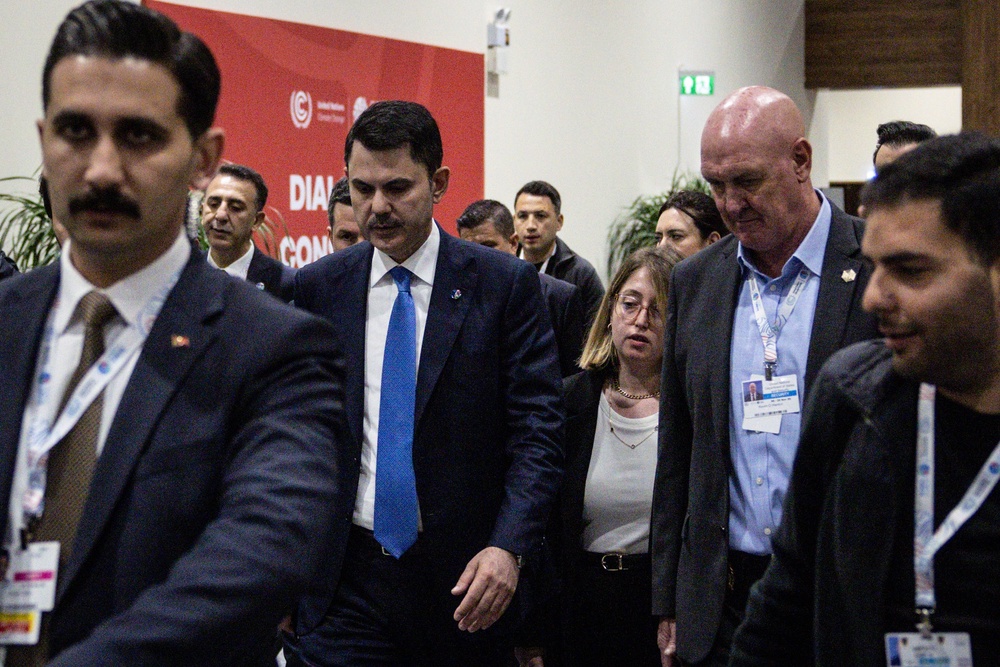
Andy Burnham was the only G7 leader to attend the summit, where he made an impassioned speech promising to usher in a “new era of British leadership" on climate change.
But the prime minister said nothing on Sunday as hopes of a deal evaporated and delegates eventually left empty handed.
UK energy secretary Miatta Fahnbulleh later called the failure to reach a deal “immensely disappointing”, but said there had been “genuine progress” during the conference.
“This Cop sought to confront hard truths – that global warming is set to overshoot 1.5C and that we must act with ever more urgency to address it,” she said in a statement. “The moment required bold ambition and we have been working tirelessly to try to build consensus. It is immensely disappointing we have been unable to do so.”
The failed deal had acknowledged the planet's projected temperature overshoot for the first time and called for faster development of carbon-removal technologies to eventually reverse it.
It was already heavily criticised by small islands and civil society groups who called it a “betrayal” and criticised its reliance on carbon capture schemes, which had been pushed by oil states including Saudi Arabia.
"It seems like we are negotiating with the Saudis," Maina Talia, Tuvalu's climate minister, commented during the conference.
A representative for the Saudi delegation, which supported the deal's mention of carbon removal, told the summit he was surprised at the resistance to technology, which he said offered a “concrete solution”.
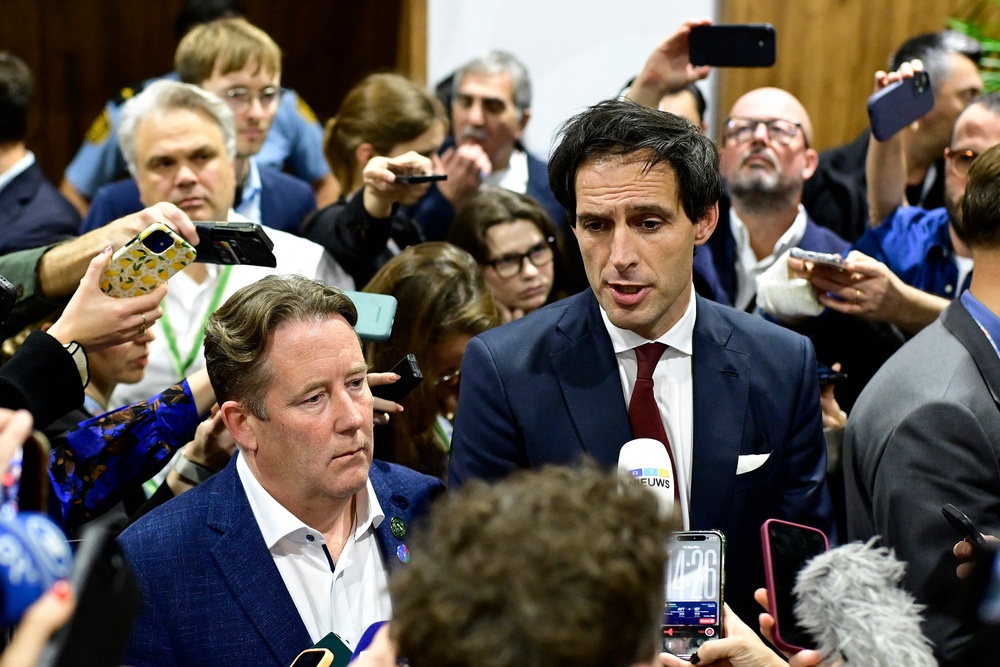
Developing countries had also criticised the deal for not providing sufficient new funds to help them adapt to a warming planet.
China and India said they had objections but chose to accept the cover text to move things forward.
The Cop process is the main vehicle through which countries coordinate efforts to curb global warming. Its annual meeting provides an opportunity for nations to signal they are willing to work together to find solutions and help finance the problems rising temperatures cause.
Earlier, Mr Kurum, defended the text and said the presidencies had “listened to everyone” and tried to bring the groups together, but admitted there was “no consensus”.
Despite a failure to strike a deal, Mr Kurum said the summit had come to smaller agreements on plans to scale up global geothermal energy supply by 2050, build greener freight corridors and increase the electricity share of global energy to 35% by 2035.
Australia's Cop31 president of negotiations, Chris Bowen, called the outcome "very disappointing" and said disagreements over fuels and climate finance were the dealbreakers.
The conference became the longest COP ever on Sunday afternoon, passing COP25 in Madrid in 2019, which ran 44 hours over its schedule.
Delegates pored over several drafts with language that tried to bridge the position of countries most exposed to climate impacts and those whose economies depend on producing or consuming fossil fuels, but the split came down to whether the text should refer to oil, gas and coal at all.
The first time the transition away from fossil fuels found a mention in a UN climate agreement was at Cop28 in Dubai in 2023. It had been hoped that a series of climate disasters in the lead up to this year’s conference would help to sharpen minds and reaffirm commitments.
The last time UN climate talks failed to get a deal adopted by all was in Copenhagen in 2009.
Chief executive of environmental charity Friends of the Earth Asad Rehman said the deal in its current form “is no deal at all” and urged governments to pledge more than “wooly” promises.
He warned leaders the “clock is ticking” and said governments must “come back to the negotiating table ready to deliver”.
United Nations secretary-general Antonio Guterres also said he was "deeply disappointed” by the conference’s failure to reach a consensus.
“I share the very profound frustration of all those who expected governments to rise to the moment the climate crisis demands,” he said. "There may be no consensus in the negotiating room. There is no ambiguity in the science."
Some campaigners also turned on the EU, which rejected the text while some lauded the resistance shown at the plenary.
"The EU is trying to shift blame onto others and it is deeply hypocritical. At the beginning of COP31, it signalled it was prepared to drop the renewables ask from the electrification target and it has failed to put forward an EU fossil fuel transition roadmap," said Laurie van der Burg of Oil Change International.
The failure is a blow to efforts to ratchet up international action, but does not erase the obligations agreed by previous summits or remove existing agreements on action against climate change.
Read MoreCOP31 climate talks on brink of collapse as EU rejects deal over fossil fuel omission
COP31 climate talks close to final deal, says summit president
Cop31 heading for overtime thanks to bitter dispute over fossil fuels
Turkey’s farmers face battle against sinkholes: ‘This huge hole just appeared’
Fiji declares national state of disaster after El Nino-driven drought