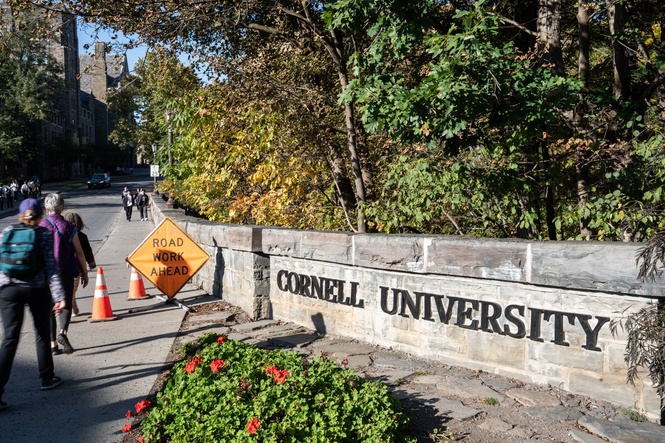
The former Cornell University student known as Jane Doe — who alleged she was gang raped in a frat house in 2024 — wrote in a letter to faculty members last week that she felt “unsupported” by the school’s president.
Doe claimed in a bombshell lawsuit filed last month that she was drugged and raped by seven men at the now-defunct Chi Phi fraternity in Ithaca, New York, in October 2024. None of the men have been criminally charged, and all have denied wrongdoing.
In an October 14 letter to the faculty senate, obtained by The New York Times and Associated Press, Doe described a comment she was told Cornell President Michael Kotlikoff made in a meeting with students and administrators about Doe’s delay in reporting the alleged assault.
“President Kotlikoff’s initial response was along the lines of, ‘Why did she wait so long to report it?’” Doe wrote in the letter.
The alleged assault took place on October 19 and 20, 2024, and she reported it to campus police about three weeks later, on November 8.
The letter comes as Cornell faculty are about to consider a rare vote of no confidence in Kotlikoff’s administration. The resolution was introduced in light of Doe’s lawsuit, which prompted a wave of student protests and renewed scrutiny of the university’s response to sexual assaults on campus.
While the resolution would be a powerful rebuke of Kotlikoff’s administration, it wouldn’t remove him from office. Faculty members began debating the resolution last Wednesday and will meet again on October 28 before holding an electronic vote.
In her letter, Doe, now 22, said Kotlikoff’s words made her question her trust in Cornell. Doe dropped out of the university after the alleged assault.
“It diminished my confidence in the administration’s ability to approach my experience with the understanding, sensitivity, and fairness I had hoped for and expected from what had been my dream school,” she wrote.
She also said in the letter that she wanted faculty members to have all the information they need before the vote — and that she was not trying to tell them how to vote.
“My intention is not to prescribe how the Senate should interpret this account, but rather to provide information that its members may wish to consider or investigate further,” she wrote.

In a statement to the Times, a Cornell spokesperson said that Kotlikoff had made a similar comment about why the assault wasn’t supported, but that it had not been directed at Doe.
“The question ‘Why did it take so long for the assault to be reported?’ was directed at bystanders who did not use Cornell’s anonymous tip line, despite ongoing social media activity about the incident in October 2024,” the spokesperson said. “He was not questioning Jane Doe’s reporting.” The Independent has contacted Cornell for more information.
Doe is suing seven men and the university after alleging she was gang-raped for hours while she was highly intoxicated, according to the lawsuit.
After the alleged assault, Doe reported the incident to Cornell’s police department, triggering the suspension of the Chi Phi fraternity and prompting a months-long investigation. Two of the men were expelled, and others were suspended.
The New York attorney general has now reopened a criminal investigation into the allegations, although no one has been arrested or charged.
Read MoreRetail price impacts from the Iran war are uneven but add up for US households before midterms
Police investigate report of sexual assault at a fraternity party near the University of Chicago
Cornell president admits he knew about alleged gang rape in 2024