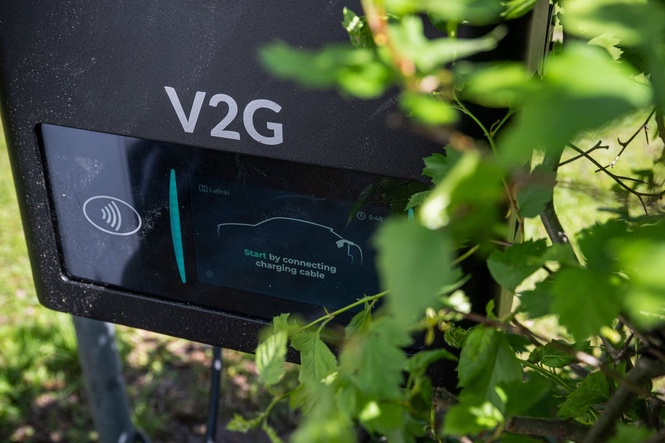
I’ve always found that a car is very good at spending your money, but what if it could start helping cut your electricity bill while it sits on the driveway?
That’s the promise of vehicle-to-grid charging, or V2G, which gives an electric car’s battery a second job beyond getting you from A to B.
And it could be quite a useful second job. With the right setup, your car could do the work of an expensive home battery system, storing electricity when it’s cheap or plentiful and supplying it to your home when it’s needed. If your EV spends more time on the driveway than on the road, there’s potentially a lot more you could be getting out of it.
How does vehicle-to-grid charging work?
Normally, home charging is a one-way affair: electricity goes into the car, ready for your next journey. Bidirectional charging lets it flow back out, too. Sending electricity back to the grid is V2G, while supplying your house is vehicle-to-home, or V2H. They’re related uses of the same idea, although the equipment and service you choose determine what’s possible.
Battery size is what makes this interesting. Compare a 5 to 10kWh home battery setup with a 60kWh car battery and you’re looking at between six and 12 times as much storage. A separate home battery system can cost thousands of pounds, whereas the EV battery is something you’ve already paid for as part of the car. It’s a sizeable store of energy to leave doing nothing between journeys.
Put that into everyday terms and the potential becomes clearer still. A dishwasher might use around 1.2-1.5kWh for a cycle, depending on the machine and programme. Even 1.5kWh is only two and a hald per cent of a 60kWh battery’s capacity, before allowing for the energy lost converting electricity for household use. In a car averaging four miles per kWh, that’s the energy equivalent of six miles of driving. The dinner plates aren’t going to empty a charged car battery.
You don’t need to hand over the whole battery, either. Using a relatively small portion for household jobs could still provide useful storage while leaving most of its capacity for driving. The opportunity is to make use of energy you don’t need immediately, then replenish it before you do.
How V2G works with solar panels and cheap electricity
Solar panels make a good partner. On a sunny afternoon, your roof might generate more electricity than the house needs. With a compatible setup and the car plugged in, the surplus can be stored in the car’s battery, ready to help run the house after sunset. Rather than buying electricity for the evening’s cooking, you could be using sunshine collected earlier.
That also changes how you think about the rest of the house. The same stored electricity could help run a heat pump, bringing heating into the picture alongside appliances and motoring. It’s worth looking at these things together, rather than treating the car charger, solar panels and heating system as completely separate purchases.
You don’t need solar panels to benefit, though. With suitable equipment and a tariff that allows it, you could charge using cheaper overnight electricity and use some of it at home when rates rise. The household still gets its electricity when it needs it; you’ve simply shifted when you bought it. Savings depend on the difference between those rates, with charging and discharging losses slightly reducing the benefit.
Can vehicle-to-grid charging make you money?
Then there’s the opportunity beyond your front door. Electricity demand rises and falls, and renewable generation doesn’t always arrive at the most convenient moment. V2G can help by storing electricity when it’s plentiful and returning some when demand is higher, reducing the need for other generation at busy times.
Imagine a housing estate where 100 plugged-in cars could each make 10kWh available. Together, that’s 1,000kWh, or one megawatt-hour, of storage without building a separate battery bank of that size. The chargers, connections and control systems still have to be in place, and not every car will always be available, but it shows how batteries bought for driving could also become a useful, shared resource.
There’s financial value in providing that flexibility, although different arrangements reward owners in different ways. Some can reduce the expensive electricity you buy for your home; others pay for exports or offer charging benefits in return for managing the car’s battery. The car isn’t generating electricity: the value comes from storing it and making it available at a more useful time.
Octopus Energy’s Power Pack is one example. It manages charging and exports, then credits back the cost of eligible home EV charging. Your household electricity and usual standing charge remain payable, so the benefit is free car charging within the tariff’s conditions, rather than wiping out the whole bill. You need a compatible car and charger, and there are conditions covering plug-in time and charging allowances to bear in mind.
What do you need for V2G charging?
The clever part should happen without you having to become an electricity trader. Automated controls can manage when energy goes in and out, working around your driving needs, charging requirements and a minimum battery reserve. Before signing up, check how much control you have, how unexpected journeys are handled and whether the required plug-in hours fit your life.
Compatibility remains the big hurdle. You can’t assume an existing EV and wallbox will do this, and vehicle-to-load, or V2L, isn’t the same thing. Being able to plug a kettle into your car on a camping trip doesn’t mean it can supply your house or export to the grid. Get the car, charger, tariff and any necessary network approval checked as a complete package.
Check that the battery warranty covers this use, too (if your car is V2G-compatible, there shouldn’t be a problem) and weigh installation costs against realistic savings. A fixed home battery has the advantage of staying put when you drive away, particularly useful if you’re out while the solar panels are generating. Your installer should also check how much power the system can supply at once: battery capacity alone doesn’t tell you which appliances it can run together.
For a car that spends plenty of time at home, though, the attraction is easy to see. Instead of paying for a separate battery to sit beside the house, you could put the much bigger one on your driveway to work. Your car would still get you to the shops, but it could also help with the bill for cooking whatever you bring home.
Read MoreSolar panel grants UK: What’s available, who qualifies and how to apply
Your first autumn with a heat pump: 7 things to do before the heating goes back on
Still heating your home with oil? You could now get £9,000 towards a heat pump
Solar panel grants and UK funding 2026, explained
New government-backed loans could make solar panels cheaper to finance