Installing solar panels and a home battery could cut the average household’s electricity costs by almost £950 a year, according to new modelling of more than 15 million UK rooftops.
The research, from solar software company GreenSketch, estimates that the average home it analysed could save £946 a year with an optimised solar and battery system.
But some parts of the country appear considerably better placed than others to recoup savings. Torbay in Devon topped the rankings for annual savings, with the modelling estimating that households could save an average of £1,069 a year. Maidstone in Kent and Plymouth were close behind, both at £1,047, followed by Ashford at £1,045 and the Isle of Wight at £1,044.
Torbay also recorded the shortest estimated payback period, at just over seven years. Plymouth came next at 7.23 years, while Maidstone and the Isle of Wight were calculated at 7.24 years.
The results suggest that location can make a noticeable difference to the financial case for solar, although the potential isn’t confined to the sunniest parts of southern England.
GreenSketch found average annual savings above £800 across all four UK nations, with its modelling putting the average at £954 in England, £951 in Wales, £930 in Northern Ireland and £869 in Scotland.
In Wales, the southwest produced particularly strong results, while GreenSketch said some of Northern Ireland’s best-performing areas were in the east, suggesting how local weather conditions can be as important as simply how far north or south a home is.
Get a free quote for solar panels for your home
Read more: Best solar panels, compared
How were the savings calculated?
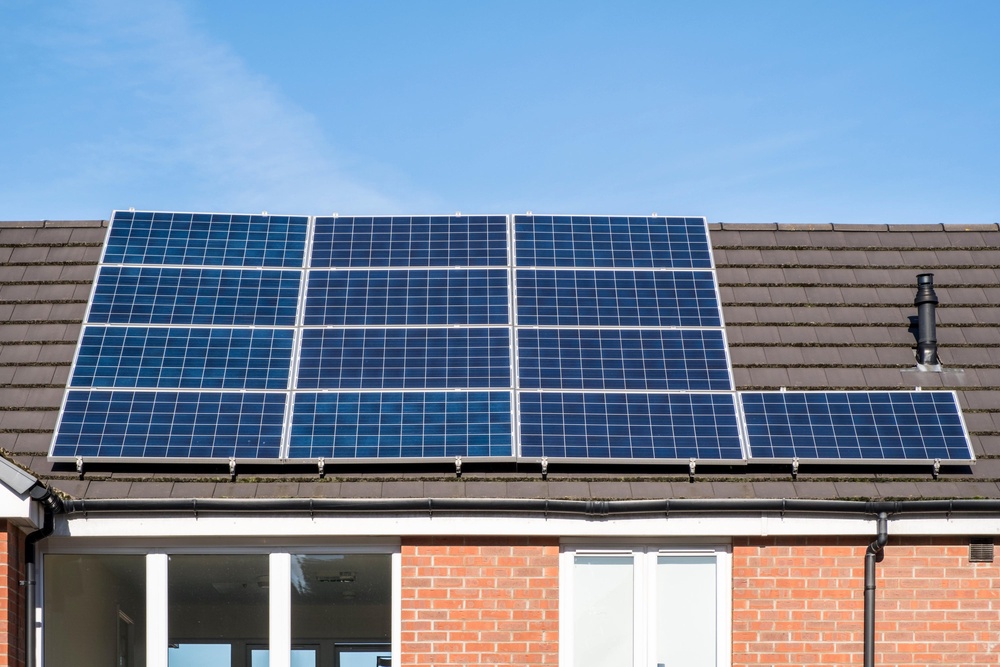
Rather than applying the same theoretical solar system to a regional average, GreenSketch says it analysed individual rooftops using satellite imagery, geographical data and artificial intelligence.
The modelling takes factors such as a roof’s slope, orientation and available panel area into account before estimating electricity generation using local solar data. It then models how electricity would be used, stored in a battery or exported to the grid.
There are, however, some important caveats to the headline savings.
The figures are based on a modelled 5.17kWp solar installation paired with a 5kWh battery, costing around £7,845. The calculations also assume particular electricity tariffs, including an export rate of 26p per kWh and an off-peak import rate of 8p per kWh.
Those rates won’t be available to every household, while the amount you could save from solar panels will also depend on factors including your electricity use, roof suitability, the price of your installation and how much generated power you can use or store at home.
GreenSketch estimates the average payback period across the homes it analysed at around 7.9 years.
Prashant Aggarwal, chief executive of GreenSketch, said homeowners should start viewing their roofs as an “energy and financial asset” rather than simply another part of a property that needs maintaining.
The company calculates that the combined potential savings across the 15 million homes included in its analysis could reach £14.2bn a year.
While that figure is theoretical, the research provides another indication that Britain’s famously grey weather doesn’t necessarily rule out solar. Solar panels generate electricity from daylight rather than requiring uninterrupted sunshine, meaning even homes outside the south of England can still produce significant amounts of power.
Read MoreHow to earn money from solar panels and cut your energy bills
How long does it take for solar panels to pay for themselves?
Are solar panels worth installing in the UK?
I’m an energy expert – here’s my verdict on plug-in solar panels
How much solar panels cost in the UK, according to an expert
Solar panel grants UK: What’s available, who qualifies and how to apply