
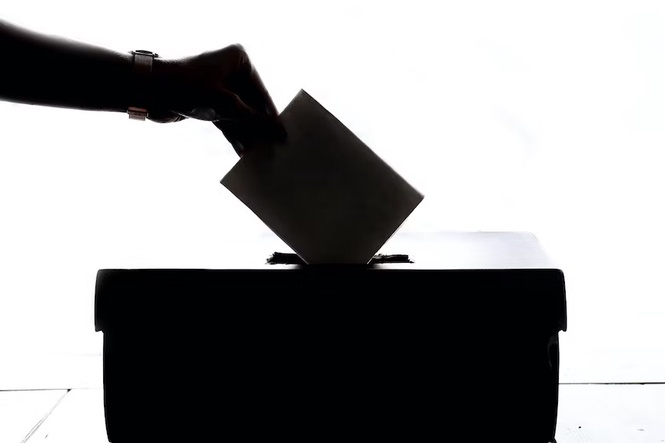
The origins of general elections can be traced back to ancient civilisations, where various methods were employed to select leaders or make important decisions. However, the concept of modern general elections as we know them today emerged during the development of representative democracies in the Western world.
This article will explore the historical journey that led to the establishment of general elections.
As we understand them today, general elections have a complex and varied history spanning several centuries. The origins of general elections can be traced back to ancient civilisations, but the modern concept of democratic elections emerged in Europe during the Middle Ages and evolved. This article briefly overviews the origins of general elections, highlighting key dates and sources.
One of the earliest examples of elections can be found in ancient Athens, Greece, during the 5th century BCE. Known as the birthplace of democracy, Athens practised a direct democracy where eligible citizens participated directly in decision-making processes, including the election of officials. However, These early elections were limited to a small subset of the population, mainly free adult male citizens.
Fast forward to medieval Europe, where the origins of general elections took root. The most notable development occurred in England with the signing of the Magna Carta in 1215. While the Magna Carta primarily focused on limiting the monarchy's power, it also introduced the concept of consultation with the "common counsel of the realm." This practice laid the foundation for representative assemblies and later evolved into the English Parliament.
The emergence of the English Parliament marked a significant milestone in the evolution of general elections. The Parliament consisted of two chambers: the House of Commons and the House of Lords. The House of Commons, initially comprised of elected representatives from counties and boroughs, gradually gained more prominence in decision-making processes. The first recorded instance of parliamentary elections in England dates back to 1295, during the reign of King Edward I.
The practice spread to other European nations as general elections became more established in England. In the 17th and 18th centuries, countries such as France, the Netherlands, and Sweden adopted electoral systems that allowed broader participation in selecting representatives. These elections, however, were still limited to a relatively small portion of the population, usually based on property ownership or social status.
The American Revolution in the late 18th century also played a crucial role in shaping the modern concept of general elections. The United States' founding fathers, deeply influenced by Enlightenment ideals, sought to establish a government that derived its powers from the consent of the governed. The U.S. Constitution ratified in 1788, established the framework for representative democracy, with provisions for elections to select members of Congress and the President.
General elections became more inclusive in the 19th and 20th centuries as the suffrage movement gained momentum. Women's suffrage, in particular, was a significant milestone in expanding voting rights. New Zealand became the first self-governing country to grant women the right to vote in national elections in 1893, followed by other countries such as Australia, Finland, and the United Kingdom.
Throughout the 20th century, the spread of democratic ideals and decolonisation led to increased general elections worldwide. Many former colonies gained independence and established democratic systems, often adopting electoral practices inherited from their colonial rulers. The Universal Declaration of Human Rights, adopted by the United Nations in 1948, explicitly recognised the right to participate in the government through free and fair elections.
In conclusion, the origins of general elections can be traced back to ancient Athens, but the modern concept developed over time in various regions. The English Parliament, the American Revolution, and the suffrage movements were crucial in shaping democratic electoral systems. The expansion of voting rights and the spread of democracy worldwide have further solidified the significance of general elections as a cornerstone of representative governance.
Healthy LifeSTYLE is a content creator under the Newswav Creator programme, where you get to express yourself, be a citizen journalist, and at the same time monetize your content & reach millions of users on Newswav. Log in to creator.newswav.com and become a Newswav Creator now!
The User Content (as defined on Newswav Terms of Use) above including the views expressed and media (pictures, videos, citations etc) were submitted & posted by the author. Newswav is solely an aggregation platform that hosts the User Content. If you have any questions about the content, copyright or other issues of the work, please contact Newswav.