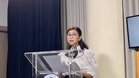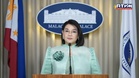
THE administration of President Ferdinand Marcos Jr. is facing yet another controversy. The Supreme Court has declared unconstitutional the 2024 and 2025 General Appropriations Acts (GAA) and portions of the 2026 GAA, and its decision in four consolidated petitions renders Palace Press Officer Claire Castro, Solicitor General Darlene Berberabe, and Interior Secretary Jonvic Remulla busy.
The cited GAAs violated the basic principle laid down in the 1987 Constitution: Congress cannot increase the budget requested by the Executive Department as contained in the National Expenditure Program (NEP).
The good intention
There are unexpected events that the government would need money to address, just as a big family must have an emergency fund to cater to unexpected expenses. Thus, in 1989, during Corazon Aquino’s administration, the Department of Budget and Management (DBM) gave the fund allocation a name: Budget of Expenditures and Sources of Financing (BESF). It was introduced as a strictly standby fund to address “contingencies.” The BSEF was “refined” in 1991, in which its nature as a fund for “unforeseen expenditures” was officially removed. What was originally intended to be a general emergency fund became a purely revenue-contingent standby mechanism.
In 2015, it was called “Unprogrammed Funds.” Congress baptized it as “Unprogrammed Appropriations.” It became synonymous with “standby funds” that can be spent for other purposes if the government is able to generate unexpected cash from, say, a more efficient tax collection, sale of government assets, or foreign loans, among other sources. A practice that Castro opines will be rendered “useless” following the Supreme Court ruling.
To suit its sinister agenda, Congress took the distinction between programmed and unprogrammed appropriations to the hilt. It took a liberal interpretation that only programmed appropriations cannot be increased, but unprogrammed ones may be made bigger than what the president asked for in the NEP.
The perdition
Programmed appropriations are programs and activities earmarked by the president for a specific public purpose or for government operations that are budgeted from identified funding sources. To this class belongs public works and infrastructure projects, health, and education; salaries and benefits of government employees; and maintenance and operating expenses of various agencies and instrumentalities of government.
By contrast, unprogrammed appropriations do not have a definite source of funding, but some “brilliant and innovative” members of Congress found a way with it. They took the liberty to reduce the budget intended for programmed appropriations and allocate the amount to unprogrammed appropriations to support their “pet projects.” These cunning legislators knowingly and willfully reduced the fund allocations for government programs and activities in the NEP. They took away, for their selfish motives, the budget for government services that could have benefited the people who paid “every peso collected in taxes and fees [that] represents labor rendered, needs deferred, perseverance, sacrifice endured,” as Supreme Court Senior Associate Justice Marvic Leonen wrote in his ponencia.
The Supreme Court did not declare the unprogrammed appropriations illegal, per se. But it took the occasion to say these funds are part of the NEP that Congress cannot bloat and include in the GAA without violating the Constitution. It ruled that Congress cannot raise the appropriations — programmed or otherwise — from the amount recommended by the president in the NEP.
The 2024 GAA was unconstitutional because Congress increased the unprogrammed appropriations by P449.5 billion, i.e. from P281.9 billion in the NEP to P731.4 billion in the enacted GAA. The Supreme Court also declared the 2025 GAA unconstitutional because the legislature increased the Department of Public Works and Highways’ Special Road Fund by P17.99 billion. It also found that a P12.75-billion increase in certain agencies’ Special Accounts in the General Fund violated Book VI, Chapter 4, Section 25 of the Administrative Code, which prohibits increasing amounts in special provisions beyond those proposed by the president.
Meanwhile, the high court invalidated Special Provisions 1(a) and 1(b) of Chapter XLIII of the 2026 GAA, which allows the president to release funds from unprogrammed appropriations based solely on new or excess revenue from particular sources, even when the government’s overall revenue target had not been met.
The same provision in the 2024 GAA that authorized the transfer to the national treasury of so-called excess funds of the Philippine Health Insurance Corp. and Philippine Deposit Insurance Co. amounting to P89.9 billion and P107 billion, respectively, that the Supreme Court invalidated as of December 2025.
So what?
With this decision the Supreme Court made — with a number of associate justices writing separate concurring and dissenting opinions that took two years to issue — the people wanted to know: Would the money be returned? Would there be anyone prosecuted for the passage of this law that violated the Constitution?
The 2024 and 2025 national budgets have already been spent and fully executed, so these can no longer be returned for obvious reasons and to prevent economic chaos. But the ruling will stop the disbursement of unspent funds allocated under the voided provisions of the 2026 GAA. For this, the Supreme Court issued a permanent injunction against Congress, the Office of the Executive Secretary, and the DBM from implementing them.
The high court’s decision did not specify the persons civilly, criminally, or administratively liable. But if the evidence in separate cases filed before the appropriate tribunals warrant, the authors, proponents or implementors of the questioned provisions may be determined. And bad faith should be established and cannot be presumed.
Should the senator-judges of the impeachment court preserve their robes? May the president be impeached in 2027 for culpable violation of the Constitution? Would we expect the Ombudsman to investigate and file cases before the Sandiganbayan against the “authors, proponents or implementors” of these laws declared unconstitutional? Your guess is as good as mine.
In the meantime, for being susceptible to misuse, lacking proper vetting, and bypassing standard budget procedures, the Senate calls out the 2027 General Appropriations Bill passed by the House of Representatives that has P243 billion in unprogrammed appropriations. Senators flagged duplicate or identical funding for flood-control projects and found farm-to-market roads with coordinates found in the open ocean.
These are revolting findings and revelations of how our political leaders salivate for public funds. Let us all be vigilant and protest all sinister moves to abuse and misuse government coffers. There will be a time for reckoning; only God knows when.
atty.edarevalo@gmail.com