THE Department of Agriculture (DA) is expanding ube production in Cagayan Valley to meet growing global demand and help farmers earn more through direct links with buyers.
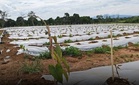
The region targets 100 hectares of ube in Isabela, expanding to 500 hectares by 2028.
Planting areas and production volumes will be based on market demand, buyer requirements and farmers’ capacity. The DA will provide technical assistance and planting materials, while local governments will organize farmers, identify suitable sites and mobilize resources. Private partners will help ensure the crop meets market standards.
Agriculture Secretary Francisco Tiu Laurel Jr. said the partnership aims to turn growing demand into higher and more sustainable farm incomes.
As of Oct. 7, the regional office had allocated P3.7 million to produce 420,000 ube setts — pieces of tuber used for planting — through six research centers and stations. More than 211,000 had been delivered to Echague, with the remaining 208,820 expected to follow.
The DA aims to develop another 70 hectares by December, requiring 1.4 million additional setts.
Korean investors from Singapore-based cold-chain technology company Carnot Fleet joined DA and Echague officials in assessing Simon’s Farm in Isabela on Oct. 1.
Discussions with the Agricultural Credit Policy Council covered possible support for cold storage, mechanization, automated irrigation, processing and consolidation facilities. These proposals remain subject to further assessment.
Regional Executive Director Rose Mary Aquino said Cagayan Valley began laying the groundwork for ube production and exports two years before the crop gained global popularity.
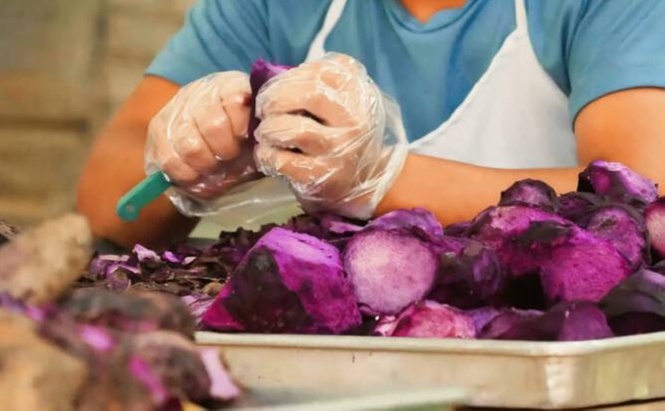
DA-funded processing facilities at Quirino State University helped develop ube powder samples that met Japan’s quality requirements, with marketing assistance from the Department of Trade and Industry. The facilities also support training and improvements in export quality.
The DA said expansion must be supported by reliable buyers, infrastructure and processing capacity.
On Oct. 5, the agency clarified that the export ban imposed in mid-August covers ube planting materials, not processed products. Tiu Laurel said the restriction would likely remain until 2028.
Philippine ube output reached 1,681.67 metric tons from April to June, up 22.5 percent from a year earlier, according to the Philippine Statistics Authority.
Cagayan Valley accounted for 463.90 MT, or 27.6 percent of the total.