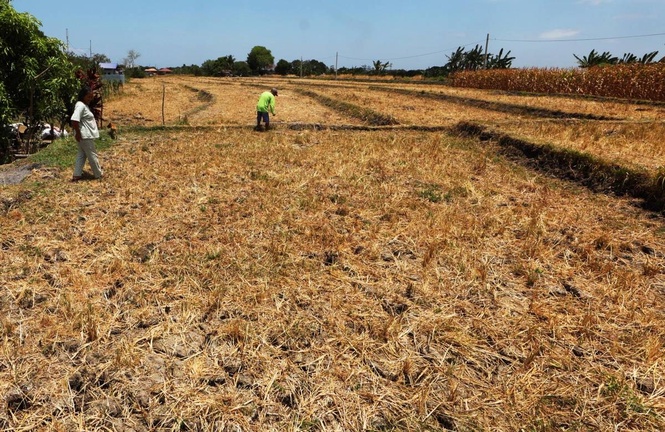
THE Department of Agriculture (DA) is expanding food reserves and farm support ahead of an El Niño that could become very strong by year-end and persist into the first half of 2027.
Agriculture Secretary Francisco Tiu Laurel Jr. said on Sunday that the agency is ready, drawing on its experience with the El Niño that affected the country after he took office in November 2023.
“We are now more prepared,” he noted, citing advance purchases of rice, fertilizer and other farm inputs.
The Philippine Atmospheric, Geophysical and Astronomical Services Administration (Pagasa) had warned that El Niño could bring below-normal rainfall, prolonged dry spells, reduced water supplies and extreme heat to parts of the country.
To build a larger food buffer, the DA has expanded storage capacity. The National Food Authority ( A) now operates 365 active warehouses, up from about 300, with rented facilities supplementing its network. New cold storage facilities are also opening to extend the shelf life of meat and vegetables.
The Marcos administration approved an additional P6.2 billion for fuel subsidies and other assistance to farmers, fisherfolk and truckers. The allocation aims to cushion rising fuel costs linked to the Middle East conflict and the initial effects of El Niño.
Tiu Laurel said assistance would be tailored to local conditions. The DA is shifting to foliar treatments and soil ameliorants, including bio-based alternatives to urea, while increasing fertilizer application and seeding rates in selected areas.
He stressed that El Niño would not leave every area dry, since some places could still experience excessive rainfall.
Cloud seeding has begun in drought-hit areas, including Isabela and Negros. Tiu Laurel said operations would depend on whether clouds contained enough moisture to produce rain.
Recent monsoon rains have also replenished major dams, potentially providing enough irrigation water for the next planting season. Fuller reservoirs offer some relief, but preparations must begin well before drought conditions peak, Tiu Laurel said.
Despite these measures, the DA sees agricultural output to decline.
“We are looking at the worst-case scenario, so we expect that overall production will still be lower,” Tiu Laurel said.
Weather-related disruptions, including El Niño, are expected to affect fisheries, livestock and crops. These could cut projected palay production by about 700,000 metric tons during the main harvest in the second half of the year.