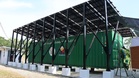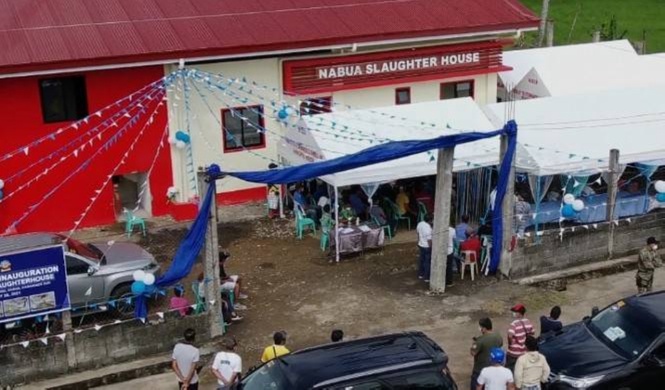
THE Department of Agriculture (DA) has opened four cold storage facilities worth P45.5 million and a P51.5-million slaughterhouse in Camarines Sur to reduce post-harvest losses and improve meat handling.
The modular cold storage units, powered by solar and wind energy with diesel backup, were turned over Monday in San Jose, Garchitorena, Lagonoy and Tigaon municipalities, the DA said Tuesday.
The DA also distributed P79.6 million worth of farm and fisheries assistance, including tractors, combine harvesters, seeds, garden tools, boats and fishing gear.
The facilities are expected to benefit more than 10,762 farmers, fisherfolk, and other food producers in 10 towns. The slaughterhouse in San Jose alone is seen to serve 1,303 livestock raisers across 29 barangay (villages).
Agriculture Secretary Francisco Tiu Laurel Jr. said the investments would help producers earn more by reducing losses, improving meat handling and expanding access to markets. These could also create jobs in processing, storage and transport, he added.
The cold storage facilities will allow growers to keep perishable produce longer, giving them greater flexibility in deciding when to sell their harvests. Intended users include growers of vegetables, pineapple, sweet potato, and other high-value crops.
Each 40-foot unit maintains temperatures of 1 to 10 degrees Celsius for chilled produce and includes areas for washing, processing, loading and preparing goods for distribution. Insulated walls help retain cold air.
The hybrid power system combines 30 solar panels rated at least 700 watts each, a 3-kilowatt wind turbine, a battery bank with at least 160 kilowatt-hours of storage capacity, and a 25-kilowatt diesel backup generator.
Designed for a typhoon-prone area, the cold storage structure is rated to withstand winds of up to 350 kilometers per hour, while the wind turbine is rated for up to 315 kph. Actual performance will depend on construction quality, maintenance and operating conditions.
The project was developed by the DA’s Agricultural and Fisheries Logistics Office in coordination with the Bureau of Agricultural and Fisheries Engineering. It supports the Philippine Food Chain Logistics Master Plan 2023–2033, which seeks to improve connections between production areas and consumer markets.
The investments also support the modernization goals of Republic Act 8435, or the Agriculture and Fisheries Modernization Act of 1997.