

The heated afternoon sun beat down on the windshield as Maya gripped the steering wheel, sweat trickling down her back. Despite the tinted film she chose to help keep the glare at bay, a sudden flag-down by a traffic officer brought her world to a screeching halt. Just one glance and the officer asked: “Do you have your Jabatan Pengangkutan Jalan Malaysia (JPJ) approval certificate for your tint?” Suddenly, the privacy she sought felt like a legal trap. What she didn’t realise was that in 2025 Malaysian drivers face clearer, stricter rules when it comes to car window tinting rules that could cost thousands in fines or even jail time if you don’t comply.
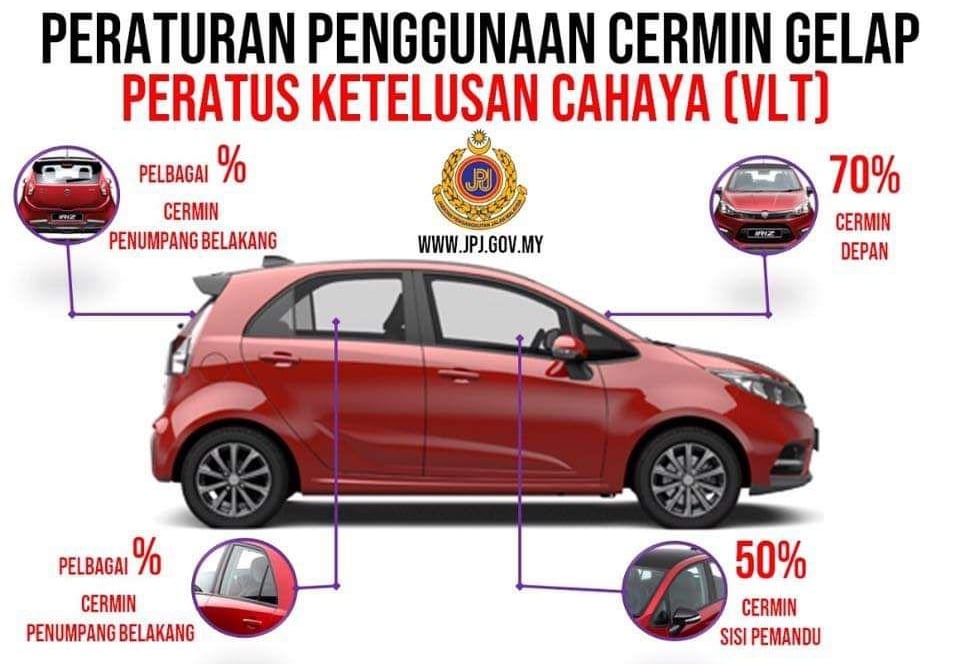
Car tinting in Malaysia has long hovered in a grey zone of style, comfort and legality. On one hand drivers seek relief from searing heat, intense UV rays and the glare of city lights. On the other hand, law enforcement and regulatory bodies warn of dangers when visibility is compromised or law officers cannot inspect vehicles especially in low-light or rainy conditions. According to a 2025 guide by the website of the film supplier Hamel Marketing, the limits today reflect that balance: “front windscreen must allow at least 70 % visible light transmission (VLT); front side windows must allow at least 50 % VLT; rear side windows and rear windscreen have no minimum VLT requirement, as long as the car has both side mirrors.” (Hamel Marketing)
The regulation is clear: if you darken your windows beyond those thresholds without proper exemption, you run a risk. According to the blog of the inspection company UCoolz Tint, fines for non-compliance can run up to RM 2,000 and jail time up to six months; repeat offenses can bring fines up to RM 4,000- or 12-months imprisonment. (UCOOLZ TINT (BUKIT INDAH) SDN. BHD.) In July 2025, the chief executive of the inspection company PUSPAKOM emphasised that there is no separate “PUSPAKOM‐approved” standard for tinting it must meet JPJ’s specs, film providers’ labels notwithstanding. (Paul Tan's Automotive News) In short, the tinted film might feel like a luxury but the legal framework treats it with serious caution.
Visible Light Transmission (VLT) is the percentage of visible light that your window (including film plus glass) allows to pass through. The lower the percentage, the darker and more obscured the view becomes. According to the official blog of film manufacturer 3M, “Front windscreen: The VLT level must be at least 70 %. Front side windows: The VLT level must be at least 50 %. Rear side windows and rear windscreen: Can be as dark as you like.” (3M Malaysia) The logic is simple: You should see out, and others should see in, in critical areas, for safety and enforcement.
The Specific Limits in 2025
- Front windscreen: At least 70 % VLT. (Motorist.my)
- Front side windows (driver and front passenger): At least 50 % VLT. (Berjaya Sompo Insurance)
- Rear side windows & rear windscreen: No specified minimum, provided both side mirrors are present. (kltintstudio.com)
- If you want darker than the front side windows or windscreen: You must apply to JPJ for special exemption (health or security grounds). (shieldsmith.co)
The Penalties
Non-compliance carries serious consequences. One site notes the penalty for violating tinted glass regulations: fine up to RM 2,000 or imprisonment up to six months. For second or subsequent conviction: fine up to RM 4,000 or imprisonment up to 12 months, or both. (Berjaya Sompo Insurance) When you factor in the time, hassle and cost of removal plus potential inspection failures, the financial and legal risk is high.
Behind the Numbers: Social and Industry Context
Why do such rules matter beyond legal compliance? There are deeper societal and industry reasons.
Heat, health and comfort
Malaysia’s tropical climate means car interiors get brutal. Quality tinting offers UV protection, glare reduction and lower interior temperatures. According to 3M’s blog, tinting can block up to 99.9% of harmful UV rays. (3M Malaysia) Demand for high-performance films in 2025 has grown especially in southern states like Johor Bahru where workshops say “In 2025, JPJ compliance remains a key concern. More car owners choose tints that meet the required VLT rules.” (UCoolz™ - Kulai Automotive Tinted Shop)
Enforcement and perception
From enforcement perspective, extremely dark or reflective tints can hinder police work to identify occupants, inspect vehicles in stop-and-checks or ensure road safety in rain or at night. The JPJ’s light transmission limits reflect that need for visibility. Instalment of non-compliant tints undermines that. The PUSPAKOM CEO’s warning about misleading “compliant” claims is telling: clear standards exist and must be met. (Paul Tan's Automotive News)
Industry dynamics
Tint film brands and workshops themselves face a tension: deliver what the customer wants in terms of privacy and heat reduction, while staying within legal limits. Some premium shops now highlight “JPJ-compliant” packages and use proper VLT meters before installation. In 2025, premium films like ceramic or nano-ceramic (which reject heat without needing a low VLT) are rising. For example, a Johor Bahru guide shows ceramic film prices in 2025 ranged RM 800 to RM 1,300. (UCoolz™ - Kulai Automotive Tinted Shop)
Case Study: A Misstep in Johor Bahru
Last June in Johor Bahru, a driver had installed what he believed was a “dark film” on his Corolla. He later learned during a PUSPAKOM check that the front side window’s combined VLT (glass plus film) measured at 42 % well below the 50 % threshold. Because the installer had presumed “darker is better” without checking VLT, the car failed inspection. The owner faced removal costs and potential delay in renewing road tax. This illustrates a common trap: even if film specs look compliant in isolation, the factory glass may already be tinted and push the combined VLT below the limit. The PUSPAKOM CEO pointed this out: “Some vehicles already come with factory-fitted tinted glass… even if a tint film is JPJ-compliant on clear glass, the car may still fail inspection when layered on top.” (Paul Tan's Automotive News)
Frequently Asked Questions and Myths
Is there such a thing as “JPJ-approved film”?
Not exactly. According to 2025 write-ups, labelling that a film is “JPJ-approved” can be misleading because compliance depends on the final VLT reading of your specific car, not just the film rating. (Hamel Marketing)
Does the rear window have a limit?
No minimum is specified for the rear side windows or rear windscreen as long as both side mirrors exist, enabling the driver to maintain side visibility. (Motorist.my)
What if I have a medical condition or I’m a VIP?
Yes, you can apply for exemption to have darker tint on windscreen or front side windows. But you must submit supporting documents, pass vetting (including from the police/geared for security uses) and pay required fees. The film itself still must be installed carefully. (shieldsmith.co)
Tips for Staying Legal and Comfortable
- Before installing film, ask the provider to measure the current VLT of your glass (without film) so you know how much headroom you have.
- Choose quality film types like ceramic or nano-ceramic that offer strong heat/UV rejection while satisfying the required VLT limits.
- Keep receipts, film specification sheets and installation records if stopped by JPJ you may need to prove compliance.
- Avoid marketing claims like “PUSPAKOM approved tint” or “darkest legal tint” they may be misleading, as the legal measure is your actual VLT reading.
- If you plan to get front windows darker than permitted (for health/security) start the exemption application process early, it is not guaranteed.
A Reflection on Privacy, Safety and Choice
The story of Maya’s traffic stop is more than a cautionary tale. It embodies a tension in modern car ownership: the desire for comfort, privacy and personalisation versus the need for visibility, safety and regulation. Tinted windows live at that intersection. On the one hand, they shield occupants from heat, from prying eyes, from glare. On the other hand, when they become too dark, they erode a basic transparency that protects driver visibility and law enforcement oversight.
For Malaysian drivers in 2025, the message is clear: you have a right to comfort and privacy, but that right comes with a duty to ensure your vehicle remains safe and legal. As regulations tighten and enforcement becomes stricter, every car owner must navigate that boundary with care.
In the end, the sight of the tinted car at the traffic stop is a metaphor for a deeper question: how dark should we let our shields become before they obstruct not just the world outside us but our own ability to move safely within it? From Johor Bahru to Kuala Lumpur, the answer lies in the transparency of compliance, the clarity of vision and the willingness to choose safety over aesthetics when it matters.
Maya drove off that day with her film intact, but she learned a hard lesson: tinted windows may feel like protection, but they require as much vigilance as they promise. And in 2025 Malaysia, no tint film, no sticker and no marketing slogan can replace the simple truth written in light: make sure your transmission is visible.
AM World (tameer.work88@gmail.com) is a content creator under the Newswav Creator programme, where you get to express yourself, be a citizen journalist, and at the same time monetize your content & reach millions of users on Newswav. Log in to creator.newswav.com and become a Newswav Creator now!
The User Content (as defined on Newswav Terms of Use) above including the views expressed and media (pictures, videos, citations etc) were submitted & posted by the author. Newswav is solely an aggregation platform that hosts the User Content. If you have any questions about the content, copyright or other issues of the work, please contact creator@newswav.com.