PETALING JAYA: Data centres accounted for 9.28% of Malaysia’s electricity consumption as of the second week of August, up from about 7% around the middle of the year, as the sector’s rapid expansion and prolonged hot weather push power demand higher.
Energy Commission (ST) CEO Siti Safinah Salleh said the latest figure reflected not only the growing number of data centres coming online, but also higher electricity consumption for cooling amid hotter weather.
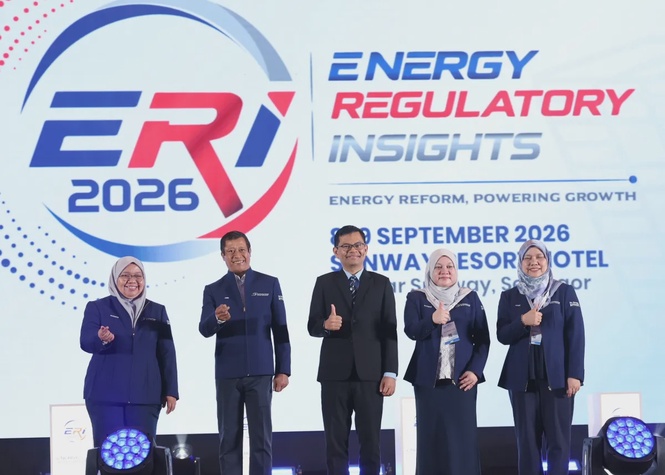
“So 9.28% is the number that I have right now on data centres most recently,” she said during a question-and-answer session with the media at the Energy Regulatory Insights 2026 (ERI 2026) today.
Siti Safinah said data centre usage could increase even without additional facilities coming online, as higher temperatures require more energy for cooling.
“Sometimes consumption or behaviours, use, utilisation remains the same, right? Usage remains the same. But with the hotter weather, the cooling system requires a lot more energy to cool it,” she said. “So that’s where the consumption therefore increases.”
The latest figure represents an increase from the 7% of total electricity consumption recorded around the middle of the year, highlighting the speed at which data centres are becoming a major component of Malaysia’s electricity demand.
Siti Safinah said Malaysia’s current peak electricity demand is slightly above 21GW, with demand expected to rise further towards the end of the year as several data centres are anticipated to become operational around November.
“We don’t expect that will increase too much in terms of peak capacity, but there will be a lot more consumption with the data centres coming in,” she added.
Siti Safinah estimated total electricity consumption could increase by 5% this year from 2025, although she stressed that this was only a rough estimate pending a check against ST’s latest figures. “The 5% is from last year’s consumption to this year’s consumption, in total.”
Siti Safinah said ST had expected the hotter weather to ease after July and August, based on the usual seasonal pattern.
Despite the rapid growth in data-centre electricity demand, ST does not impose a specific cap on the sector’s share of the country’s electricity supply.
Siti Safinah said large electricity users are being encouraged to participate in the Corporate Renewable Energy Supply Scheme (CRESS), which allows them to directly invest in renewable energy development.
ST currently has approximately 3GW of projects in the CRESS pipeline, she added.
The strong CRESS pipeline could allow data centres and other major electricity consumers to secure renewable energy while supporting the wider expansion of Malaysia’s renewable-energy capacity.
Siti Safinah said the surge in electricity demand has not resulted in any delay to Malaysia’s renewable-energy development plans.
The latest Large-Scale Solar 6 (LSS6) programme involves 2.5GW of hybrid renewable energy comprising solar and batteries, with the capacity expected to start coming into the system from 2029.
ST has remained consistent in implementing both its JPEC generation requirements and renewable-energy development plans, she said. “We’ve actually been quite consistent in ensuring that whatever we have planned in JPEC, and also for our renewable energy development, will continue.”
ST is also looking at increasing the contribution from other renewable sources, including biomass.
A study under the Sustainable Energy Development Authority is looking at ways to address some of the challenges surrounding biomass development.
ST is also looking at smaller renewable-energy projects, including run-of-river and mini-hydro, Siti Safinah said, adding that the current rule-of-thumb reserve margin for Malaysia’s electricity system is 25%.
The focus next year will be on optimising existing gas capacity, with utilisation dependent on overall electricity demand.
Siti Safinah disclosed that the implementation of the Energy Efficiency and Conservation Act is beginning to take effect, with ST issuing reminders to the first group of large energy consumers that need to conduct energy audits and develop energy-efficiency plans.
“We’ve started issuing all the reminders to the first set of the large energy guzzlers that actually need to start doing their energy audits,” she said.
Siti Safinah said she hoped the government would introduce incentives and other measures to encourage energy efficiency and renewable-energy development in Budget 2027, which is due to be tabled next month.