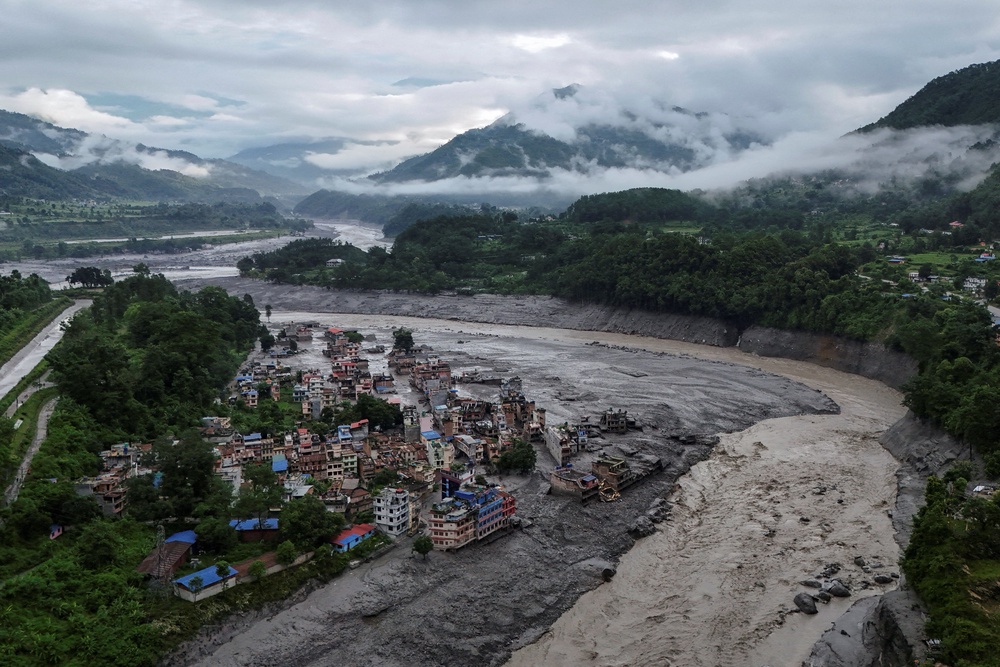
The death toll from the flash floods in Nepal was expected to match the grim figure from the 2015 earthquake, finance minister Swarnim Wagle said.
“The floods were geographically concentrated but the human toll has been as massive as the 2015 earthquake,” he said at a seminar in Delhi, India, over the weekend, the Indian Express reported.
The 7.8-magnitude earthquake had killed about 9,000 people and left 21,000 injured across Nepal, China, India, and Bangladesh.
As of Sunday, the toll from the flash floods in the Himalayan nation stood at 1,450, with 6,000 people still missing, the Indian news agency PTI reported, quoting the Nepalese police.
Mr Wagle was in India for a three-day visit during which he met finance minister Nirmala Sitharaman to discuss bilateral economic ties as well as the neighbour’s commitment to support disaster recovery and rehabilitation efforts.
He also met Indian foreign minister S Jaishankar to “reset” diplomatic ties, according to the Hindu.
Last week, Nepali authorities said only about seven per cent of the bodies recovered since the floods had been identified.
The National Disaster Risk Reduction and Management Authority said it had collected DNA samples from 1,206 bodies as well as samples from 1,889 relatives of the missing.
In spite of all that, only 105 bodies had been identified and handed to family members thus far.
Thermal drones and helicopters had been deployed to search for the missing and specialists had been brought in to help rescue hydropower project workers trapped inside tunnels.
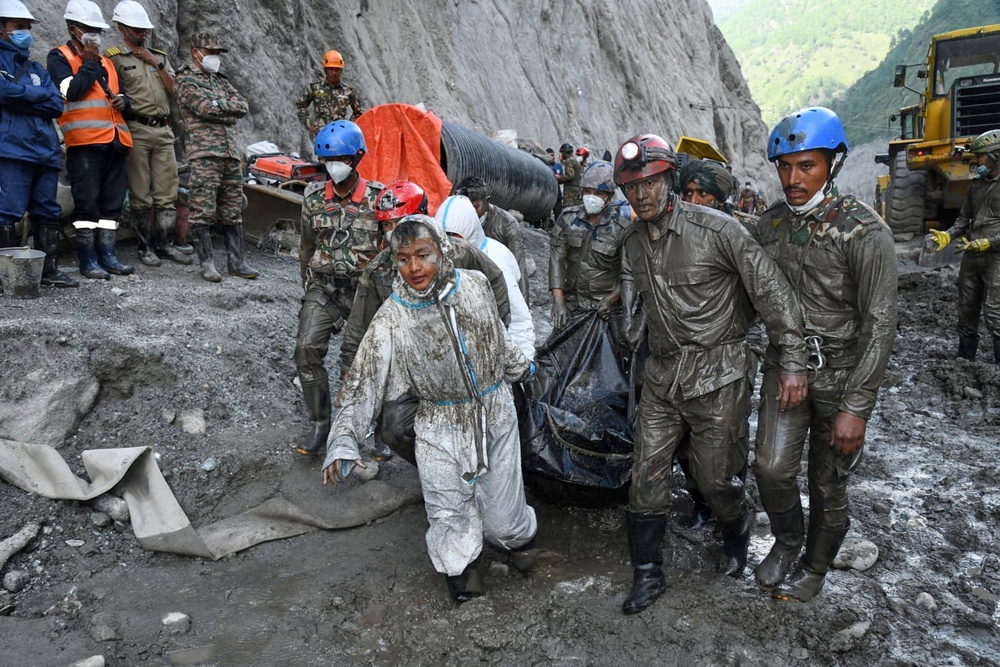
Efforts to locate people still missing had also resulted in several remarkable rescues from tunnels at hydropower projects across Nepal, authorities said.
However, families of foreign nationals said updates on rescue operations, which had previously been issued regularly, had become less frequent.
“Narrow airspace, difficult geographical mountainous terrain and scale of debris deposited are the major challenges on locating the missing,” the agency said.
Read MoreWhy Xi’s visit to US is culmination of ‘profound shift’ in balance of world power