
Seven years after the last payment, my Client's RM 800k debt looked completely dead. If not for one routine accounting document that brought it back to life...
Last year I was engaged by a sub-contractor to recover a debt of approx. RM800k+.
When our initial demand letter went out, the debtor engaged a lawyer who responded almost immediately and with 100% cockiness:
“Our Client has no knowledge of your Client's claim, and in any event, even if legitimate, your Client's claim is time-barred under the Limitation Act. We demand that you withdraw your claim immediately for abuse of process yadda yadda yadda...”
The tone from them was of amusement, as if the matter was already over and we were ridiculous for even attempting to put forth such a demand.
I called my Client and we talked about the debtor's counter-argument. I asked my Client if there had been any part payment or acknowledgement of debt within the last 6 years.
"The last time they paid me was about 7 years ago. But... I have this document that they mail to me yearly. Is it useful?"
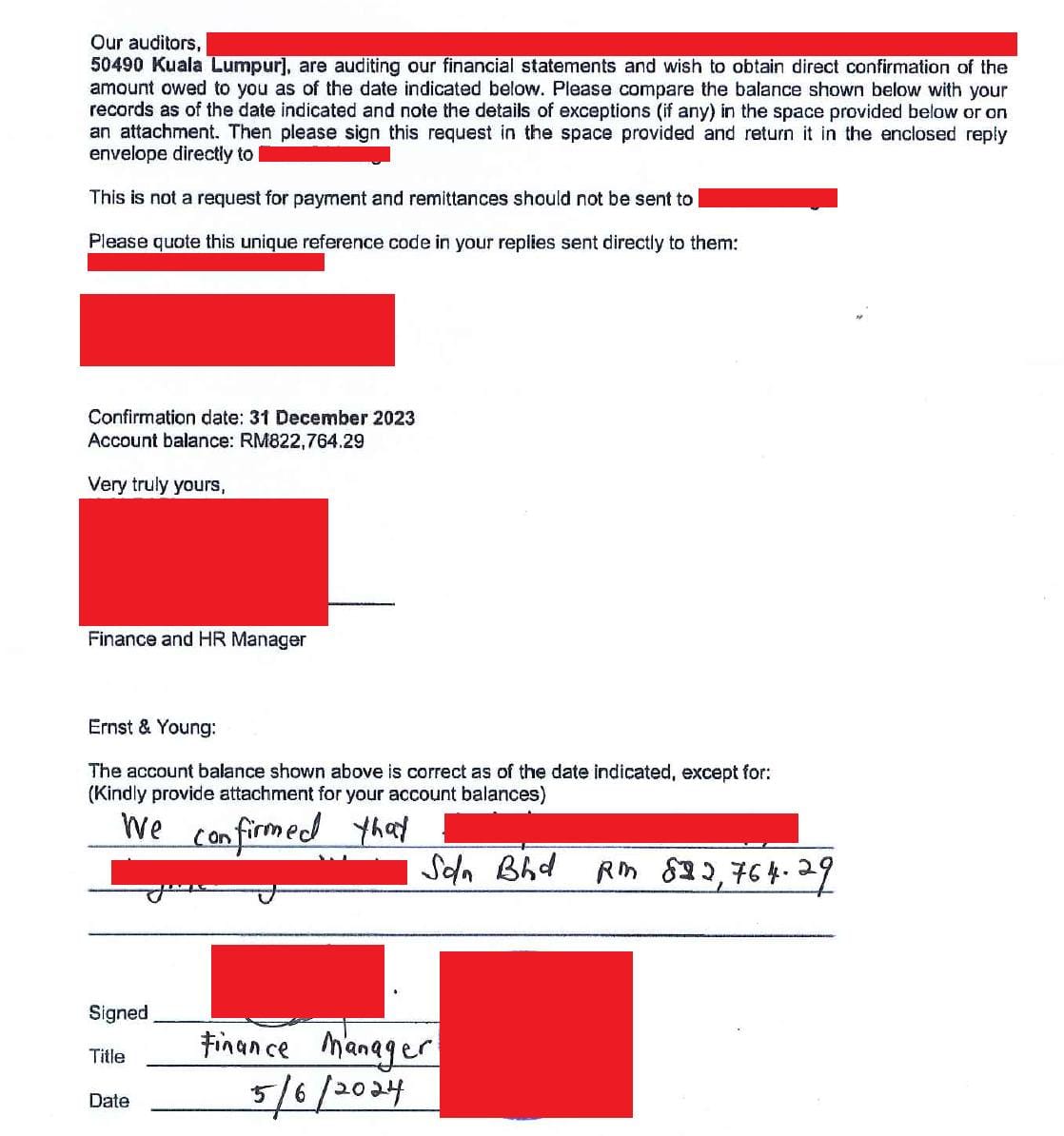
My Client Whatsapped me a document entitled "Request for Confirmation of Amount Owed".
I smirked immediately, trying to contain my excitement. We had a smoking gun!
It turned out that every year, like clockwork, the debtor would send my client a short document seeking confirmation of the outstanding balance. A routine request from their auditors.
It is sometimes also called a “balance confirmation" or “statement verification.”... a short letter confirming the amount owed.
Business owners treat these documents as routine paperwork, something accounting departments exchange at the end of the financial year.
But legally, those documents can shift the fate of the universe: when a debtor acknowledges a debt in writing, the six-year limitation period starts all over again.
In this case, the debtor had been sending my Client these annual requests for confirmations every single year.
Seven years had passed since payment, but the last written acknowledgment was less than a year old.
I attached the document to my reply and sent it back to the debtor's solicitors.
A week of silence.
Followed by a much more cautious reply.
The cocky “limitation defence” suddenly disappeared; and their tone changed completely. Arrogant and aggressive to cooperative.
"On a without prejudice basis and without any admission as to liability (haha); we propose goodwill settlement of the outstanding debt in 12 monthly installments of RM 68k each"
For business owners, this situation happens more often than one might think.... debtors rely on the assumption that time alone will erase a debt.
But what they often fail to remember is that emails, WhatsApp messages, signed confirmations, or even simple written acknowledgments can reset the clock.
In this latest case we did, one small document revived a RM 800k claim and turned a “dead debt” back into a live one overnight.
Rudi Cheu (rudi@rulecolaw.com) is a content creator under the Newswav Creator programme, where you get to express yourself, be a citizen journalist, and at the same time monetize your content & reach millions of users on Newswav. Log in to creator.newswav.com and become a Newswav Creator now!
The User Content (as defined on Newswav Terms of Use) above including the views expressed and media (pictures, videos, citations etc) were submitted & posted by the author. Newswav is solely an aggregation platform that hosts the User Content. If you have any questions about the content, copyright or other issues of the work, please contact creator@newswav.com.

